DaRmaZat
 Since Returnal, Housemarque has more than earned its stripes as one of the modern masters of bullet-hell intensity fused with cinematic sci-fi spectacle. Few studios have proven as capable of transforming sensory overload into something this stylish and mechanically hypnotic. So when PlayStation-exclusive SAROS was announced as its spiritual successor, anticipation was bound to escalate.
Far from a mere repetition of that formula, the third-person roguelite shooter emerges as a more narratively intimate evolution with a significantly more accessible structure, all without sacrificing the compulsive “just one more run” addiction – perhaps even making it harder to put down.
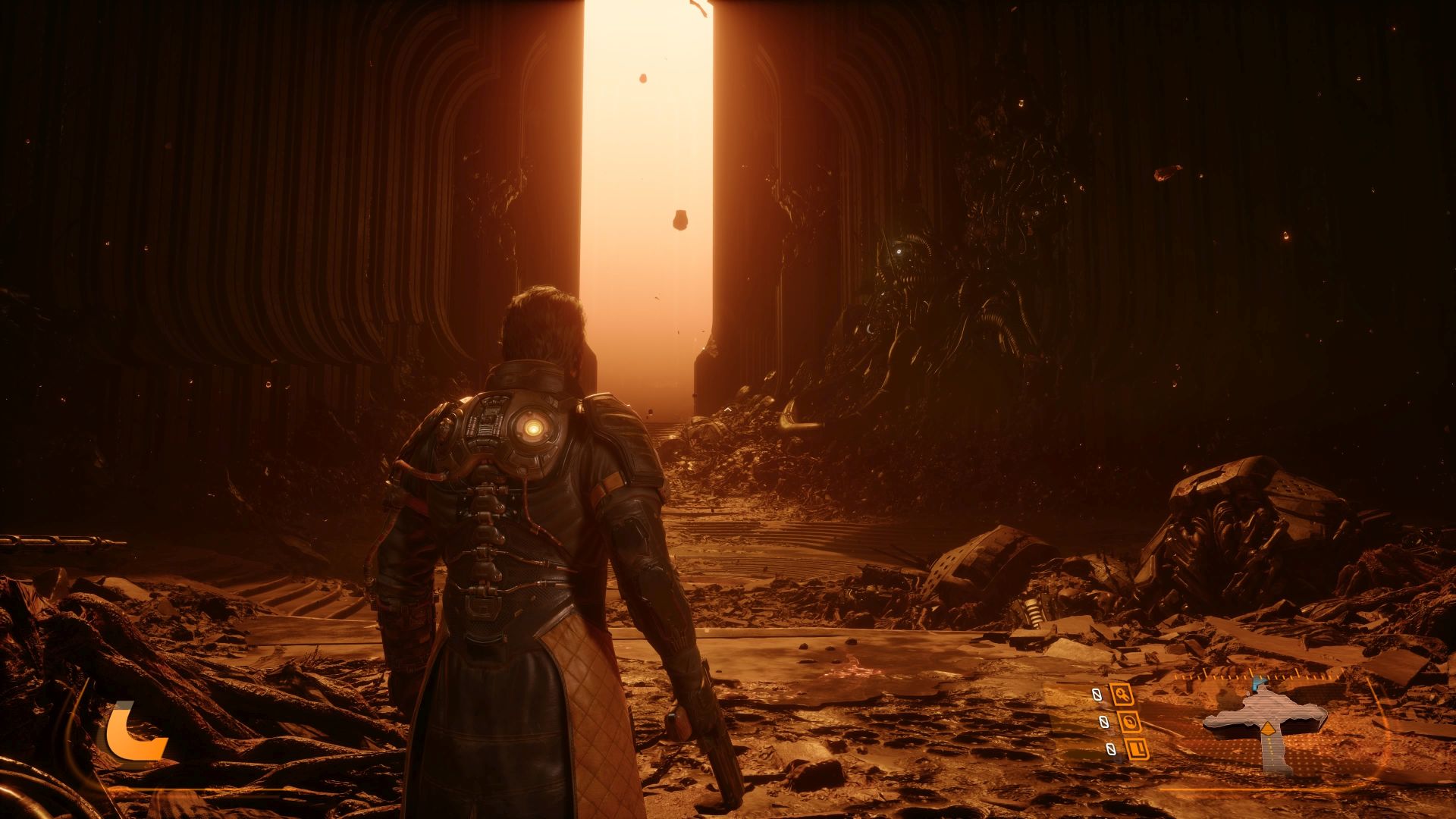
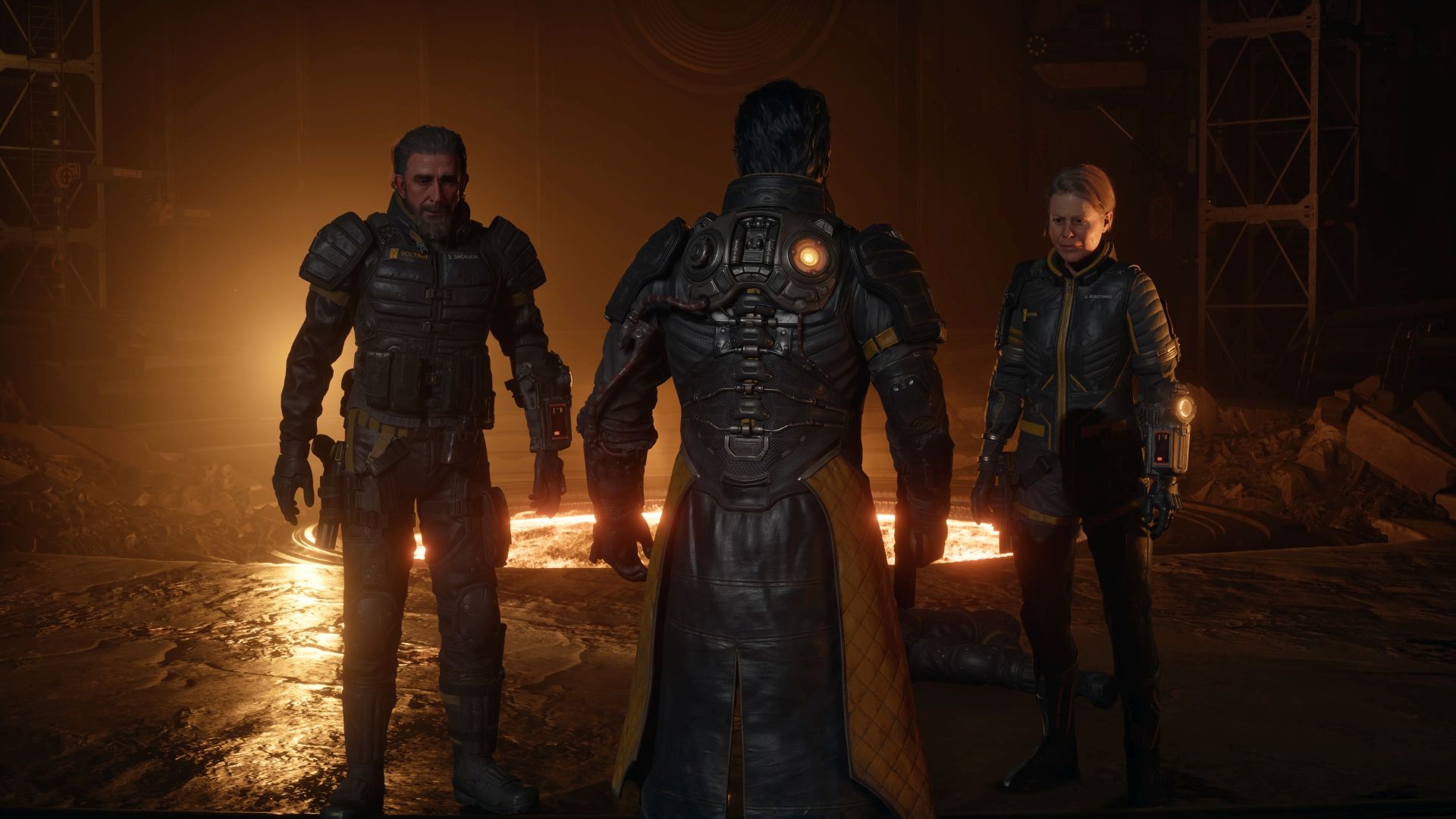
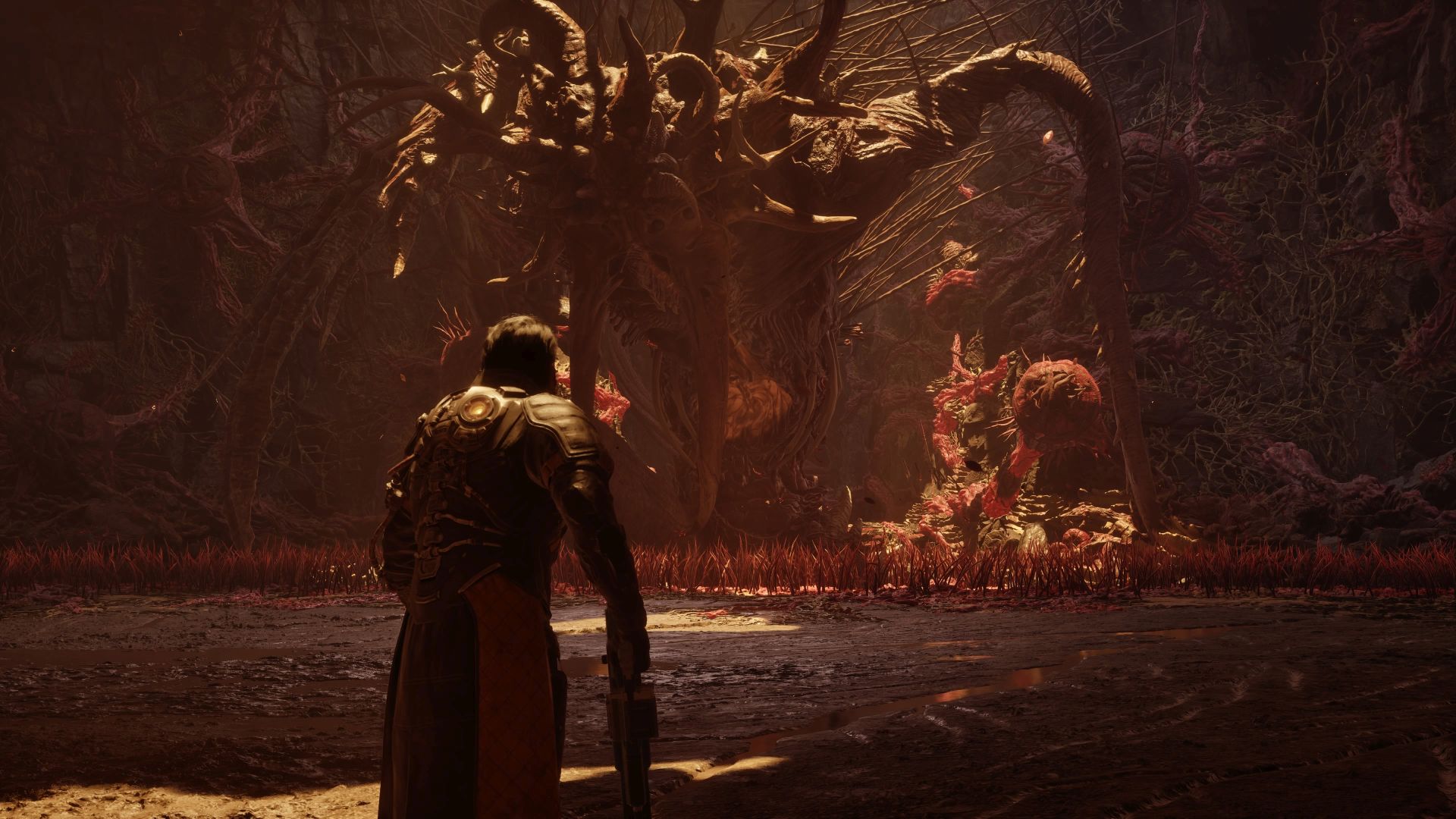
Set on the ever-mutating alien planet Carcosa, SAROS follows Soltari enforcer Arjun Devraj, portrayed with weary conviction by Rahul Kohli, as what begins as a mission to locate missing colleagues gradually spirals into something far more personal and spiritually devastating. Carcosa is not merely a dangerous planet – it is a mysterious place seemingly enthralled by something ancient, malignant, and eclipse-bound.
With neon ruins, projectile storms, and haunting biomes, the atmosphere immediately establishes itself with confidence. Through cinematics, hallucinations, and crew interactions, Carcosa evolves beyond a battleground into an almost self-contained allegory. The deeper Arjun ventures into its shifting ruins, industrial wastelands, and biome sections – each increasingly corrupted – the more SAROS dissolves into catharsis. Like those around him, Arjun becomes increasingly vulnerable not only to physical destruction, but to the seductive psychological unraveling Carcosa exerts on all who enter its orbit.
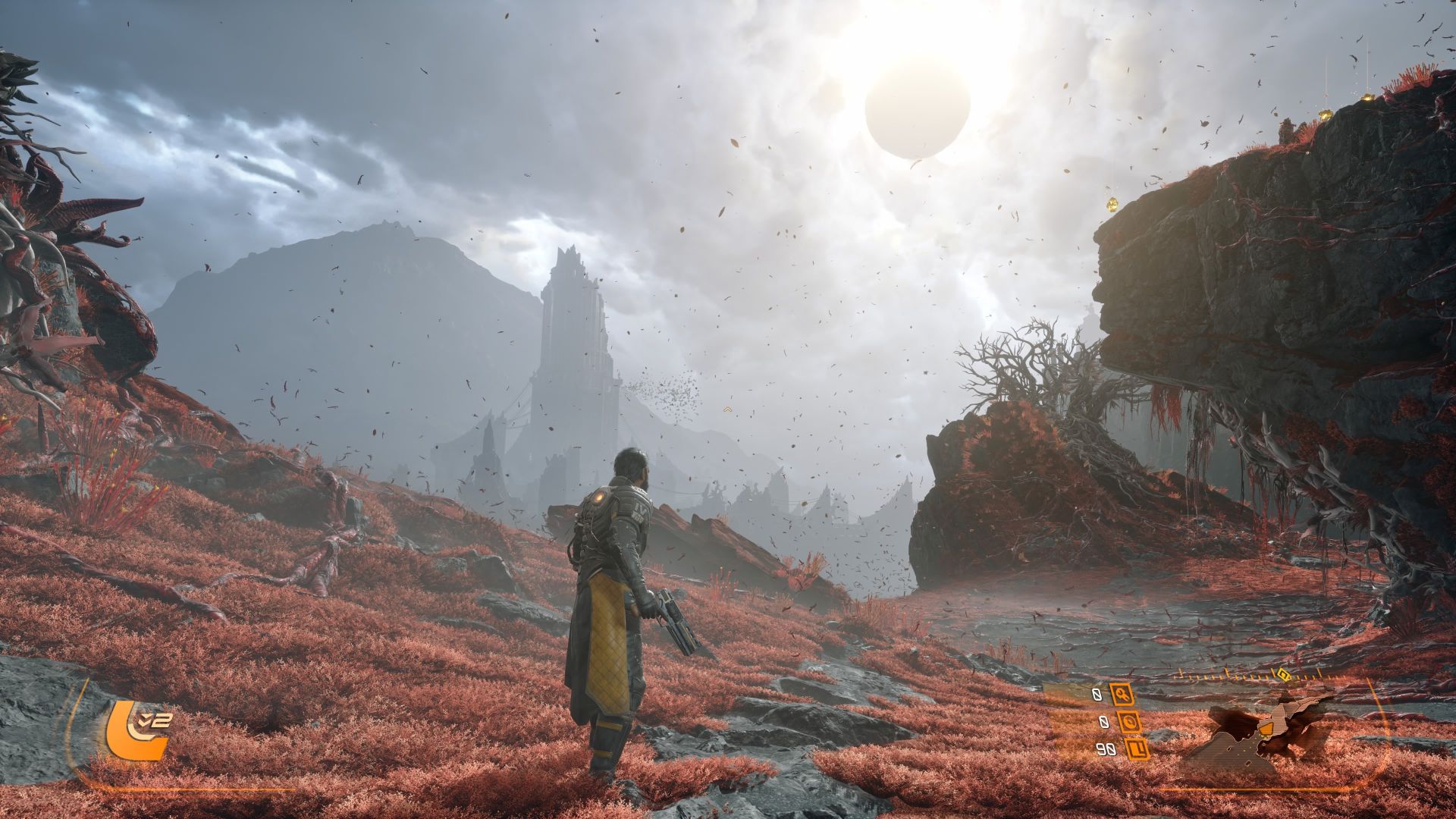
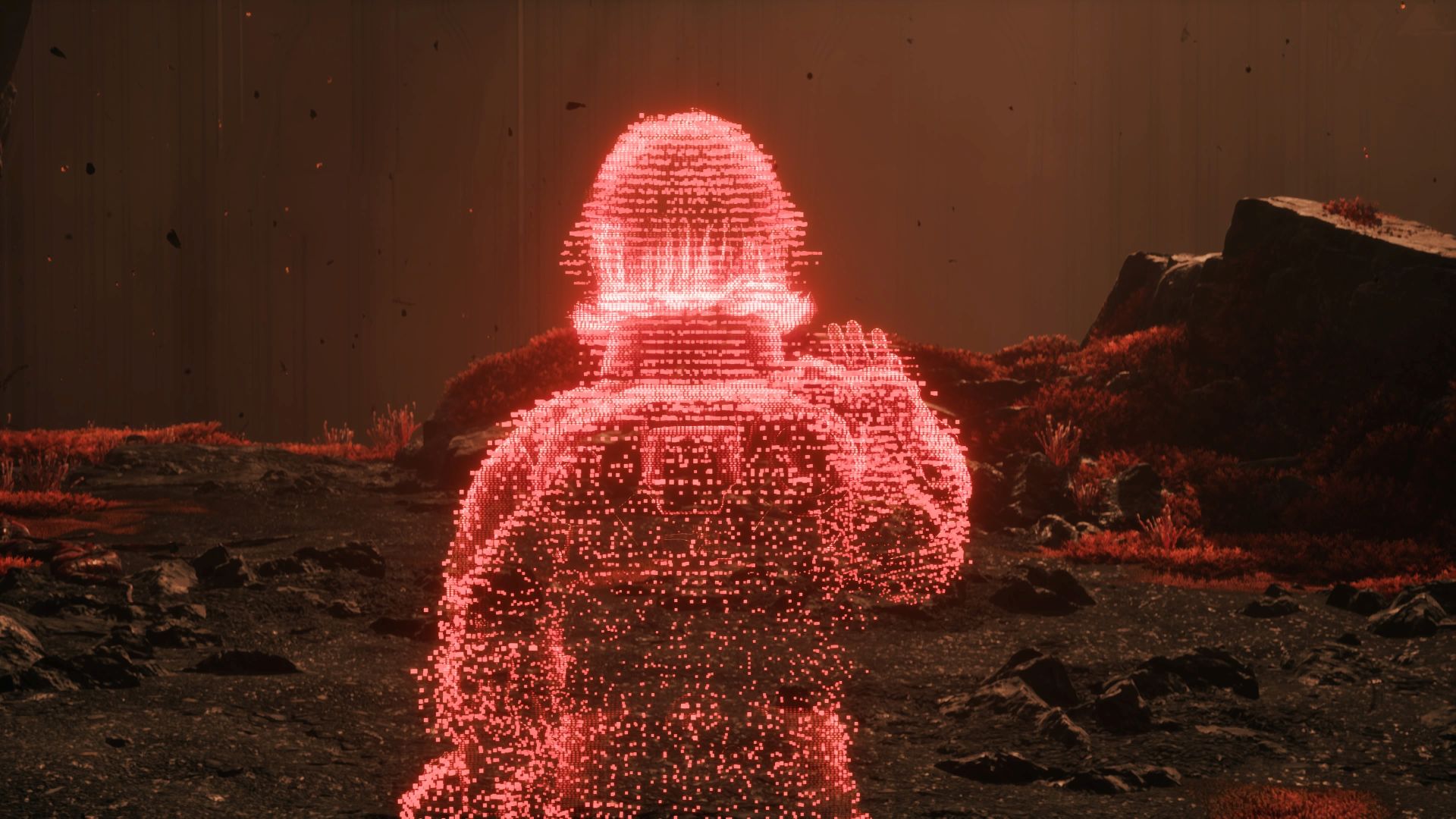
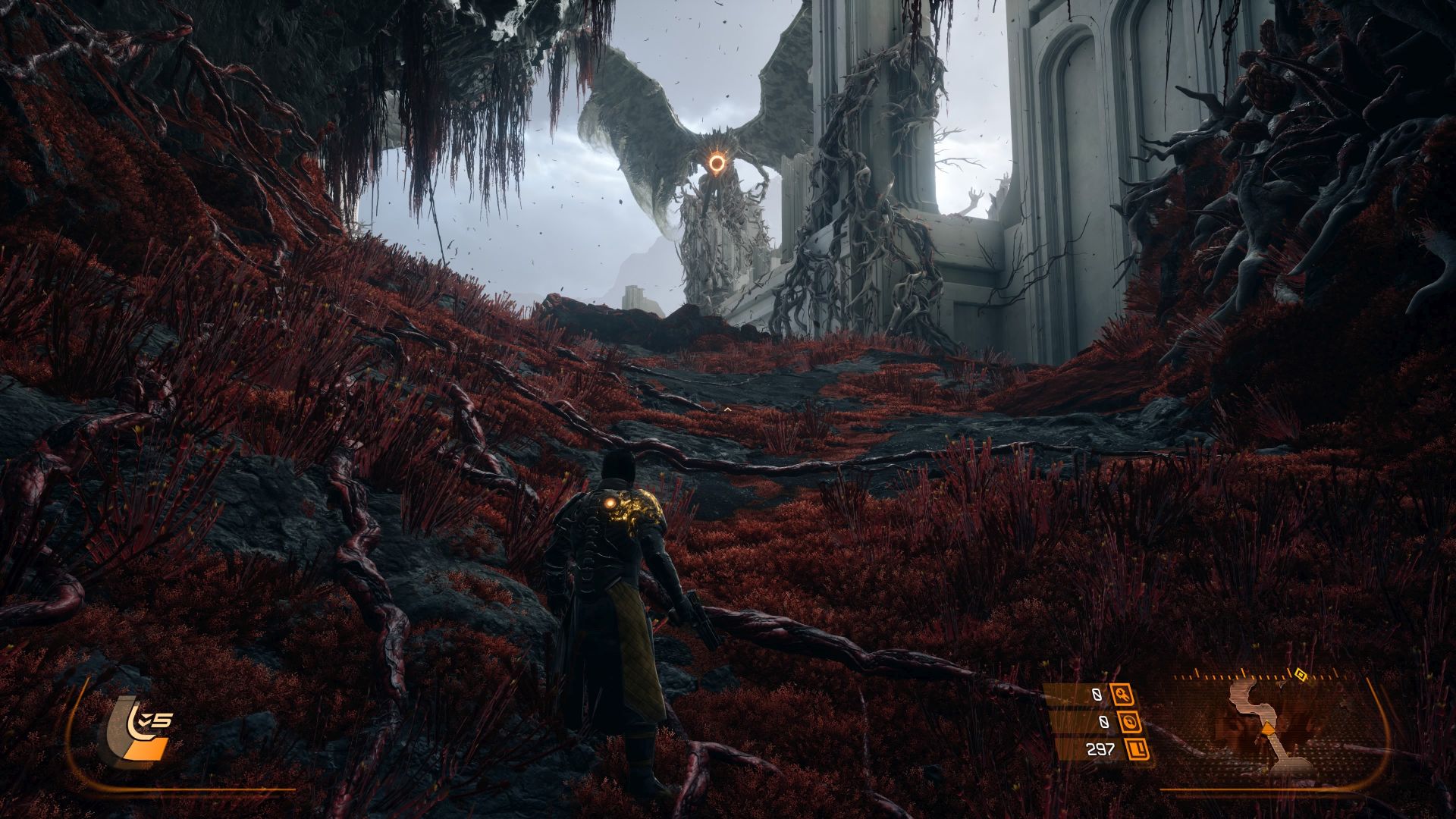
Without doubt, SAROS‘ fast-paced yet smooth combat is its greatest strength, most immediately recalling Returnal, and thankfully so. Once again, battle frequently feels like surviving inside a weaponized prism – a giant kaleidoscope of colorful particle effects, uniquely shaped projectile patterns, and overwhelming visual chaos with bullets swarming, spiraling, pulsating, and distorting in dazzling formations. While some attacks can only be survived through desperate last-second melee strikes, carefully timed dodge-dash cooldown usage, or lightning-fast repositioning, others can instead be absorbed through Arjun’s Soltari Shield.
This is arguably the most defining mechanical innovation compared to the spiritual predecessor. Because more than a defensive tool, it transforms absorbed enemy aggression into explosive counteroffense through devastating missile salvos. Combined with Power Weapons fueled by alien corruption and eclipse-born force, combat feels ferocious yet multi-layered with advantages and disadvantages that often arrive simultaneously, making you question whether it’s really wise to pick up that one brightly glowing artifact after all.
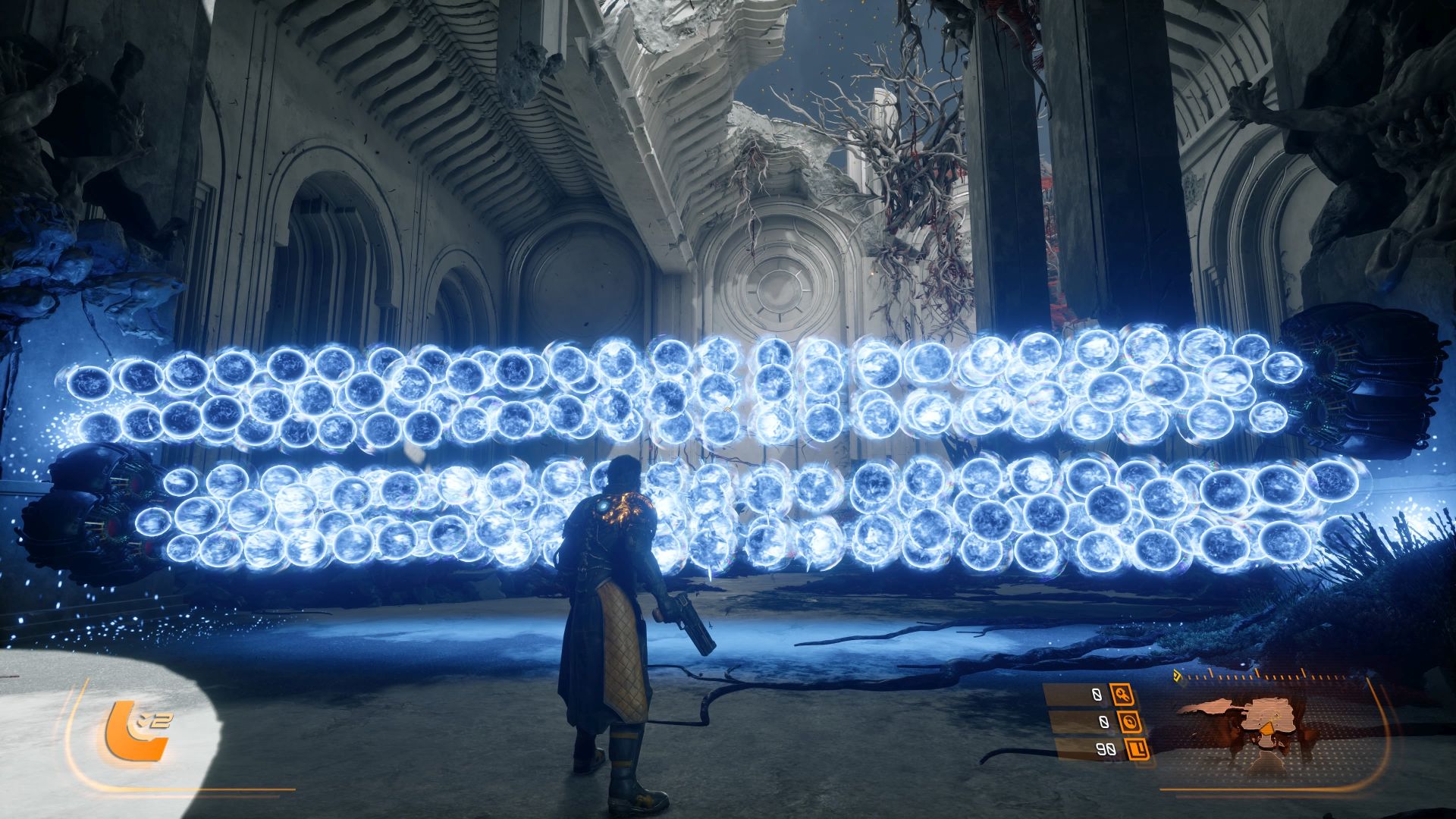
And true to the genre, one of the most defining principles is that mastery is never given – it is earned through repeated failure. This is especially true in its standout multi-phased boss fights, where survival depends less on raw reflexes than on the willingness to learn through death, adapt through repetition, and gradually internalize attack patterns until the chaos becomes readable. For me as well, only after enough failed runs did what once seemed overwhelming begin to feel like a genuinely winnable fight.
Even then, this game is not always interested in fairness, as it often finds ways to unsettle your growing confidence, reminding you that this is rarely an equal struggle. At times, danger emerges from angles you failed to anticipate, punishing overconfidence. SAROS can be brutally deceptive, and at times almost cruel, but beneath that imbalance lies a path to victory for those stubborn enough to keep practicing. Many will give up long before then, but those who persevere will find its hardest battles among its most satisfying.
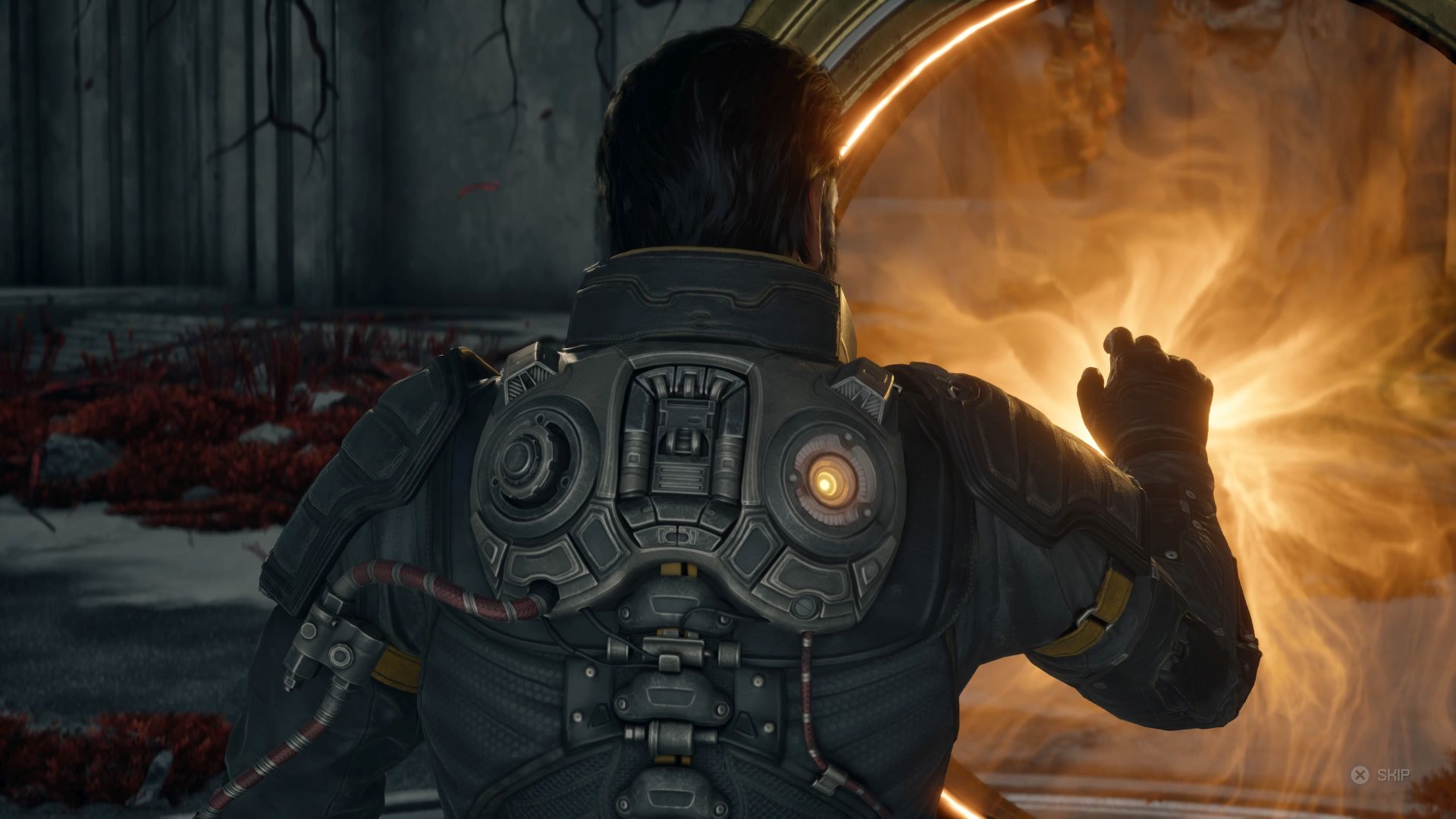
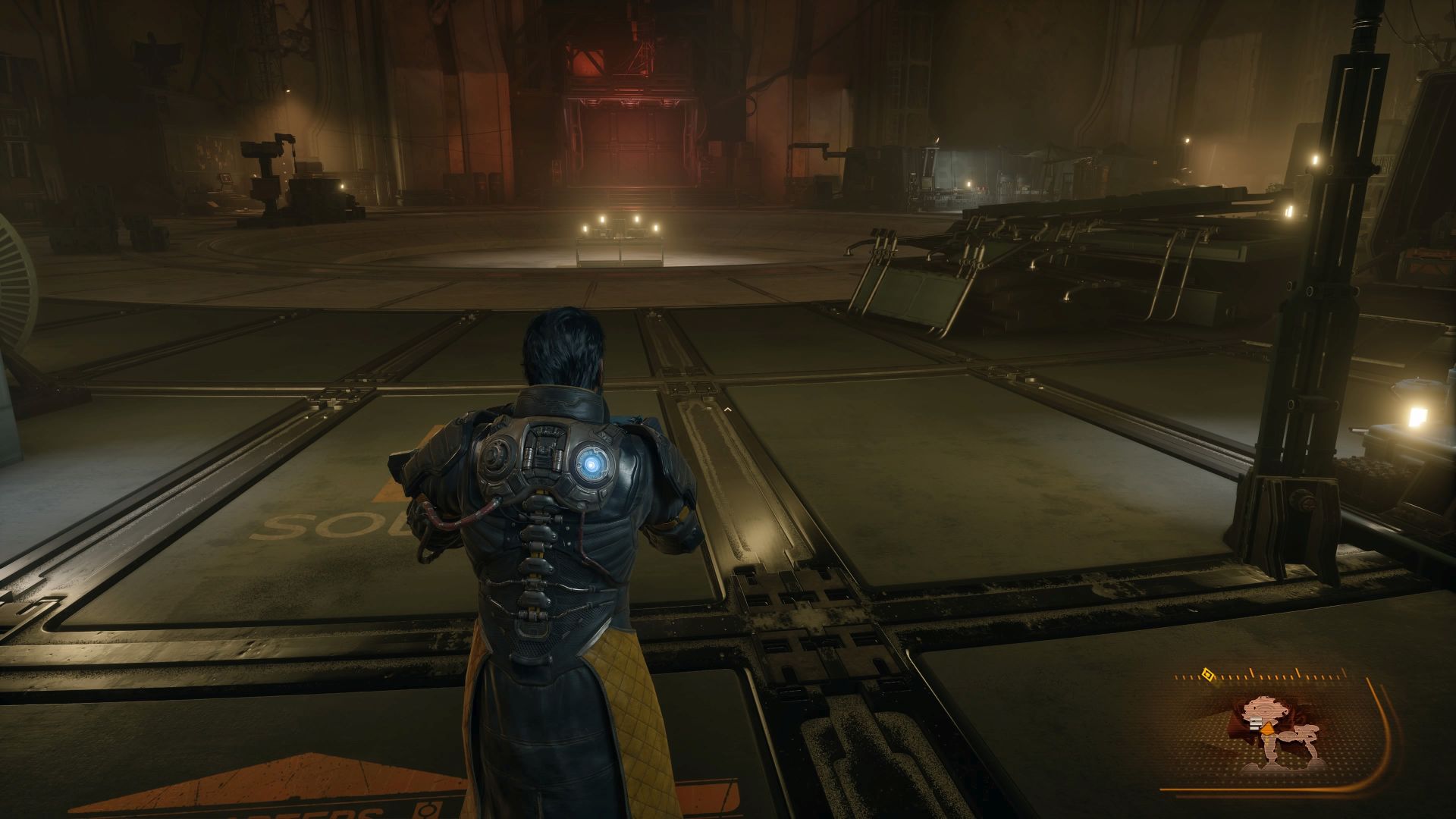
Nevertheless, SAROS does offer quite a few sophisticated progression systems to help you out to some extent. Central within the Passage hub, just before each run begins, sits The Armour Matrix, serving as the true facilitator of the long-term loop. During the eclipse cycles, you gather materials called Lucenite and Halcyon, which help improve your basic abilities, but sufficient collection and plot progression through this tree also unlock new survival systems such as Second Chance, strengthen shield functionality, and eventually unlock Carcosan Modifiers. These allow you to make the difficulty somewhat more accessible, though often at the cost of introducing new disadvantages, such as stronger enemies or reduced weapon efficiency.
One of the more meaningful structural refinements lies in how SAROS reduces friction around progression loops. While Returnal already allowed selective biome traversal after key milestones, SAROS streamlines this further through the World Dial Teleportation system, making runs feel less disruptive. Beyond that, later upgrades subtly expand Arjun’s traversal toolkit, gradually opening up new ways to navigate Carcosa’s fractured spaces.
As a PlayStation 5 exclusive, Housemarque fully leverages the platform’s hardware through near-instant load times, DualSense haptics and adaptive triggers that heighten weapon feedback, and immersive 3D audio. Audiovisually and mechanically, SAROS rarely disappoints. The onscreen chaos remains astonishingly readable despite extraordinary particle density, preserving that crucial balance between overwhelming spectacle and mechanical clarity, further amplified by Sam Slater’s exquisite industrial dark-electronic score.
Final Thoughts
SAROS ultimately succeeds not by abandoning Housemarque’s identity, but by reshaping it into something broader without losing its edge. Its oppressive, eclipse-drenched world remains consistently mesmerizing and deeply unsettling. Meanwhile, the smooth combat gameplay stays brutal and dazzling, yet simultaneously highly addictive, as progression gradually transforms the narrative into a psychologically charged odyssey – one where every death feeds persistence rather than defeat. For some, SAROS‘ endless eclipse cycles will become utterly consuming; for others, Carcosa’s blackened sun may still prove far too merciless to endure.
Additional Information
Release Date: April 30, 2026
Reviewed On: PS5 Pro. Download code provided by the publisher and PR agency.
Developer: Housemarque
Publisher: Sony Interactive Entertainment
Relevant links: PlayStation Store (NL-BE, NL-NL, US)