DaRmaZat
 In this crowded April release window, just another narrative adventure could easily slip under the radar. However, overlooking Tides of Tomorrow would be a mistake for anyone who values choice-driven storytelling. Developed by DigixArt—the creative minds behind the hit Road 96—this “plasticpunk” odyssey tackles urgent themes of climate collapse in a time where global priorities seem increasingly focused on war and weaponization, as well as human connection in an increasingly digital age. What truly sets it apart, however, is its innovative “Online Story-Link” system, a mechanic that ensures your solo journey is irrevocably shaped by the ghosts of those who traveled before you —specifically, the players you consciously choose to follow.


Walking the Tides
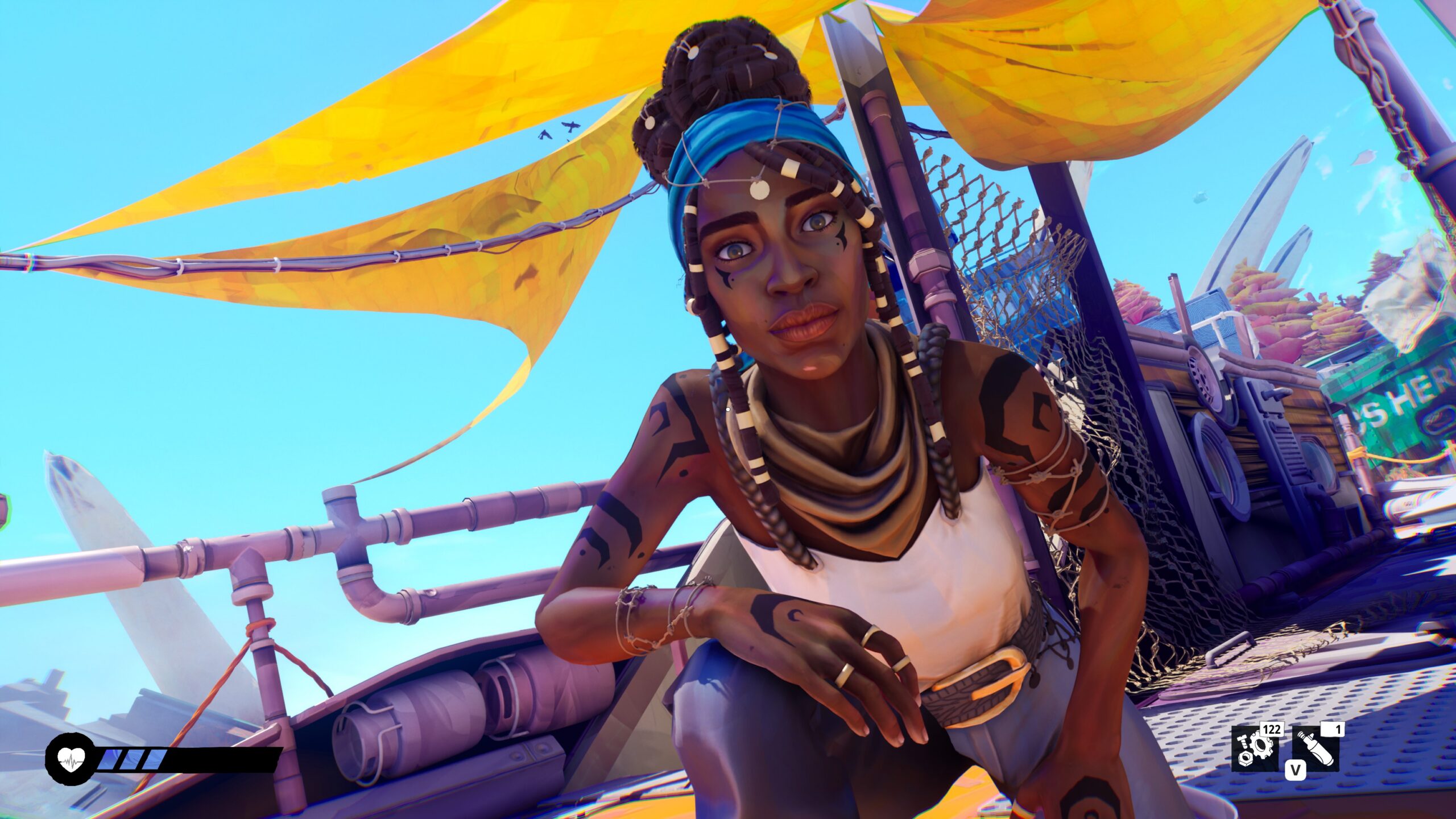
The experience begins simply enough with customization, from physical appearance to suit color. But the most critical choice happens before you even take your first step: selecting a Story-Link. Whether it’s a friend, a streamer, or a complete stranger, you need to decide whose footsteps to follow. This person becomes “The Last Tidewalker”, and their past decisions act as the foundation for your world. At a certain progression point, you also gain the ability to share your own seed, allowing others to follow your path in return.
This preliminary setup quickly gives way to a solitary fight for breath. After a narrow escape from drowning, thanks to a survivor named Nahe, you learn of the grim stakes. Apparently, the world is ravaged by Plastemia, a disease caused by the overwhelming amount of plastic in the human body. Much like the rest of humanity, you are essentially dying, suffering from physical seizures that can only be temporarily staved off by consuming bottles containing a liquid known as Ozen. However, as a Tidewalker, you possess unique powers that cast you in the role of the reluctant hero, tasked with the classic quest to find a cure and save a dying world.
It soon becomes clear, however, that your mission is a race against time. If you run out of Ozen and faint too many times, certain narrative branches and endings become permanently locked for that playthrough. It is not the only aspect where the game creates constant friction between self-preservation and legacy. Do you play it safe to ensure you reach the finish line, or do you sacrifice your own safety net to aid the strangers who will walk your path? It’s a dilemma Tides of Tomorrow forces you to weigh at every turn, and it effectively keeps you hooked—credit where it’s due.


Visions of the Past, Choices for the Future
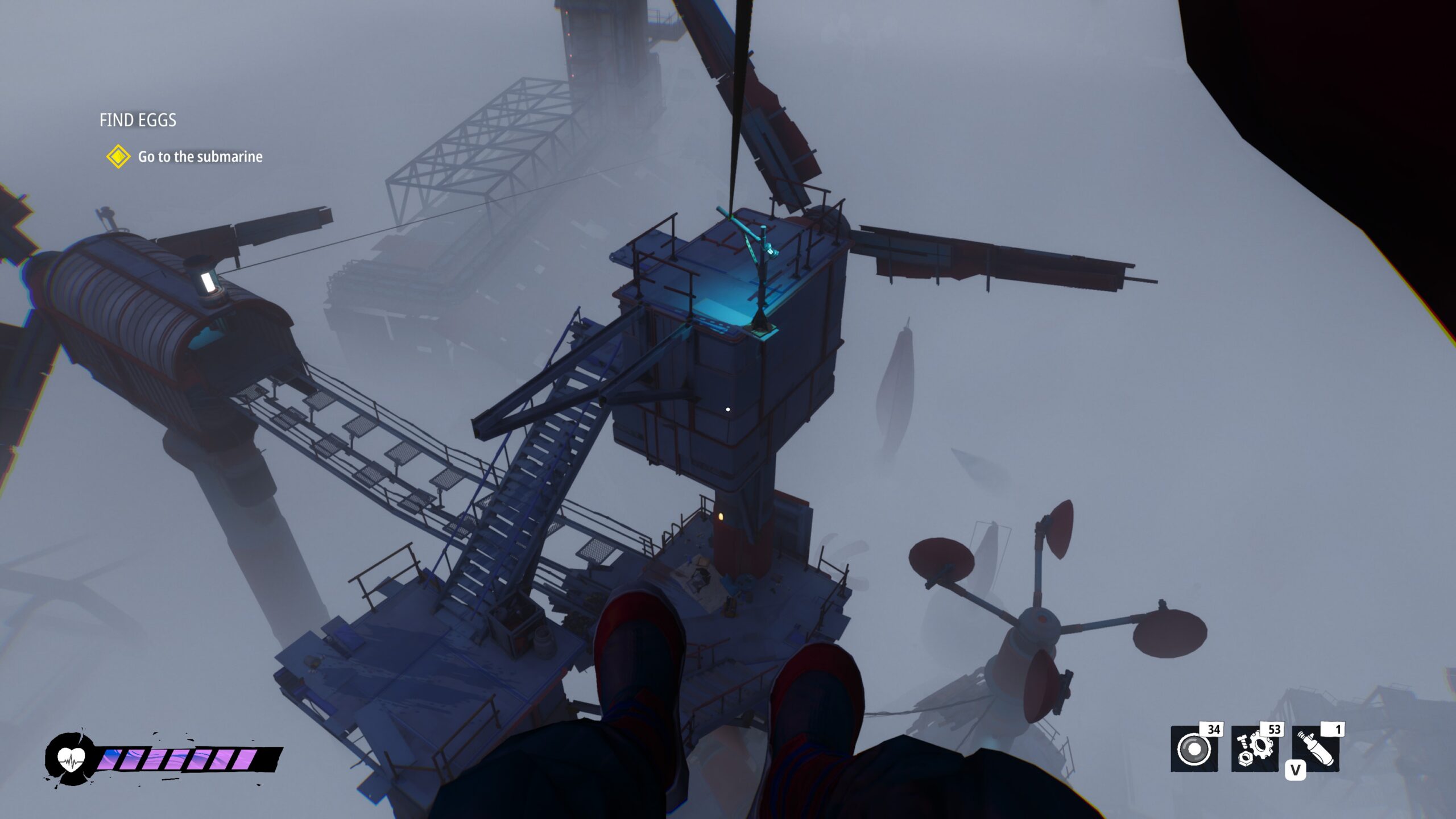
The core of the gameplay revolves around the Tides of Time mechanic. Whenever and wherever it is allowed, with a single button press, you can dive into the past to witness “visions” left by your predecessor. These range from minor echoes—showing where a previous player died or which emotes they used—to major visions that reveal key narrative turning points. More often than you’d expect, you need these glimpses into the past to progress through the story and understand the shifting ecological and political landscape. In some cases, you even need to link multiple past events together to solve simple puzzle-like sequences. It’s thought-provoking, bordering on reality fiction.
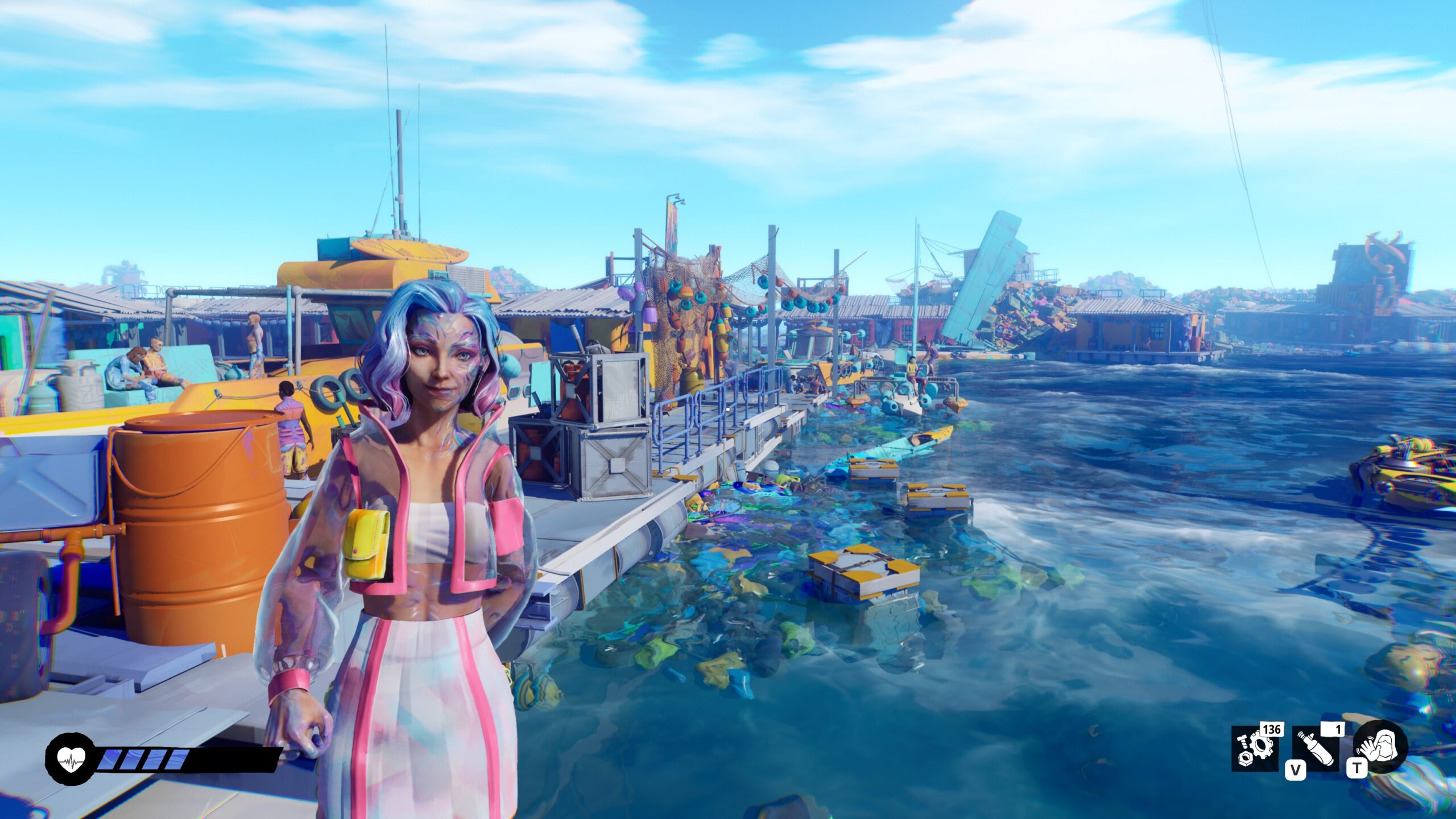
That sense of blurred reality extends to the presentation. The world is a clash of vibrant, flashy colors—at times reminding me of Mirror’s Edge—combined with ‘trancy’ visual effects that flare up whenever you access the Tides-view.
At the same time, as you pilot your speedboat between hubs like Scrap Harbor, the mysterious Sanctuary, or the bustling Pleasureland and Marketland districts, you’ll navigate a complex web of factions with a clear undercurrent of symbolic socialism. You must prove your worth to the downtrodden Reclaimers through Eyla, avoid the ruthless Marauders led by the villainous Obin, and perhaps find common ground with priestess Voot and her devout Mystics. Other figures, like the unpredictable Nyx, add more nuance to the faction dynamics. Indeed, Tides of Tomorrow plays out like a high-stakes RPG—a sort of Fallout-lite—where your dialogue choices, negotiations, and even your social status, raised by kind-hearted or violent actions, determine which factions will ultimately stand by you. Each decision directly influences whether factions will metaphorically “join your fleet” toward your end goal.


A World of Asynchronous Co-operation
And while the moment-to-moment gameplay is rarely complex, it is impressively varied. You’ll encounter stealth sections, rather simplistic puzzles where you must link past events, and even competitive boat races against the “ghost” of your predecessor. There are also timed challenges, such as collecting or repairing objects within a set timeframe. Additionally, optional ocean events allow you to use your speedboat’s cannons to fend off enemy fleets, gaining or losing scrap and Ozen based on your performance and the legacy left by those before you. Notably, you aren’t tethered to a single path. You can choose a new predecessor at every major story beat, allowing you to follow different journeys rather than being locked into one person’s timeline.
Personally, the ‘Online Story-Link’ system reminded me of the asynchronous multiplayer in Death Stranding or the early concepts of No Man’s Sky. Beyond that, simple acts like leaving items in donation boxes or committing to a ‘pro-nature’ survivalist run shape your profile for the next player who chooses your seed. The world reacts to these choices, making the narrative branches feel organic and immense, even if the individual stealth or platforming segments feel a bit scripted and unpunished. Of course, your final disposition after completing the game—ranging from cooperative to aggressive—also determines whether others will even want to follow your path.
Despite these clever systems, the experience isn’t entirely polished, though. I ran into a few technical stumbles, including a couple of crashes on startup. The NPC reuse is also hard to ignore, often coming down to a simple swap of hairstyles or clothes. Thankfully, the immensely diverse soundtrack—blending haunting violins with modern drum ‘n’ bass and rock—is an absolute standout. It’s one of my favorites of the year, perfectly capturing a post-apocalyptic atmosphere steeped in hope.


Final Thoughts
Tides of Tomorrow is a remarkably creative achievement in narrative design. While the individual gameplay elements—the stealth, the platforming, and the puzzles—remain accessible and somewhat simplistic, the way they are woven into the “Story-Link” system is simply brilliant. It transforms a single-player experience into a shared social experiment where your legacy actually matters.
Despite a few technical hiccups, some scripted-feeling gameplay segments, and the occasional Hollywood-esque trope, the sheer variety of outcomes and the emotional weight of the Plastemia timer make Tides of Tomorrow one of the most pleasant surprises of the year. The gameplay may remain mechanically simple, but its variety and the depth of its branching narrative left a strong impression. It also genuinely sparked my curiosity about DigixArt’s earlier work—especially Road 96—which I now feel compelled to visit.
Additional Information
Release Date: Apr 22, 2026
Reviewed On: PC. Download code provided by the publisher and PR agency.
Developer: DigixArt
Publisher: THQ Nordic
Relevant links: Available via Steam.