DaRmaZat
 Isolation has always been one of survival gaming’s most reliable tools to make you feel immersed, and The Gold River Project, developed by Fairview Games, is no exception to that rule. The title leans heavily into that premise by placing you inside a vast private nature reserve somewhere in the Pacific Northwest. Designed for solo play or co-op with up to four players, the game combines open-world crafting systems with an overarching mystery centered on surveillance and experimentation.
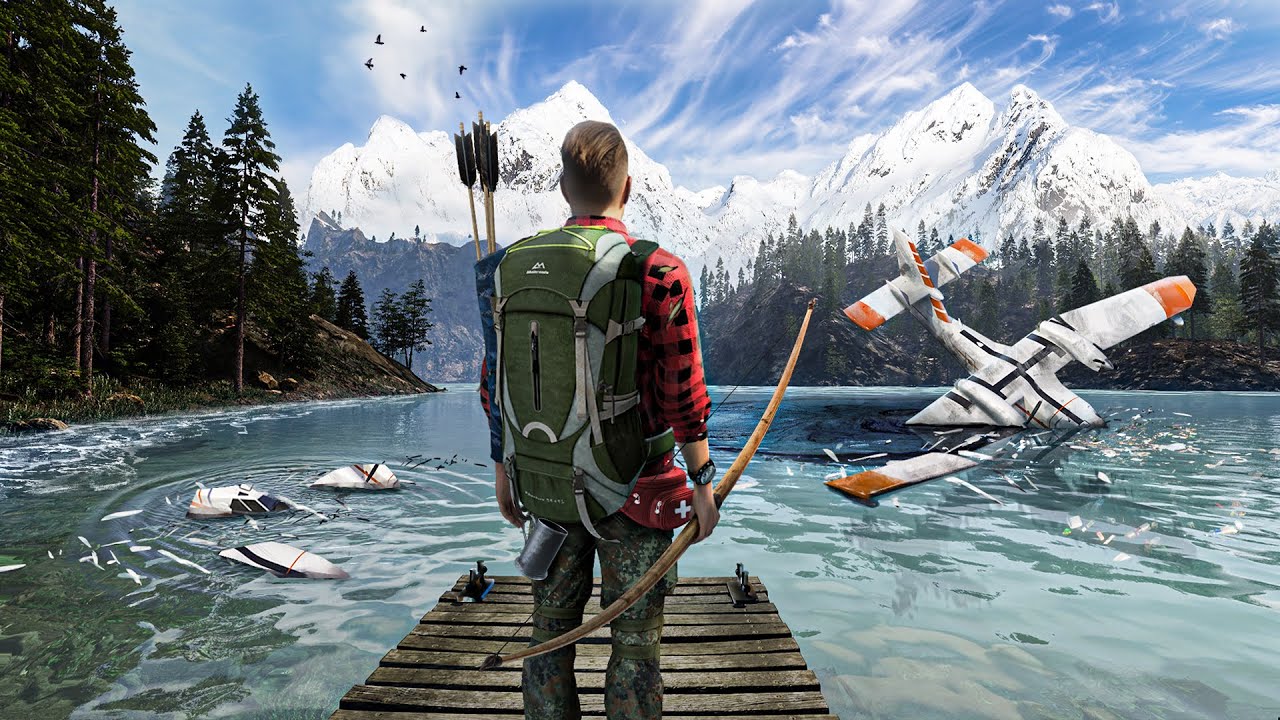
At its core, The Gold River Project presents itself as a wilderness retreat gone wrong—only to slowly reveal something far more deliberate behind the scenes. In its current state, however, the experience feels closer to a prototype than a fully realized survival sandbox.
A Vacation With an Ominous Twist
The narrative setup follows a familiar survival formula. You begin at a small camping office, free to inspect brochures and decorations before boarding a chartered float plane headed for a remote lake. The premise is simple but straightforward: a week of hiking and kayaking in untouched nature. Sounds like a great idea to relax all by your own, right? Not.
Indeed, that illusion collapses quickly. The pilot departs without confirmation of your safety, and you discover the designated campsite to be completely destroyed. With no supplies and no clear contact point, a plan to survive becomes an immediate priority. It soon becomes apparent that this is not an accident. Security cameras dot the landscape, scattered notes hint at observation and manipulation, and environmental details suggest that the reserve functions as a controlled testing ground rather than a natural wilderness.
In the current build, three factions are already present, each supported by fragments of lore and taking their own part in the backstory. Despite these interesting narrative hooks, meaningful objectives remain limited. Outside of scattered cassette tapes and written messages, your progression revolves largely around basic survival loops rather than structured missions or evolving story beats. Sadly.
Crafting Systems Under Strain
From my experience, minimal onboarding can work well in survival titles, encouraging experimentation and discovery, as long as there is mystique and intrigue involved, and that often needs a stronger narrative framework on top of it. Here, however, the guidance borders on insufficient. A short text-based tutorial introduces camp setup, but a deeper meaning, let alone an explanation of why or how, is left largely unexplained.
Crafting revolves around a “Learn” mechanic, which requires destroying an item to permanently unlock its blueprint. While conceptually interesting, this system can create early bottlenecks if key materials are scarce, and, surprise, yes, they are. Thus, progression depends heavily on resource availability, and all these failed experiments together, significantly slow the pace of the experience.
Basic survival tasks feel somewhat inconsistent as well. That’s because systems such as fishing, crafting upgrades, or unlocking advanced workstations lack clarity in their requirements. In several cases, I also noticed that The Gold River Project‘s mechanics appear incomplete. And by that I mean, not in the sense of just “work in progress” due to being Early Access. No, just plain non-functional. Even fundamental actions, such as reliably advancing time through sleep, lack intuitive implementation. You have no clue if it’s there, and if so, how it works.
The user interface compounds these issues. For example, all interaction prompts appear in low-contrast black boxes with dark gray text, making readability difficult. And during inventory management, extra confirmation steps during drag-and-drop interactions hinder you unnecessarily. These frictions simply obstruct the gameplay flow further, which is already suffering.
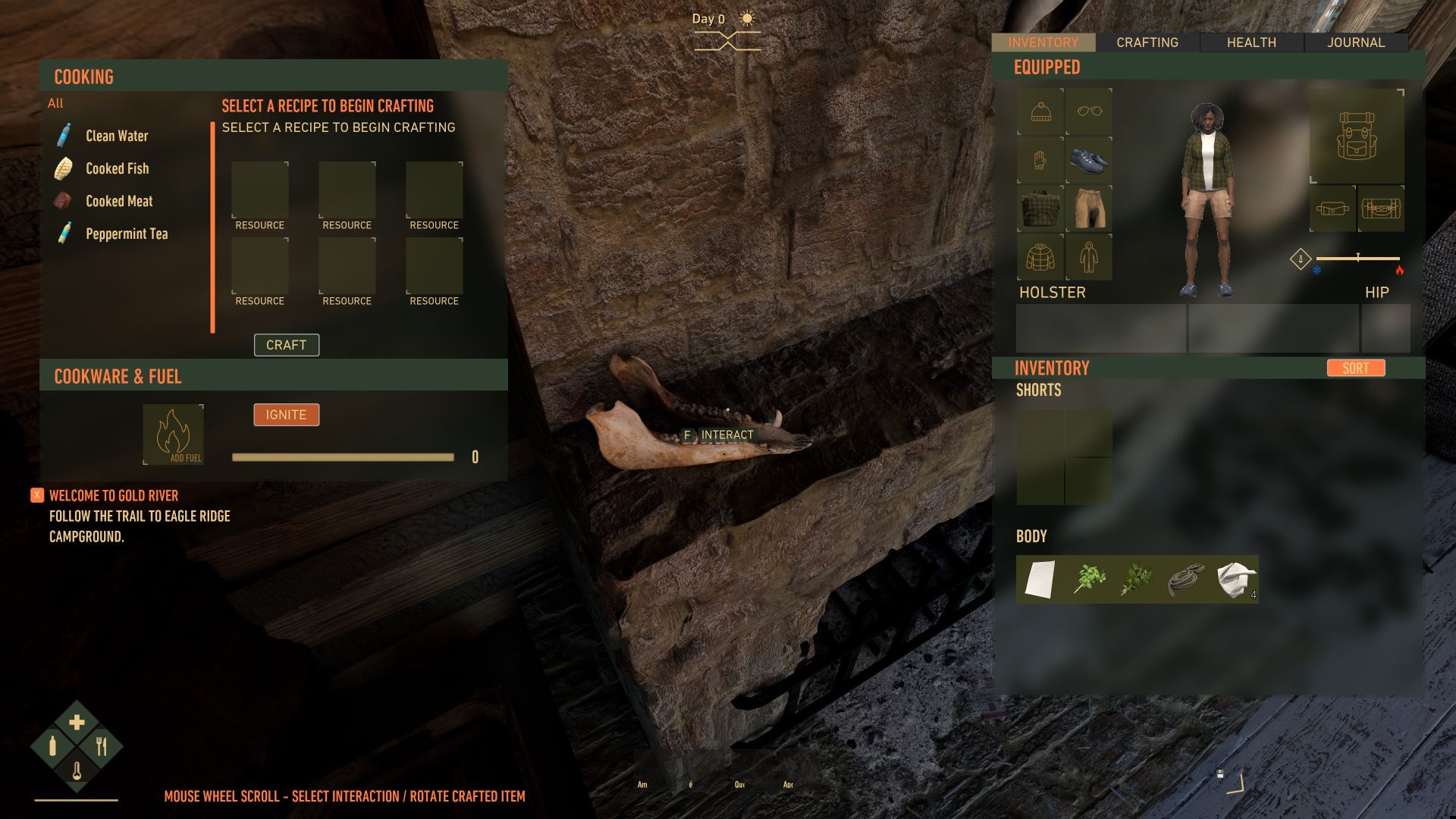
Visual Potential, Technical Limitations
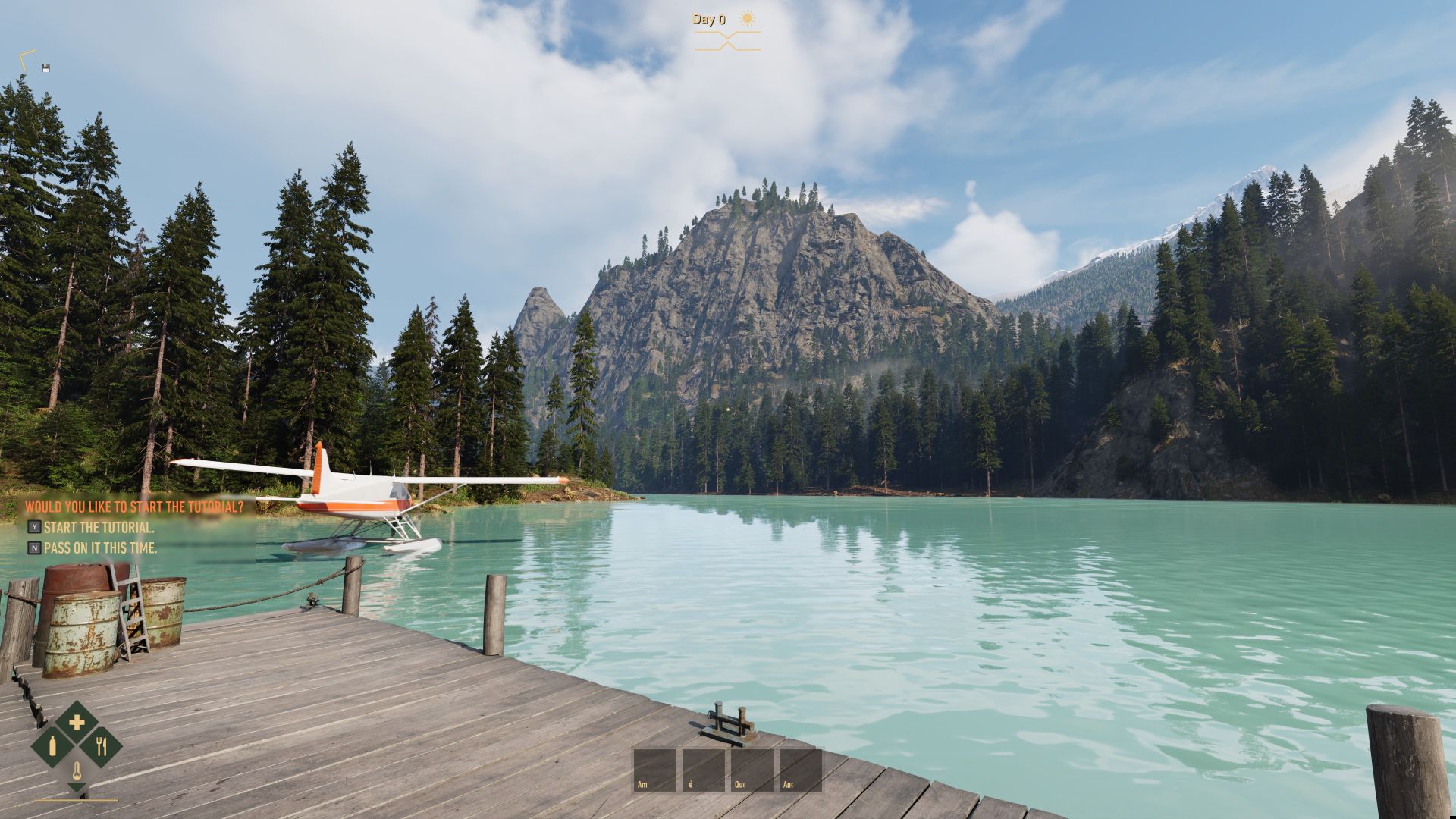
Visually, the Pacific Northwest setting shows potential, though. The dense forests, lakes, and mountainous backdrops altogether create mesmerizing vistas, establishing a strong aesthetic foundation. However, the technical execution currently undermines that immersion. Immediately, the game encourages the use of NVIDIA DLSS to mitigate performance instability issues. Pop-in rendering, fluctuating framerates, and brief freezes during object placement: you name it, they are all present frequently.
At the same time, the environmental details which could enrich this simulation also feel sparse. Wildlife presence is minimal, and much of the map appears static. While certain sci-fi elements—such as surveillance equipment and force-field barriers—add the much needed intrigue, the world often lacks the dynamic activity expected from a large-scale wilderness setting.
Additionally, a significant portion of collectible items currently serves no functional purpose, but rather serves as placeholder content to keep you busy and wondering what purpose these could be used for. I also noticed several visual glitches and unexplained character behavior, which further highlight the early-access state of the build. These issues do not completely break the experience, but just confirm firmly again that there’s a long road ahead before this project arrives where it should be to offer an enjoyable experience.
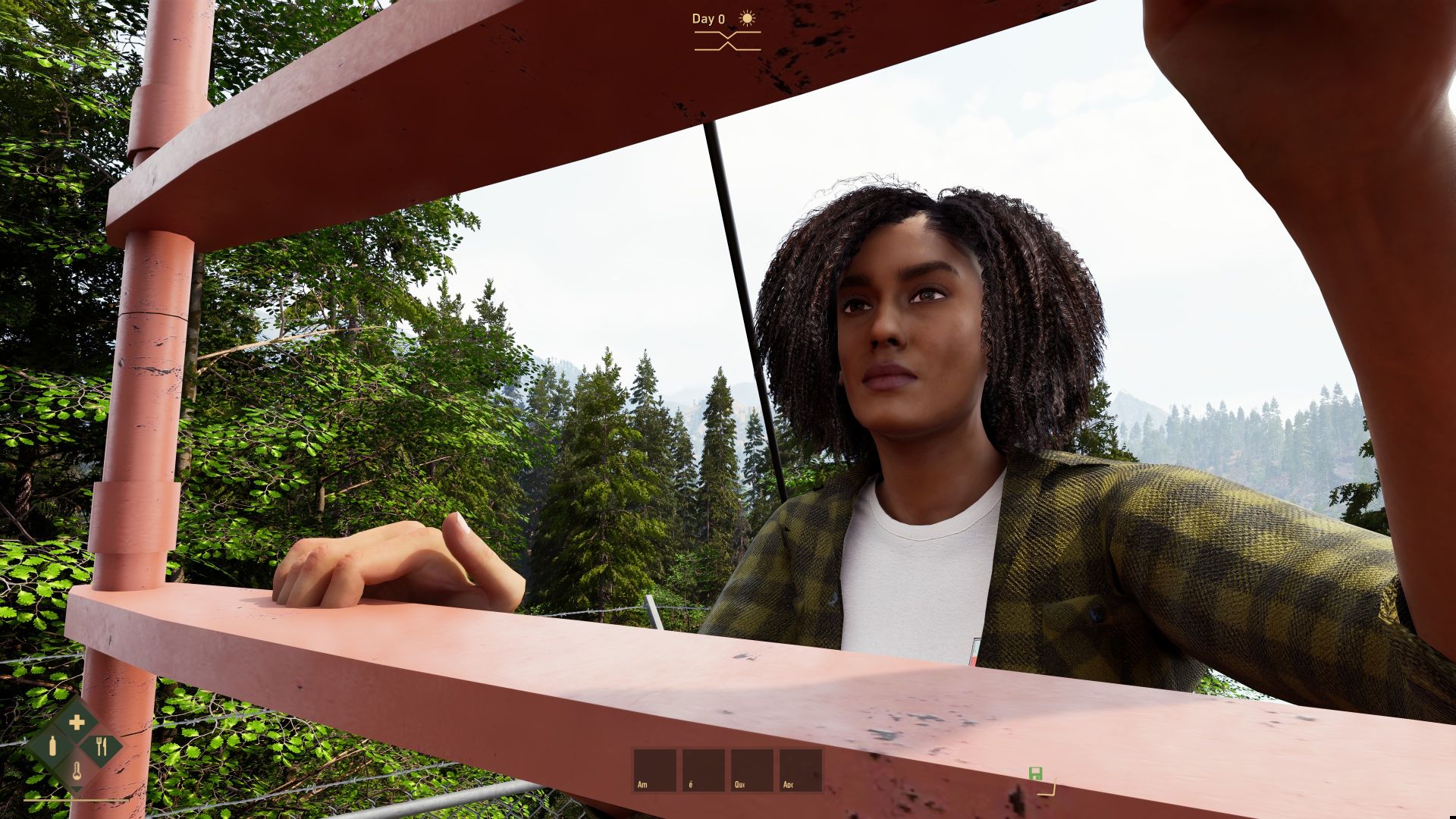
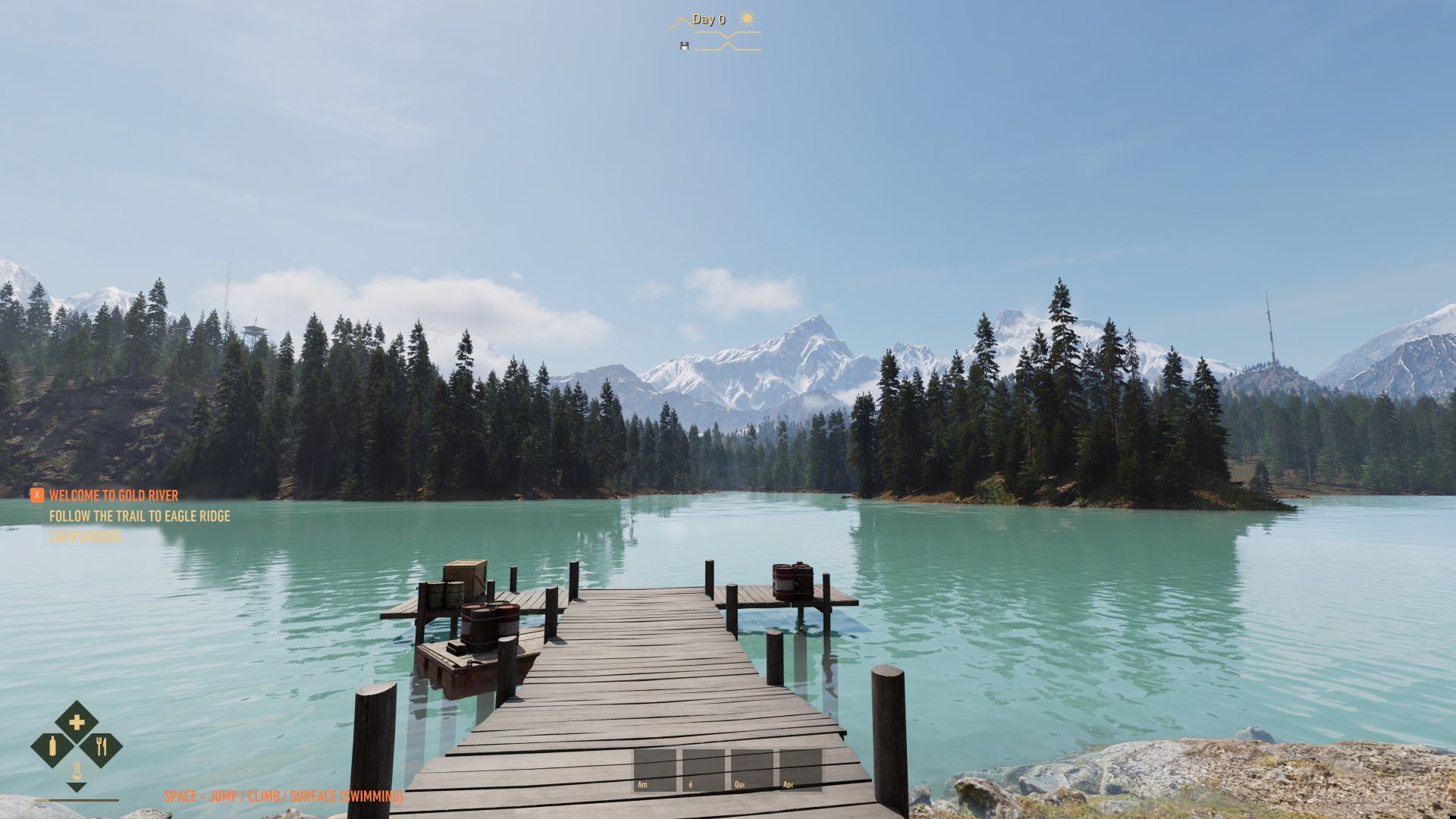
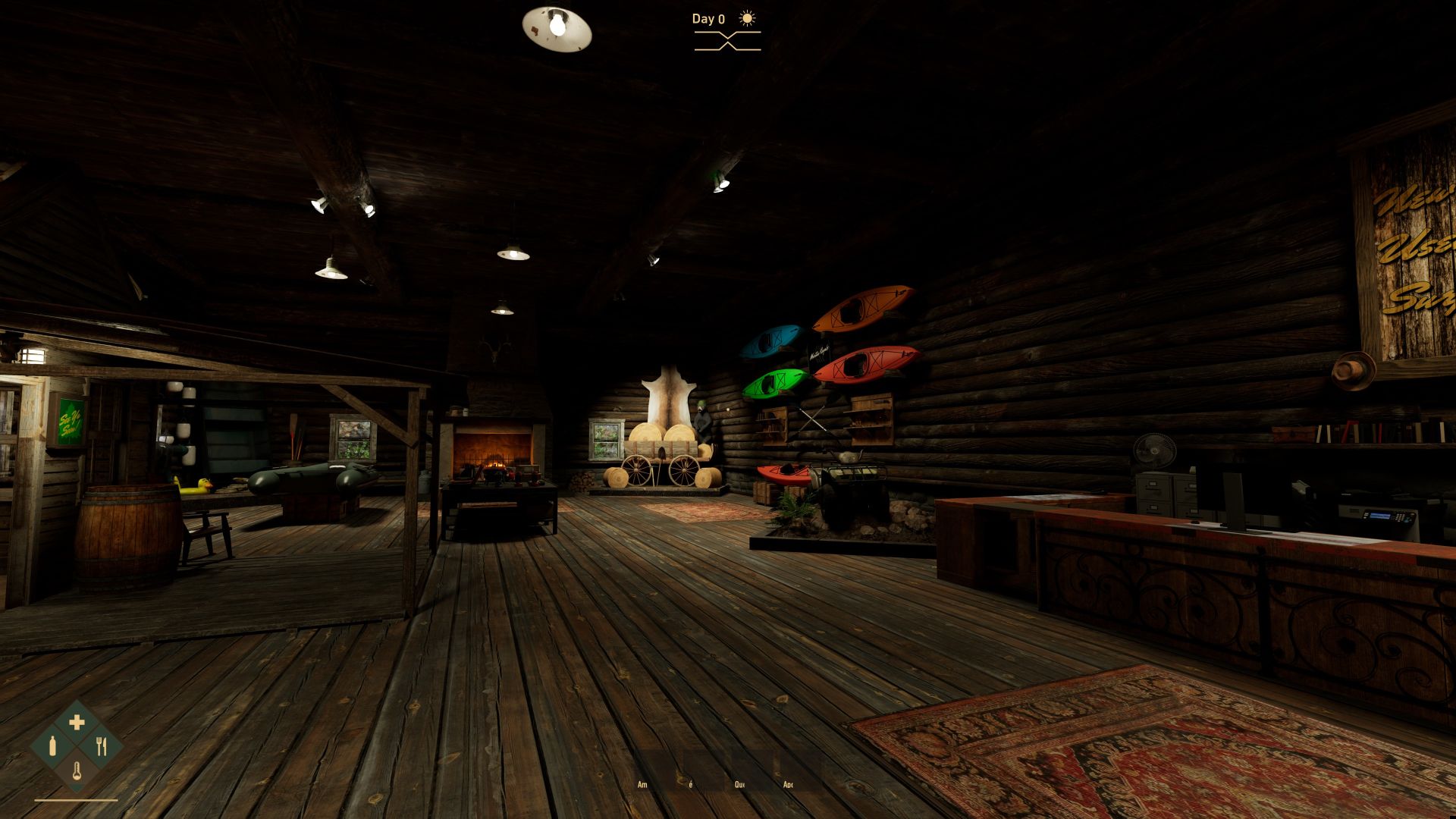
Preliminary Thoughts
Fairview Games has been transparent about the project’s early development stage, and that honesty is reflected in the current build. The Gold River Project‘s core concept—being monitored inside an artificial nature reserve—has clear potential. The faction system introduces moral decision-making possibilities, and I do believe the surveillance theme offers a strong narrative backbone for future expansion.
At present, however, most of its survival mechanics lack refinement, many crafting systems require balancing and clarity, and technical optimization is a must. True, the foundation is visible, but substantial iteration will be necessary before the project reaches the level of cohesion expected from a polished survival title.
Additional Information
Release Date: Jan 23, 2026 (Early Access)
Previewed On: PC. Download code provided by the publisher and PR agency.
Developer: Fairview Games Inc
Publisher: Fairview Games Inc, Sightline Games
Relevant links: Available on STEAM