DaRmaZat
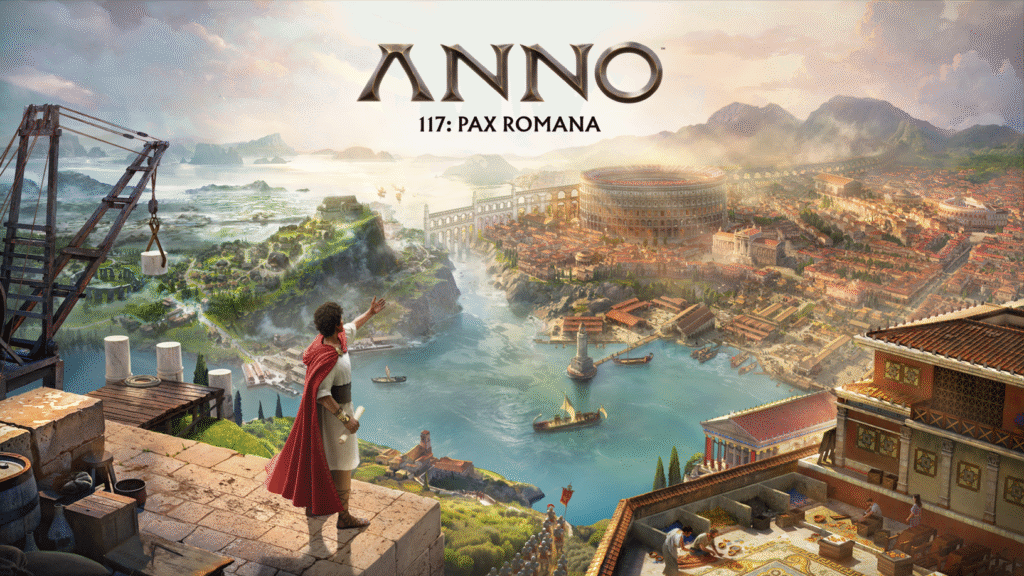
 The Roman Pax Romana — a fragile peace that sustained an empire of roads, trade, and restless ambition. For Anno 117: Pax Romana, Ubisoft Mainz turns that idea into a design philosophy, exploring how stability, expansion, and everyday life intertwined across ancient Italy’s heartlands. Anno 117 arrives as both a new chapter and a return to the roots of the long-running builder series: mechanical yet accessible, rudimentary yet elegant.
A New Era, Familiar Foundations
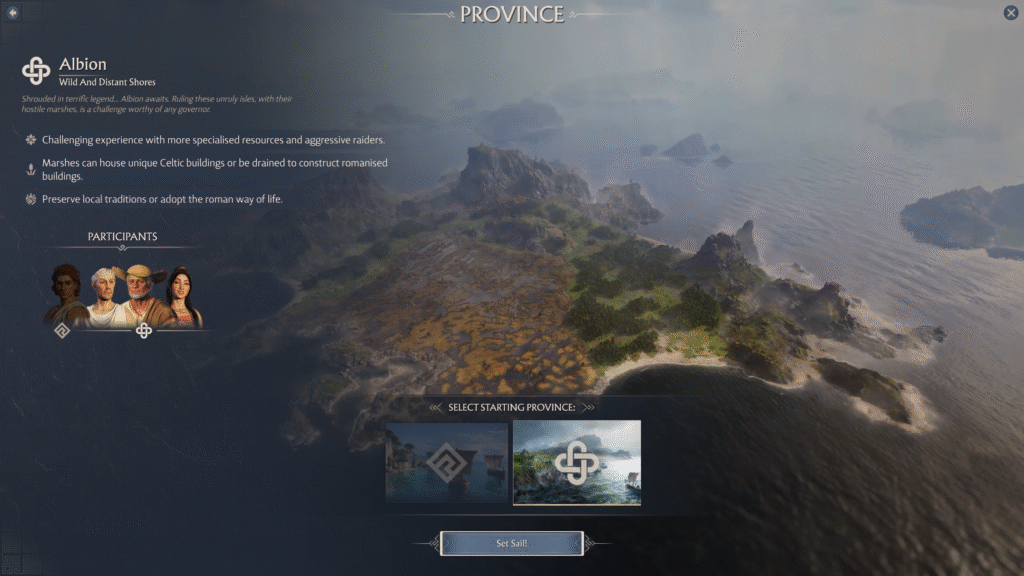
In Anno 117: Pax Romana, you step into the sandals of a provincial governor — either Marcus Naukratius or Marcia Tertia — tasked with expanding Rome’s influence across two distinct regions: the sun-drenched plains of Latium, and the damp, misty Albion, where Celtic defiance and Roman order collide. With only two main modes — Campaign and Endless — and a focus on refinement over reinvention, Pax Romana mainly aims to perfect many of its familiar rituals.
Beyond that foundation, the Year 1 Pass will expand the empire’s borders with new lands and challenges. The first chapter, Provinces of Ash, will take you to Anno’s largest island yet — a volcanic landscape overseen by a new deity and its devoted followers. Later, The Hippodrome will let you construct the grandest monument in series history, complete with roaring chariot races that boost prestige and morale. The cycle will conclude with Dawn of the Delta, shifting the action to a sun-scorched region inspired by ancient Egypt, introducing fresh cultures, resources, and beliefs that further enrich the Roman world.
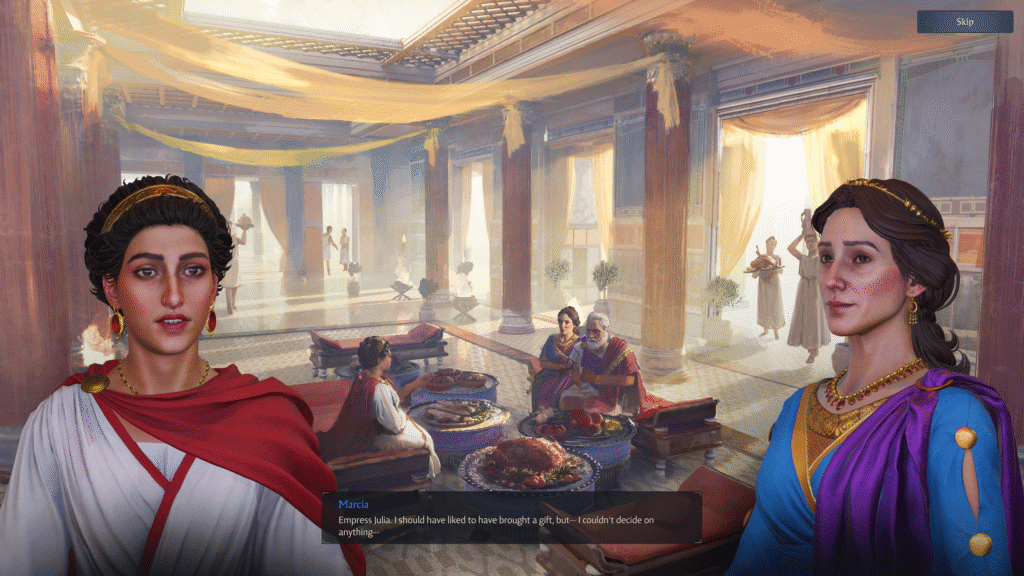
For now, the campaign offers a rather light narrative framing through dialogue and moral decisions — just enough to make you care about both governors, their advisors and rivals, and even Emperor Lucius’ increasingly suspicious requests. Yet it never overwhelms you with exposition, as the game’s real storytelling happens through its systems, its cities, and the choices you make between diplomacy and domination.
Typical Build, Expand, and Govern
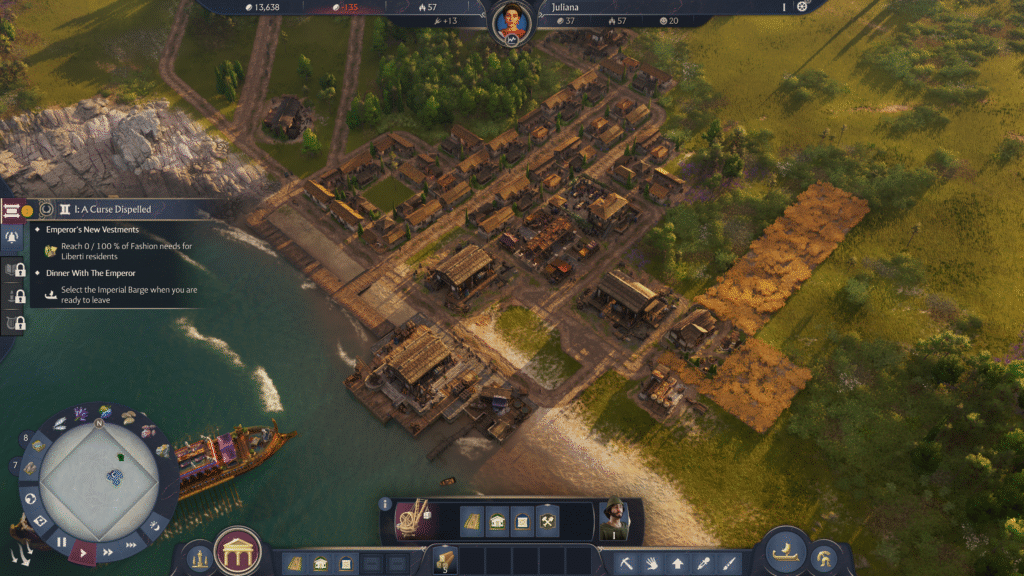
Moment to moment, Anno 117 plays much like its predecessors, including in the genre. You begin humbly — a default trading post, a woodcutter’s hut, a warehouse, a few shacks for your Liberti, and some dirt roads to connect everything with each other. As prosperity rises, Plebeians start moving in, demanding more bread, better fashion, and public baths in return for their loyalty. How dare they — wasn’t that kind of decadence what brought Rome to its knees? If not, sorry — history was never my strongest subject in high school.
What follows is a finely tuned loop of supply-chain mastery, urban planning, and diplomatic maneuvering. You’ll balance happiness, health, and workforce ratios while optimizing area effects — lavender fields that boost morale, or garum factories whose stench destroys it. Indeed, every construction choice has consequences, just as every dialogue choice might.
Soon, it becomes clear that Ubisoft Mainz is leaning into accessibility with this edition. This is an Anno game that wants you to thrive, not drown in data. For newcomers, it’s remarkably friendly; for veterans, perhaps a touch too safe. The economy rarely spirals out of control, and the game’s generous quest log keeps objectives visible at all times. Clear menus, logical resource flows, and intuitive controls make even the densest logistics systems digestible. For me, the relocate and copy tools are a real revelation — letting entire districts be moved or duplicated seamlessly. The shared warehouse inventory further expands design freedom, so production chains no longer have to cluster unrealistically close together.
War, Worship, and Politics
When peace fails — and it will — Anno 117 introduces its land and naval warfare systems. Troop formations remain simple, yet functional: legionaries, cavalry, and scorpione siege units all return, with easy-to-learn, tactical skirmishes that echo Total War at its most relaxed. Don’t expect deep battle management, but the sense of scale is undeniably satisfying, especially when defending your city walls or launching a naval siege under torchlight.
Religion, meanwhile, plays a subtler role. Each province can dedicate itself to a deity, granting buffs that ripple through production or morale. Faith becomes another quiet resource to balance alongside money and knowledge. Diplomacy also feels somewhat streamlined, echoing Anno 1800’s light interactions. You’ll trade, ally, or antagonize neighboring governors, and your choices have visible political and cultural impact — particularly in Albion, where the tension between Roman invaders and Celtic locals drives some of the game’s strongest story beats.
About Bread, Marble, and Mosaics
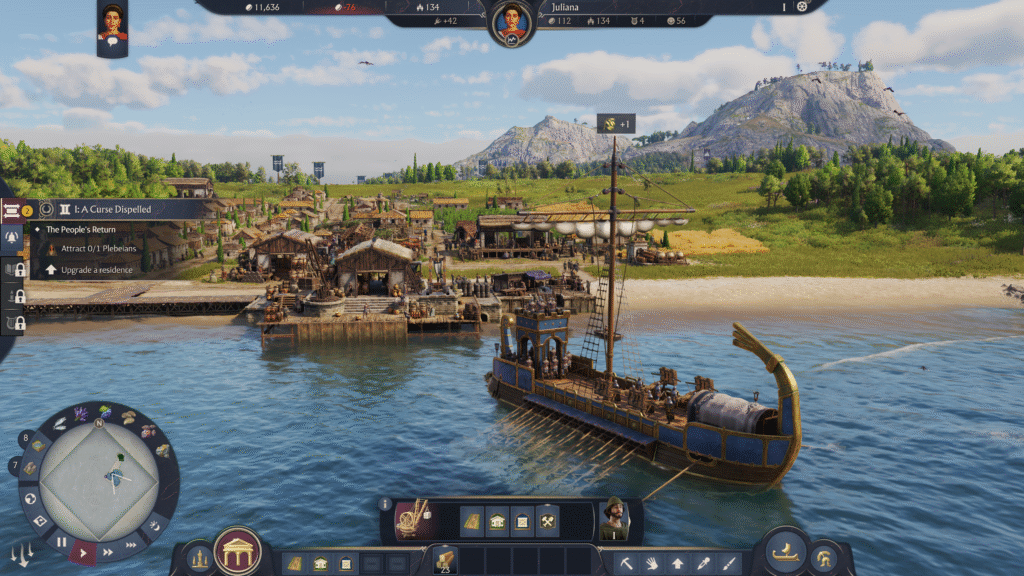
On the graphical side, I must admit that Anno 117: Pax Romana offers a wealth of breathtaking vistas. Zoom in, and artisans can be seen weaving fabric, hauling grain, or stirring soap in lavender-scented workshops. Pull back, and the city and its historical surroundings unfold as a rich mosaic: bustling markets, echoes of fallen amphitheaters, crumbled bathhouses, and flickering torchlight reflecting on tiled courtyards. As a former Latin student, I thoroughly enjoyed returning to Latium, its maps glowing under a golden sunset, terracotta roofs and marble villas dotting the landscape. Albion, by contrast, swaps sunlight for mist and moss; its boggy terrain and thatched huts evoke a land stubbornly resisting civilization.
While the UI feels somewhat sterile — all flat blues and greys, with little Roman flourish — the environmental detail and atmospheric lighting more than make up for it. Meanwhile, the epic orchestral score swells between serene classical melodies and dramatic crescendos. However, while the voice acting is solid, stiff facial animations and imperfect lip-sync slightly undercut the drama.
Nevertheless, for a game of this scale, Pax Romana runs remarkably well. Minor bugs and occasional visual clipping aside, stability remains solid even as cities grow sprawling and dense. Camera control can be finicky over longer distances, with occasional auto-snapping that disrupts precise placement — though manually clicking on the minimap largely mitigates this. Another plus is that online cooperative play can be resumed via a cloud save containing the shared progression, a logical feature I still miss in Age of Empires IV — sorry, Xbox; I’ll keep repeating this until V finally arrives.
Final Thoughts
Anno 117: Pax Romana is both a celebration and a consolidation of what makes the Anno series great. Between its layered city-building, intricate economy, serene pacing, and cinematic presentation, Anno 117: Pax Romana captures — admittedly in a rather safe manner — the majesty of ancient Rome, not through spectacle, but through subtle immersion, clarity, and accessibility.
Additional Information
Release Date: Nov 13, 2025
Reviewed On: PC. Download code provided by the publisher and PR agency.
Developer: Ubisoft Mainz
Publisher: Ubisoft
Relevant links: Anno 117: Pax Romana on Ubisoft Store