DaRmaZat
 In an era where truly old-school, single-player first-person shooters feel increasingly rare, Luna Abyss has stood out as one of the few upcoming releases genre fans have been watching with genuine curiosity. Kwalee’s sci-fi FPS drew attention not only through its eerie world-building and cryptic lore, but also through pre-release glimpses that suggested potentially intensely rewarding bullet hell combat.


Intentional Abstraction
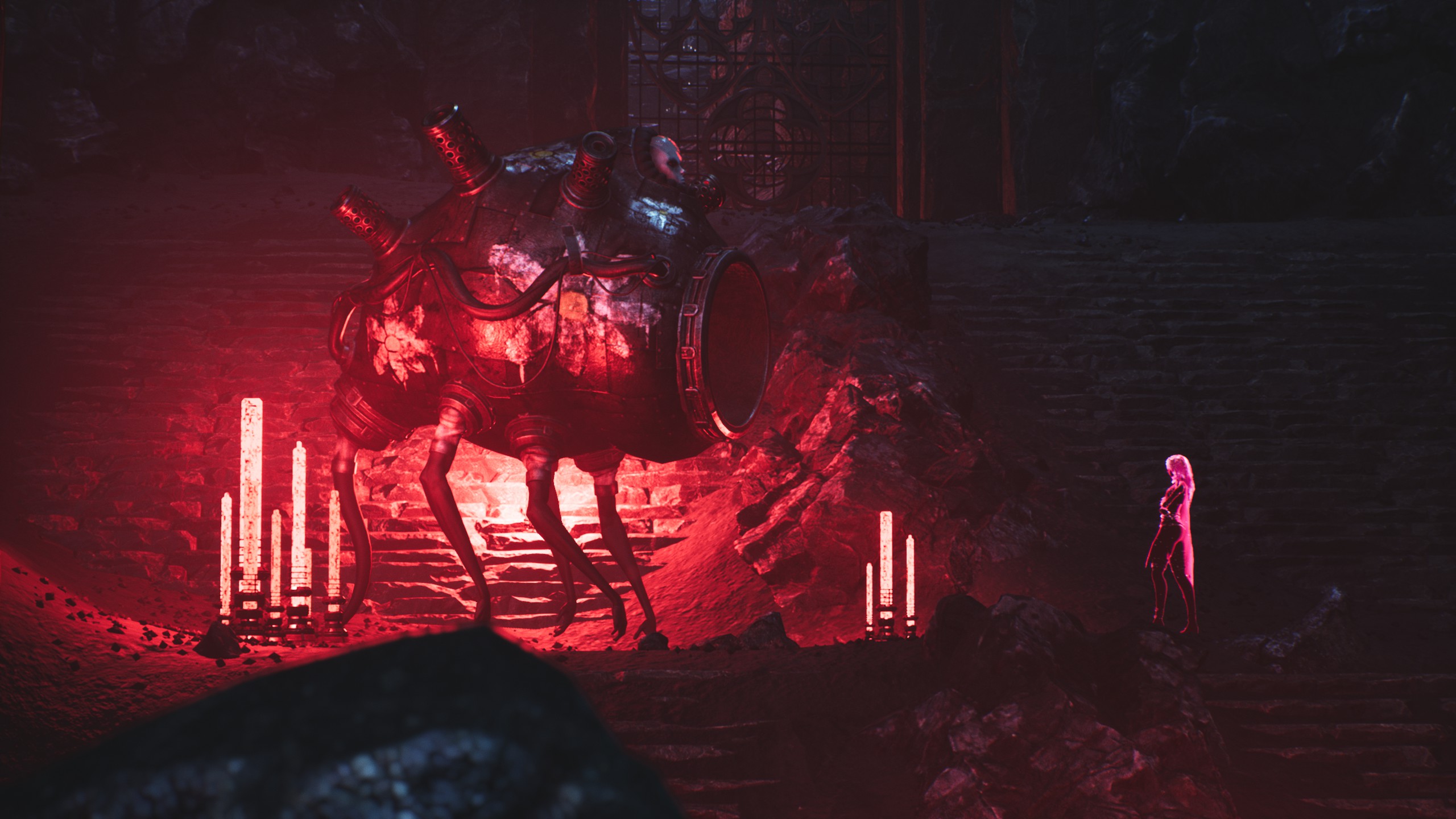
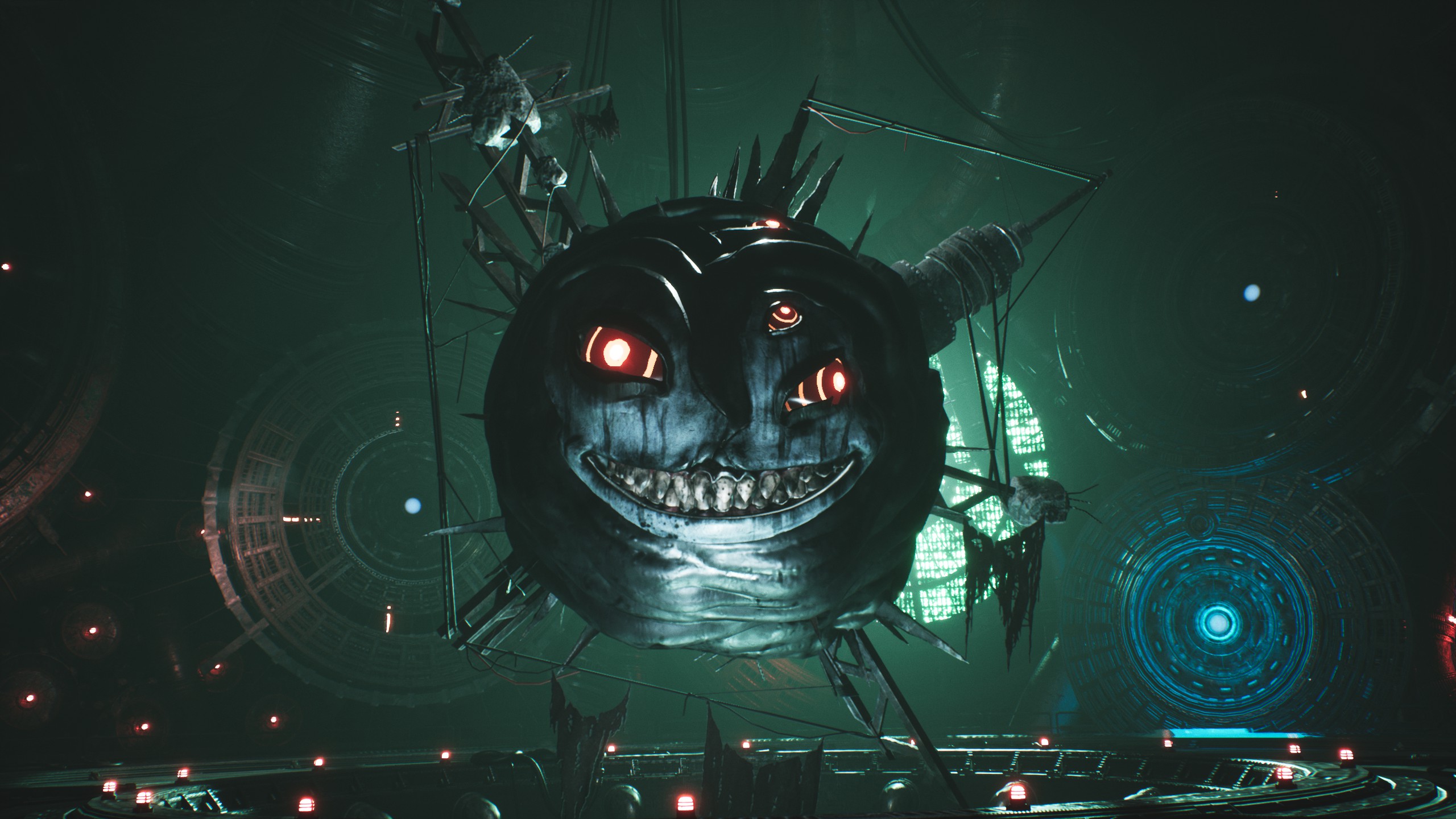
In Luna Abyss, you play as Fawkes, a prisoner serving out a sentence within the Abyss, a decaying megastructure buried beneath a mimic moon. Almost immediately, you are greeted by Aylin, an ominous, giant floating head attached to a serpent-like body, who serves as your ever-present overseer and narrator, guiding you deeper into this hostile realm. In exchange for a chance to reduce your sentence, you are assigned the role of scout to locate the source of a distress signal – a premise that quickly serves as an excuse for a typical all-out campaign against powerful enemies guarding mysterious seals.
Gradually, Luna Abyss unveils layers of fragmented lore, touching on the catastrophic Scourge event, the shadowy organization known as F.A.T.E., and the enigmatic All-Father. While the mythology is certainly intriguing and deeply rooted in the atmospheric world itself, parts of the narrative can feel deliberately abstract to the point of incoherence.
The writing itself is particularly peculiar, most noticeably during the many strangely comedic or awkward conversations Fawkes has with the Abyss’s bizarre, almost-mythical inhabitants. On the one hand, these moments often undermine the game’s otherwise oppressive tone and atmosphere. On the other hand, this is not overly damaging because the broader structure remains fairly linear. Most interactions do not significantly alter how the story unfolds, but whether Luna Abyss has multiple endings is up to you to discover.
Rapid Thinking Through Color and Form
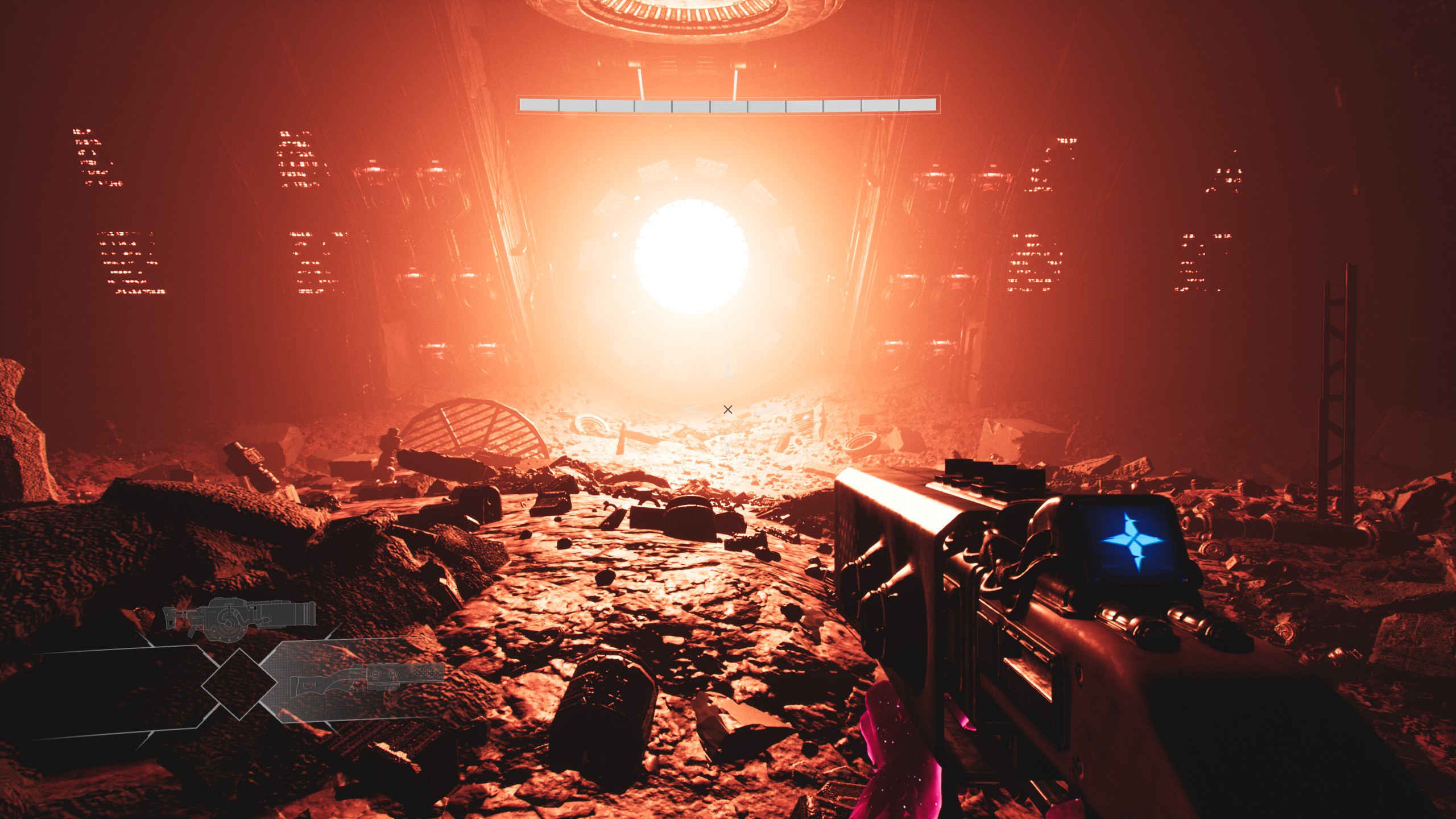
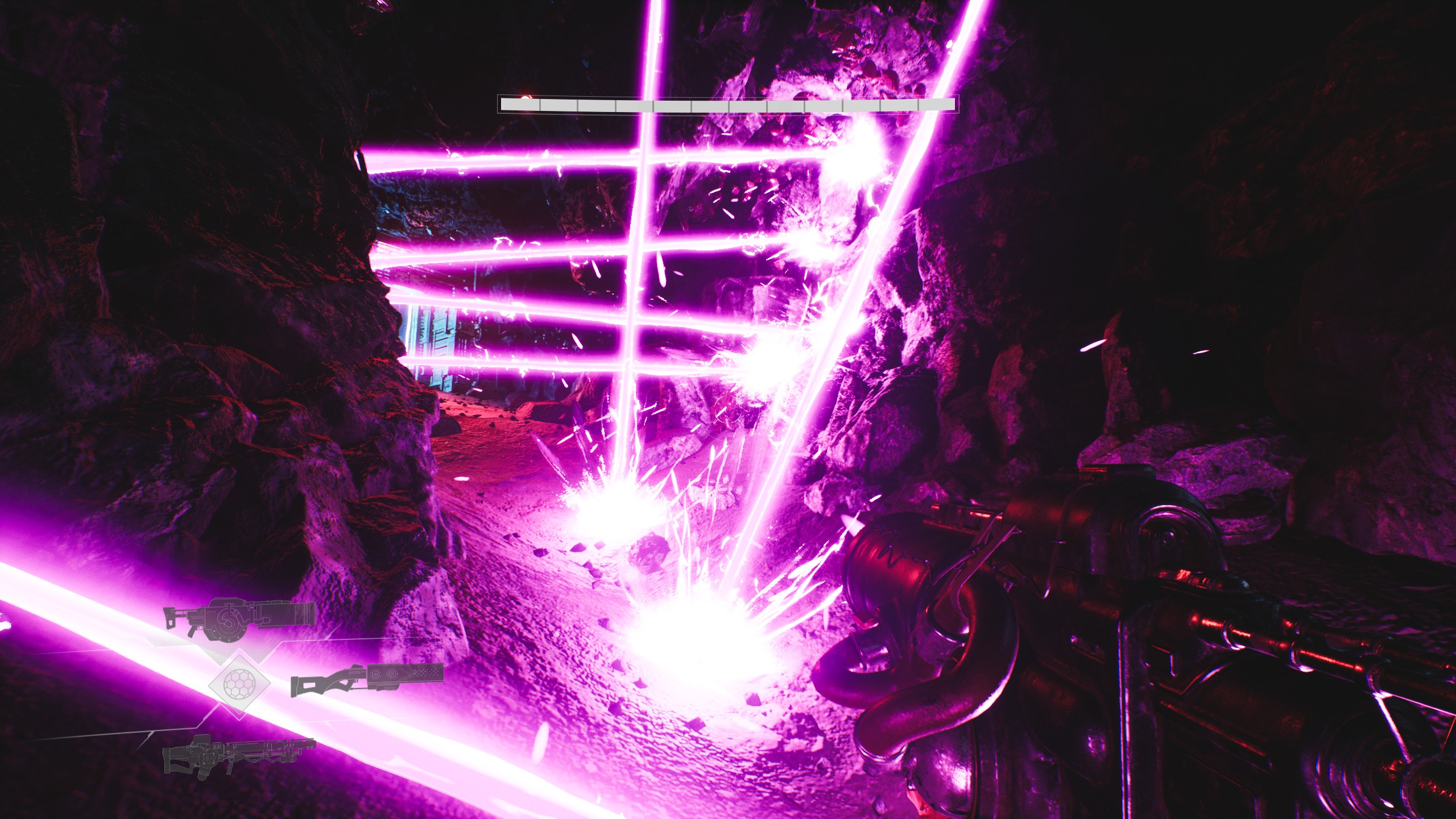
If pre-release footage had you expecting the relentless fluidity of Doom Eternal, it is worth adjusting those expectations immediately. Luna Abyss is a very different kind of beast. There is no melee combat whatsoever, and that absence becomes particularly noticeable because managing weapon overheating boils down to switching firearms, whether or not the alternative feels useful in the moment. Enemy encounters are heavily dictated by deflecting unpredictable projectile patterns and breaking different types of enemy shields, forcing you to constantly rotate weapons within your loadout.
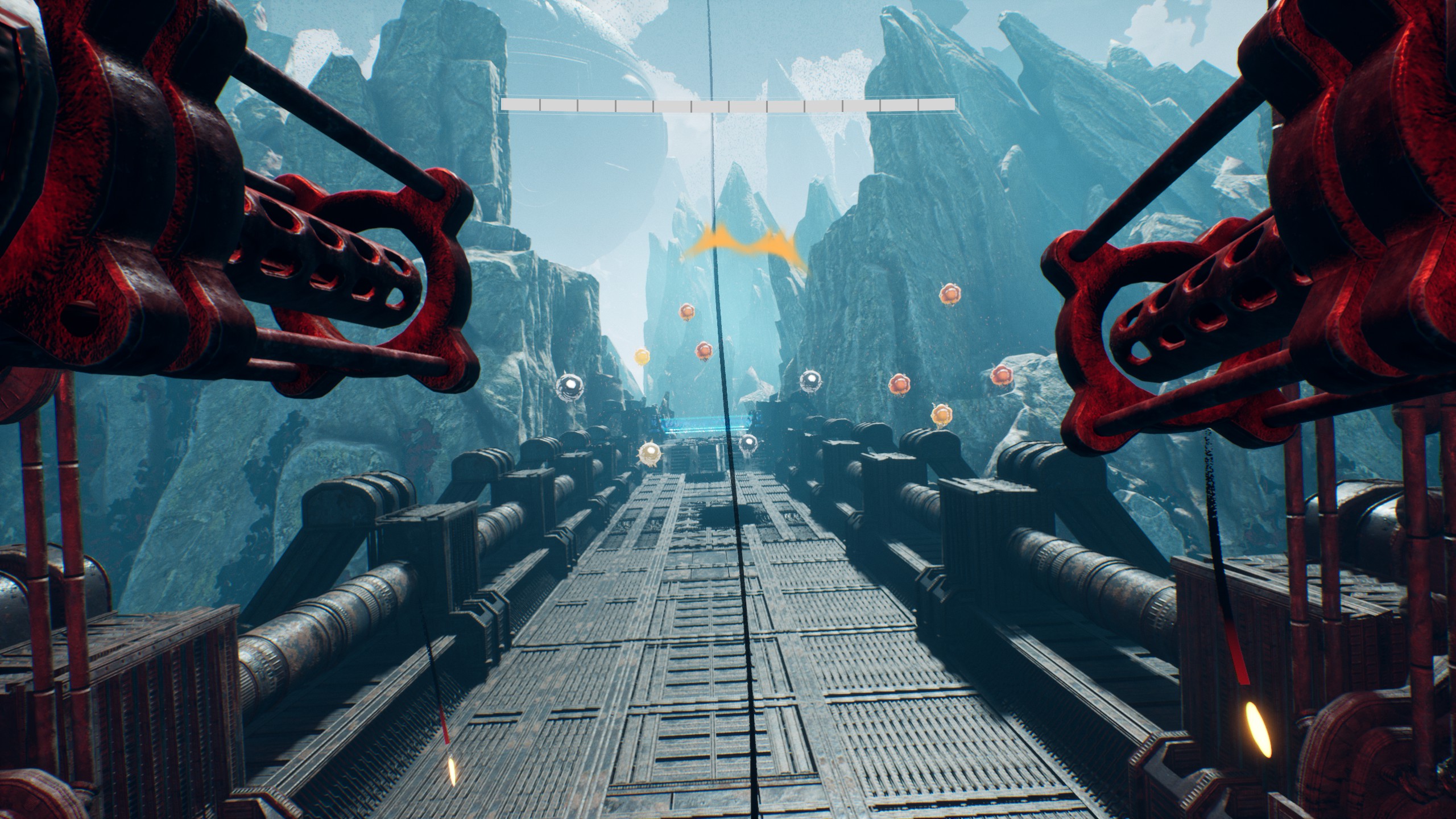
Outside of a handful of mech sequences where you pilot heavy artillery-equipped machines, the arsenal itself remains fairly limited, with only a small selection of weapons and very few upgrades. Combined with a relatively narrow enemy pool, and despite the later addition of a finisher move, repetition sets in rather quickly. Because combat also rarely provides meaningful rewards or progression incentives, one of my main issues with Luna Abyss is that so much of its combat eventually feels optional. Many encounters can simply be bypassed by sprinting past enemies while weaving through incoming projectiles.
Thankfully, the boss fights, in contrast, stand apart. Often introduced with impressive theatricality, they pull you into vast arenas underscored by haunting chants. Demanding sharper reflexes, heightened situational awareness, and a willingness to experiment, they stand out as the game’s most engaging encounters. That said, even they can eventually devolve into drawn-out endurance battles, with many bosses functioning as little more than bullet sponges.

Breaking a Mesmerizing Prison
Where Luna Abyss steadily becomes more compelling is through its expanding movement toolkit. Beyond weapon-based mechanics used to manipulate switches or destroy barriers to open new pathways, Fawkes gradually unlocks a wide range of traversal abilities that significantly improve the experience. Even while drawing on familiar tropes, the Posses-based teleportation, double jumps, evasive dashes, ice-platform creation, and the Tether Hand grappling hook all make movement and navigation progressively more dynamic. This is also where the first-person platforming can become genuinely demanding, requiring you to carefully read the environments, time momentum precisely, and adapt quickly mid-sequence. Some traversal sections are especially punishing, particularly because once certain movements are committed to, correcting momentum can be difficult. Still, these sequences are often more rewarding than the combat itself.
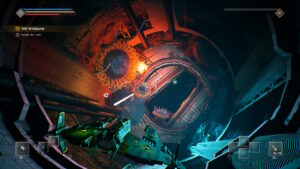
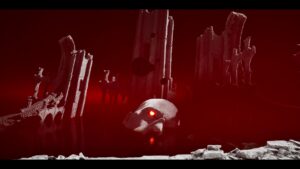
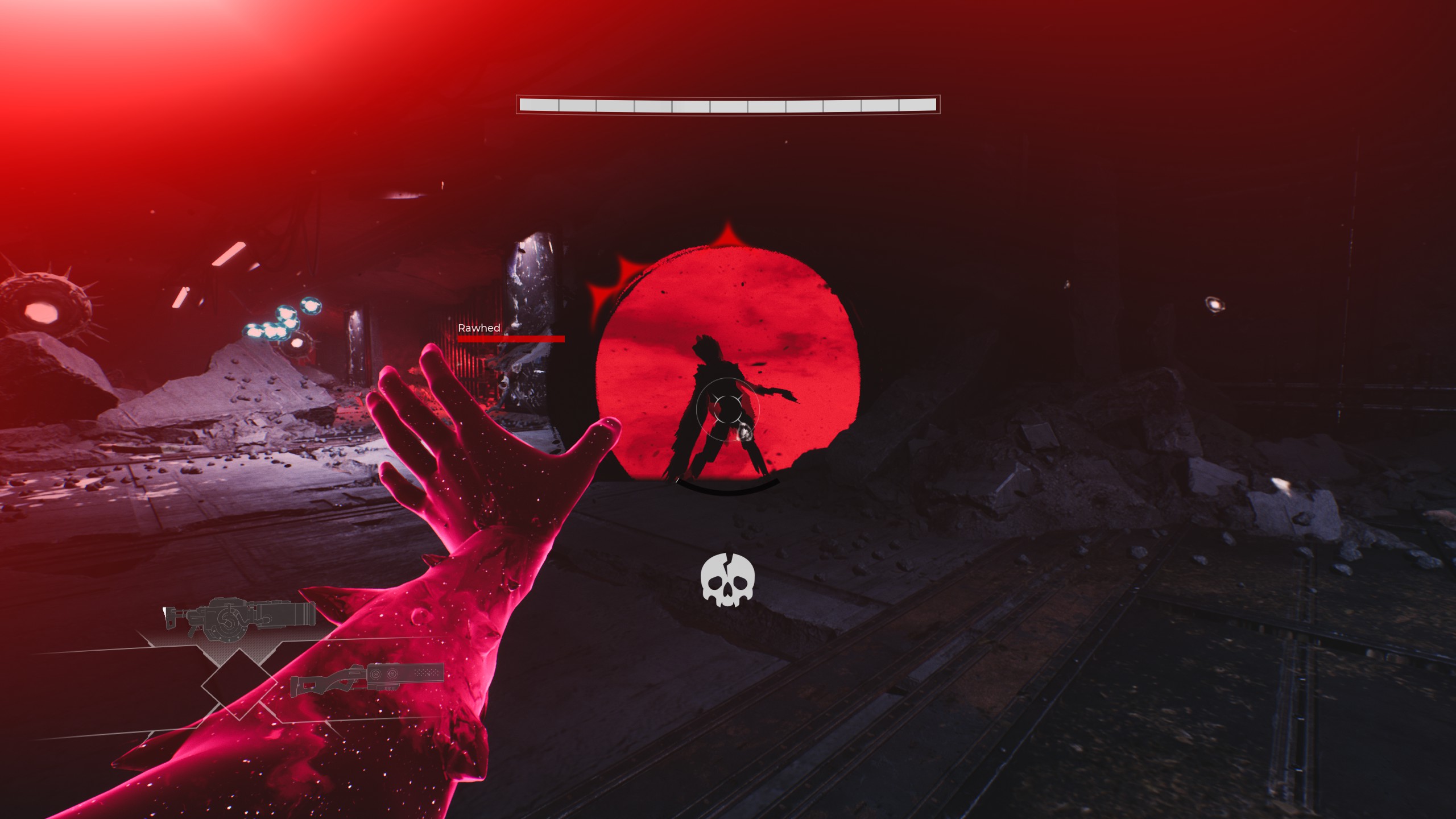
Tonally, Luna Abyss is at its strongest when it fully embraces surreal environmental storytelling. This is very much a world designed to be felt as much as played. Its world-building is one of its greatest strengths, combining brutalist alien architecture, endless blackened tunnels, stark red-and-black dreamscapes, occasional monochromatic sequences, and psychedelic visions that are imposed on you, into a uniquely oppressive identity. While the early hours can feel visually monotonous due to the prolonged descent through dark corridors and portal-heavy progression, the eventual emergence into more open exterior spaces provides a much-needed sense of contrast beyond simple color palette changes.
Blending brooding synth compositions with eerie Gregorian chants, Luna Abyss’s soundscape elevates this pitch-black descent considerably. Even with occasional technical issues such as looping audio bugs, the score remains one of the game’s strongest assets and fits its strange world remarkably well.

Final Thoughts
With its uneven dialogue, heavy reliance on repetitive combat encounters, and occasional overuse of familiar traversal sequences and environmental puzzles, Luna Abyss does not fully capitalize on the depth of its obscure lore. Yet the sheer strangeness of its surreal world, combined with its oppressive atmosphere and distinct audiovisual identity, helps offset many of its shortcomings. It may not consistently excel, but as an atmospheric descent into a deeply unsettling world, Luna Abyss remains a fascinating experience that is difficult to dismiss.
Additional Information
Release Date: May 21, 2026
Reviewed On: PC. Download code provided by the publisher and PR agency via Tasta.
Developer: Kwalee Labs
Publisher: Kwalee
Relevant links: Available on PC via Steam.