DaRmaZat
 Released today, Mirage 7 arrives as a new third-person action-adventure that attempts a risky but intriguing stylistic pivot. Set against a backdrop of sun-drenched sands, the game weaves a dark fairytale that blends traditional fantasy with sudden, sharp injections of sci-fi. Curious? So was I.
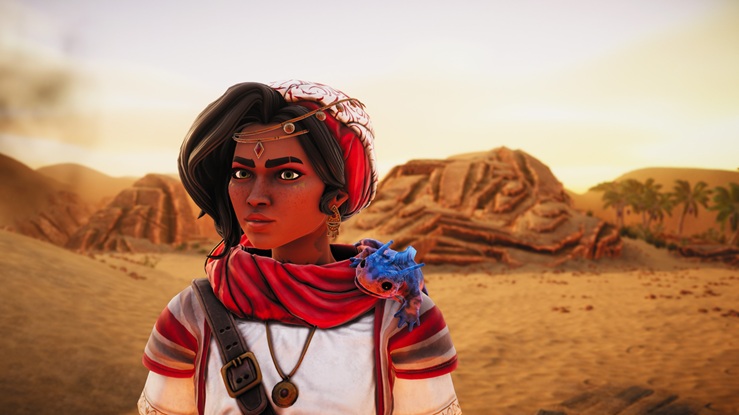
A Mysterious Awakening in the Desert
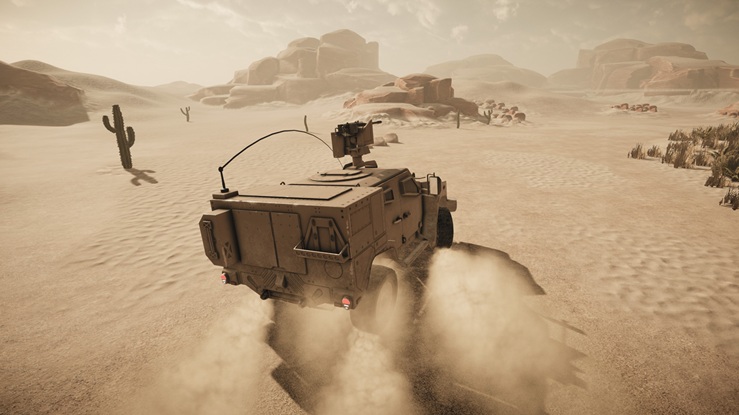
Mirage 7’s story begins rather vaguely but remains consistently mysterious in the Desert of Jahenazir. Near a secret military base called “Desert Storm”, a jeep races through the sands to shoot down a hostile spy drone. The resulting explosion causes an EMP-like power surge in the surrounding area. At that same moment, you regain consciousness alongside your loyal lizard, Jiji. You are Nadira, and you are searching for your little sister Rasha, who was apparently kidnapped by soldiers. Not much later, you are attacked by a so-called Sanddigger. Immediately after defeating this first monster, it becomes clear the creature was enchanted. This confirms that a significant amount of magic is involved as well, raising even more questions.
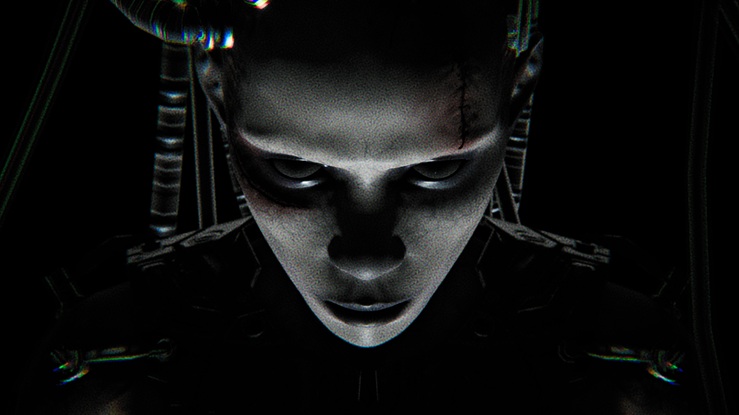
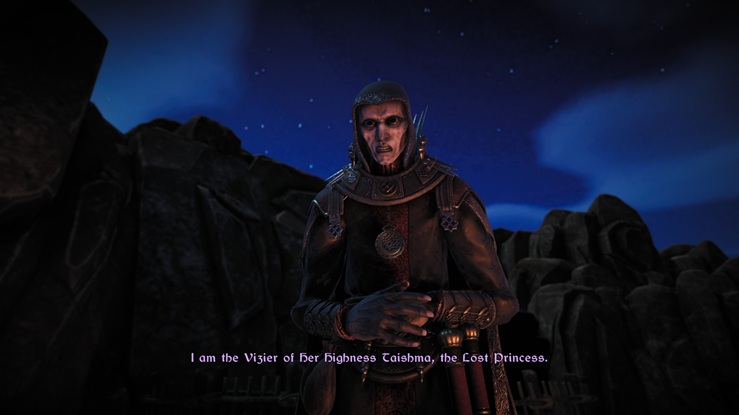
Narratively, Mirage 7 certainly tries something unique. Through various encounters, the game lifts the veil on a magical lore involving Her Highness Taishma, whom Nadira believes can grant her wish to see her sister again. However, a strange figure known as the Vizier quickly makes it clear that she must first locate a special lute. Occasionally, the game throws in rather creepy face-zoom shots that definitely generate intrigue, as the moments in between can feel quite leisurely. Truth be told, there are several muddled twists in the plot, but then again, this remains a fantasy game.
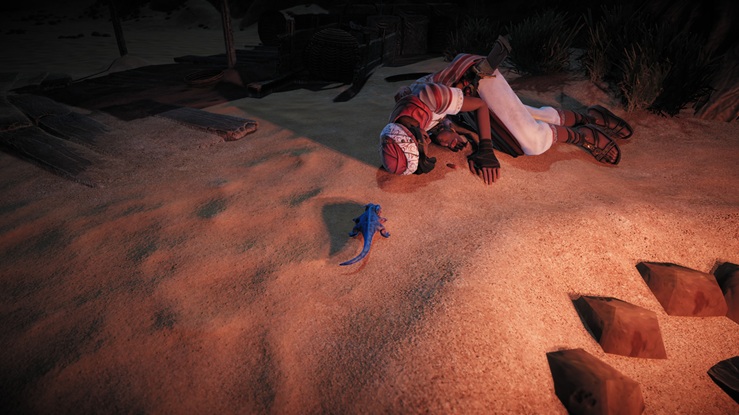
Lizard Eyes for Sandbox Puzzles
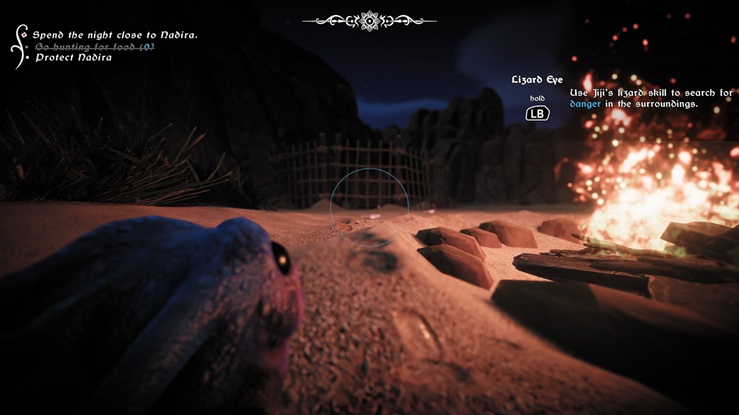
At its core, Mirage 7‘s gameplay revolves around typical puzzle-platforming. You find items—which often need to be moved or rotated—and journals by exploring and using Jiji’s special scan function. This “lizard eye” acts as a vision mode that handily highlights all relevant objects in the immediate environment, which certainly helps during puzzles that often consist of tracking down a combination of items. The vocal hint system and the visual ray of light indicating where you need to go also work reasonably well. Additionally, the UI in the top-left corner neatly shows how many items you need and crosses off what you have already completed for the objective.
Nevertheless, the gameplay revolves around simple puzzle-craft tasks with very familiar mechanics that are not challenging at all—especially when playing in Story Mode. Admittedly, the experience can become somewhat boring after a while, partly because the play area and its options are rather limited. For instance, you must find waterleafs and oases to fill your canteen, as the desert is naturally scorching and you would die instantly without water. However, the game simply doesn’t allow you to venture further into the open desert, keeping each stage functioning literally as a sandbox, where you find yourself going back and forth within a confined space, searching for a specific item until you finally track it down and can move on.
Clunky Combat amidst Shifting Perspectives
To break the monotony, Mirage 7 tries to inject some “swing” into the experience by experimenting with different perspectives and gameplay styles. At some points, you can take control of Jiji himself, even in combat, using his long tongue to eliminate a group of scorpions threatening Nadira before a timer runs out. Speaking of combat: that takes some getting used to.
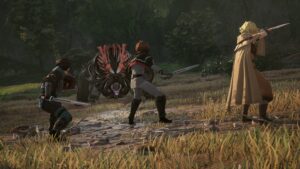
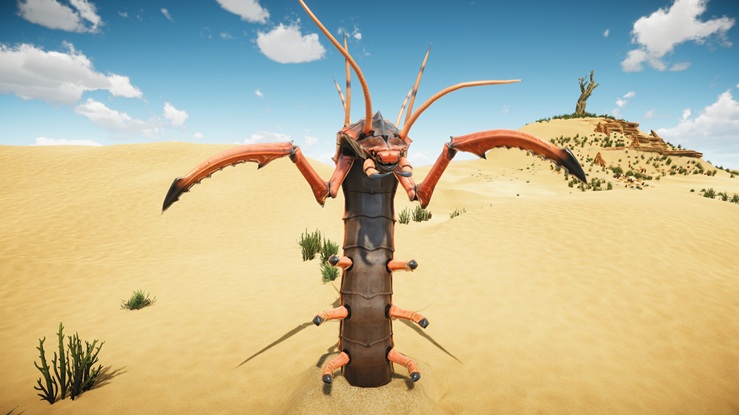
You notice the shift immediately during the first encounter with a hideous Sanddigger—a monster that looks like a giant scorpion with menacing mandibles and obvious aggression issues. There is no enemy locking, so mastery lies in landing very targeted strikes with your dagger, though your slingshot is also quite useful. With only a sprint and a roll at your disposal, the system works, but it looks and feels very clunky. With regular battles against the same types of enemies per stage, featuring the same unpolished animations and recurring cutscenes, the gameplay eventually starts to feel repetitive despite the variety.
No Sand in the Gears
Technically, the game runs stably, and the framerate is very smooth. One somewhat annoying bug is that the game window frequently forgets to stay in fullscreen mode, and sometimes UI elements hang around for a while—this was the case on the title screen, among other places.
The music and voice acting are decent as well—though you shouldn’t expect lip-syncing in a game like this—even if the voices occasionally seem inconsistent in volume.
Final Thoughts
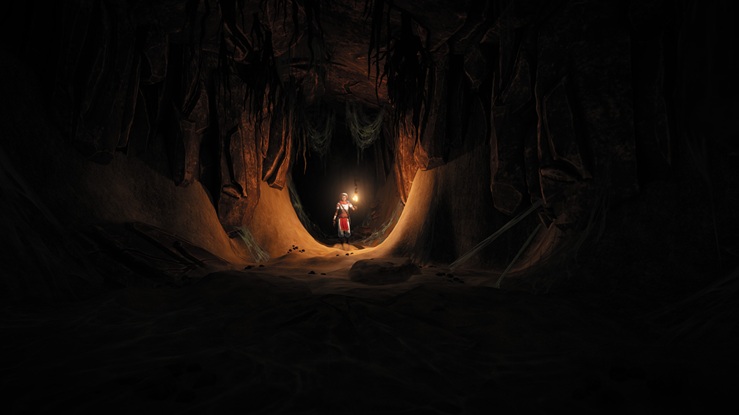
Mirage 7 is primarily a game that performs according to its means. The puzzling, for example, isn’t particularly challenging but is generally doable, thanks in part to the Jiji-vision and the hint system that provides enough guidance. Furthermore, the setting and graphical style, complemented by the detailed Arabic lore, are charming; the sound is decent, the number of bugs is limited, and even the combat is fair despite its clunkiness.
While the gameplay is somewhat repetitive, I found myself playing on because the setting and the backstory involving magic intrigued me. The pacing is occasionally uneven, leading to some “sleepy” moments, which is something you just have to accept if you are truly interested in this title.
Additional Information
Release Date: Mar 6, 2026
Reviewed On: PC. Download code provided by the publisher and PR agency.
Developer: Drakkar Dev
Publisher: Blowfish Studios
Relevant links: Available on STEAM