DaRmaZat
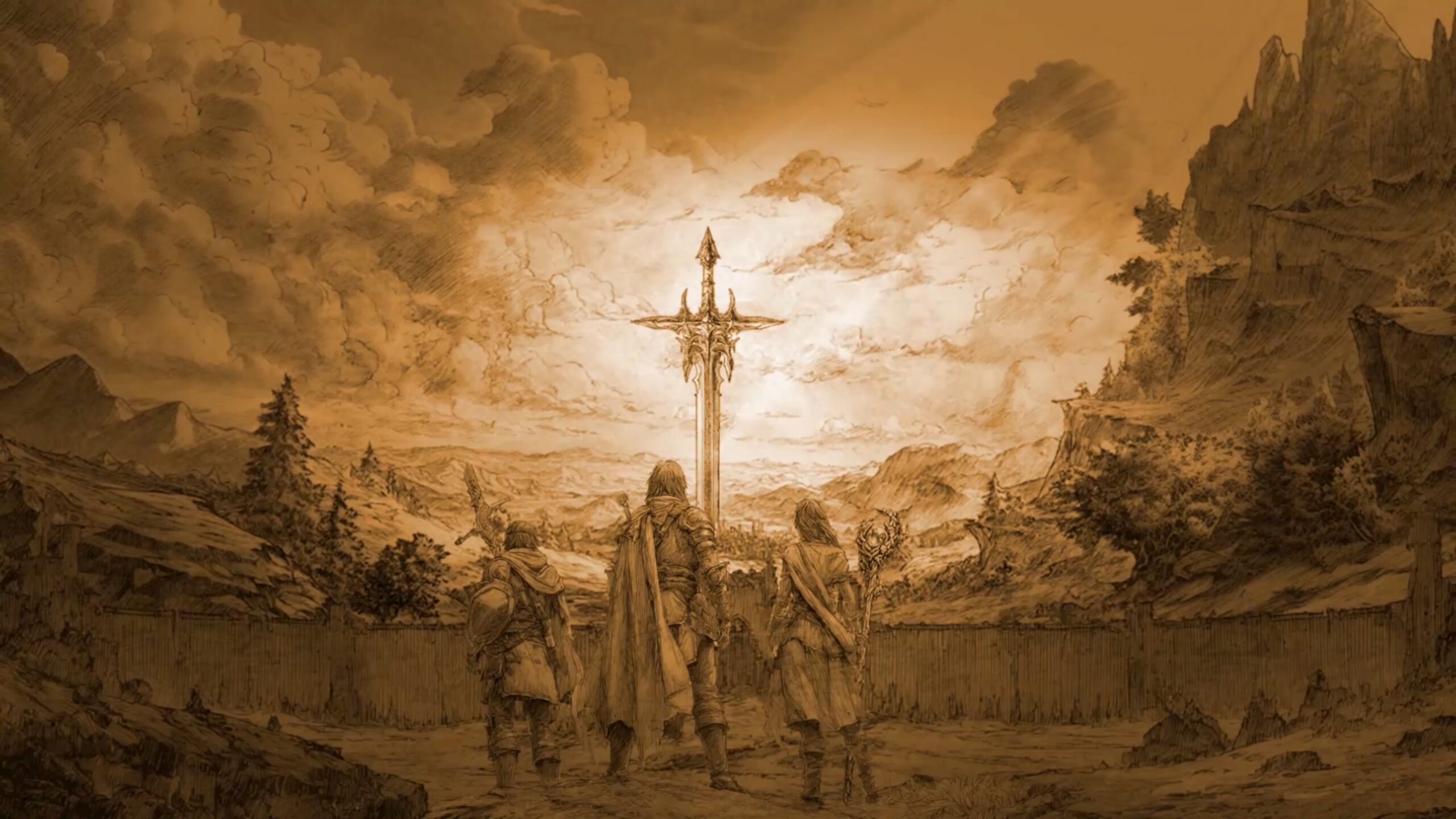
 Steam often serves as a digital hunting ground for hidden gems through its vast library of demos, and The Severed Gods is a prime example of a title that demands your attention. Developed by Topebox, this fantasy roguelite RPG blends tactical depth with a gritty reincarnation loop. You lead a party of three heroes—a swordfighter, an axe-throwing tank, and a dedicated healer—on a perilous journey starting from the camp road. Your goal? To survive a single, grueling run across a branching world map, ultimately reaching a final destination where a formidable boss, the mystic dragon Umbra, awaits.
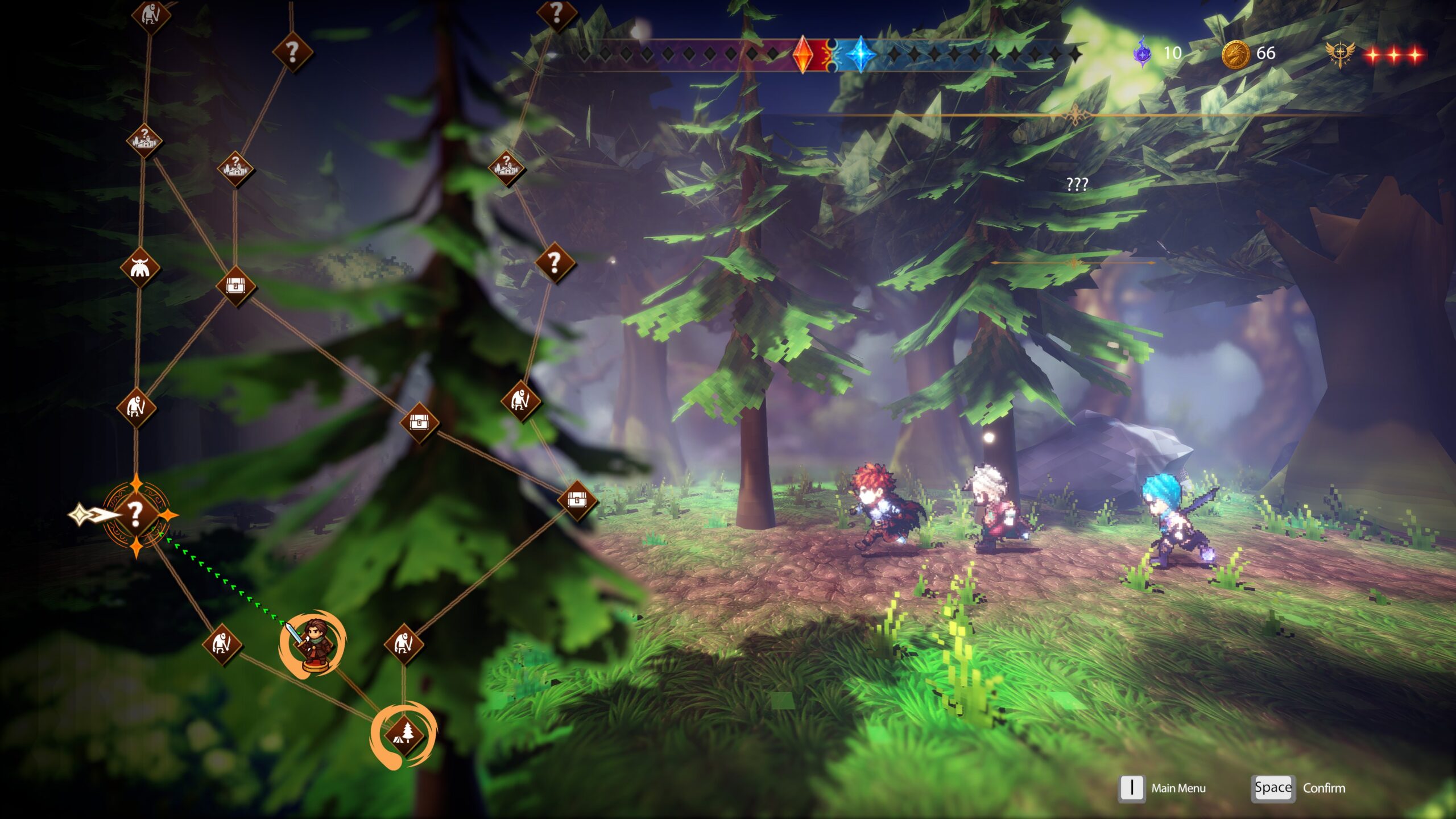
The world map in The Severed Gods is a web of tactical decisions. With every step, you face a critical choice: engage in an enemy encounter, attempt a retreat to find rest and a hearty meal, or hope for a randomized event that favors your luck. All events carry heavy consequences, offering multiple-choice dilemmas between sin and virtue-inspired deeds. This shapes your Karma score, which not only impacts the final outcome but directly dictates both the narrative fate of the villages and your party’s performance in the heat of battle.
A Shop, an Inn, and Potential Heroes
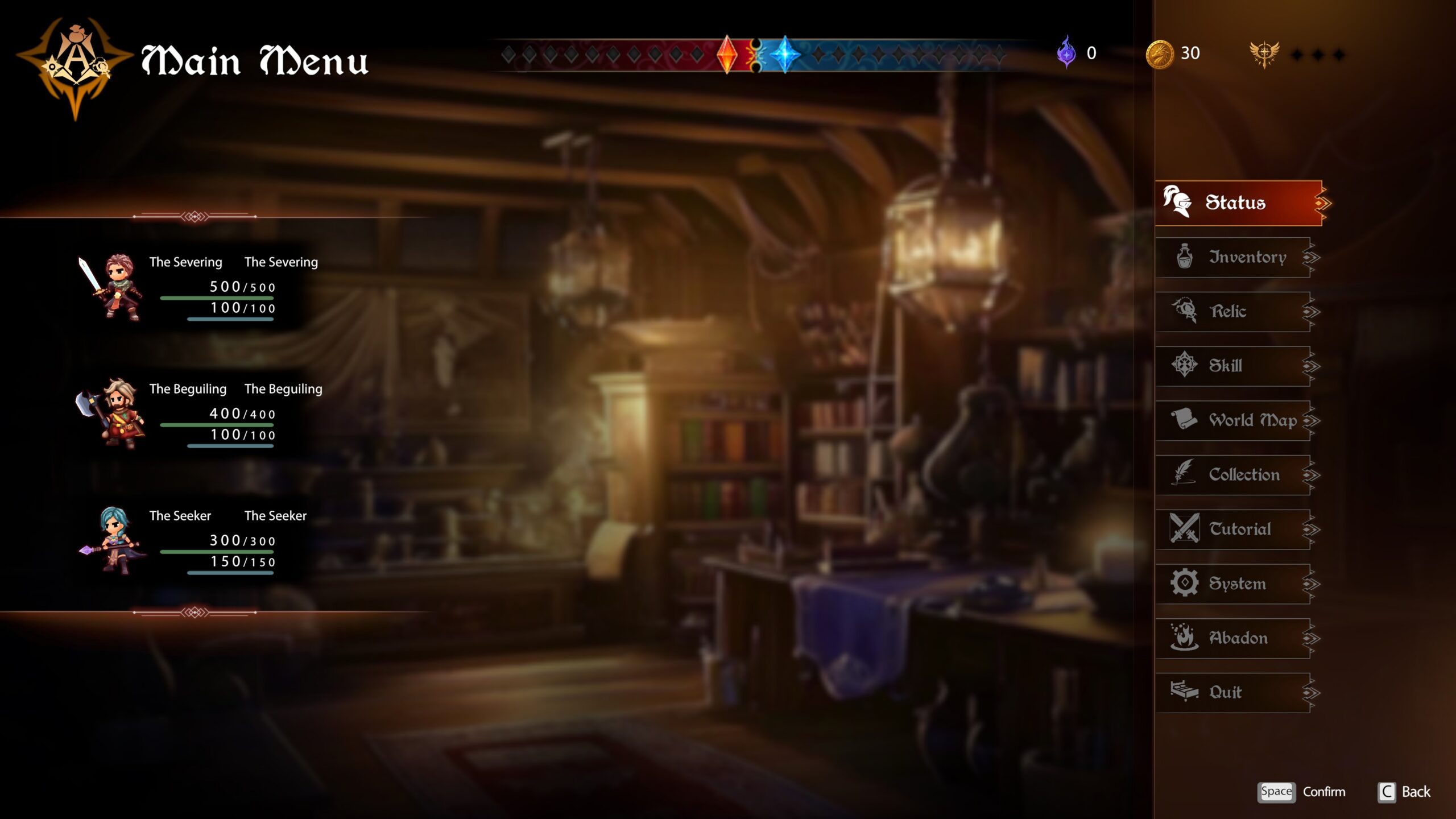
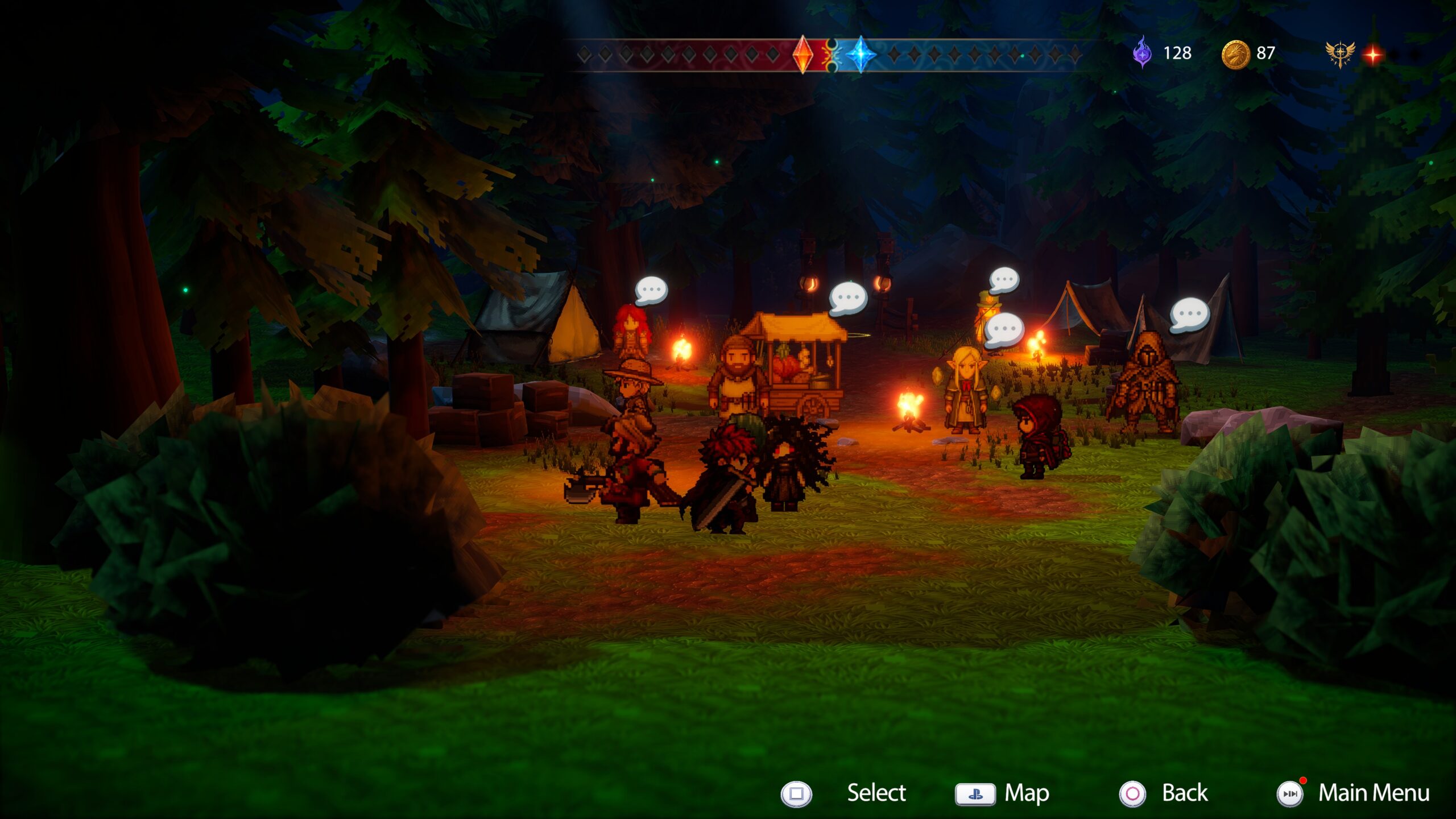
Your journey begins at the base camp, where initially only a handful of NPCs and a lone dog huddle around a campfire. As you progress, this crowd will grow. You can speak with these characters for insights into the story and lore, though it’s a bit of a shame that you often don’t see any faces—neither of your party members nor the NPCs—unless you manually adjust the camera to face your party before launching the conversation. One NPC serves as a shopkeeper, while another offers rest at the inn after a successful retreat from battle, along with restore options, like recovering a single Hero Sigil in exchange for coins.
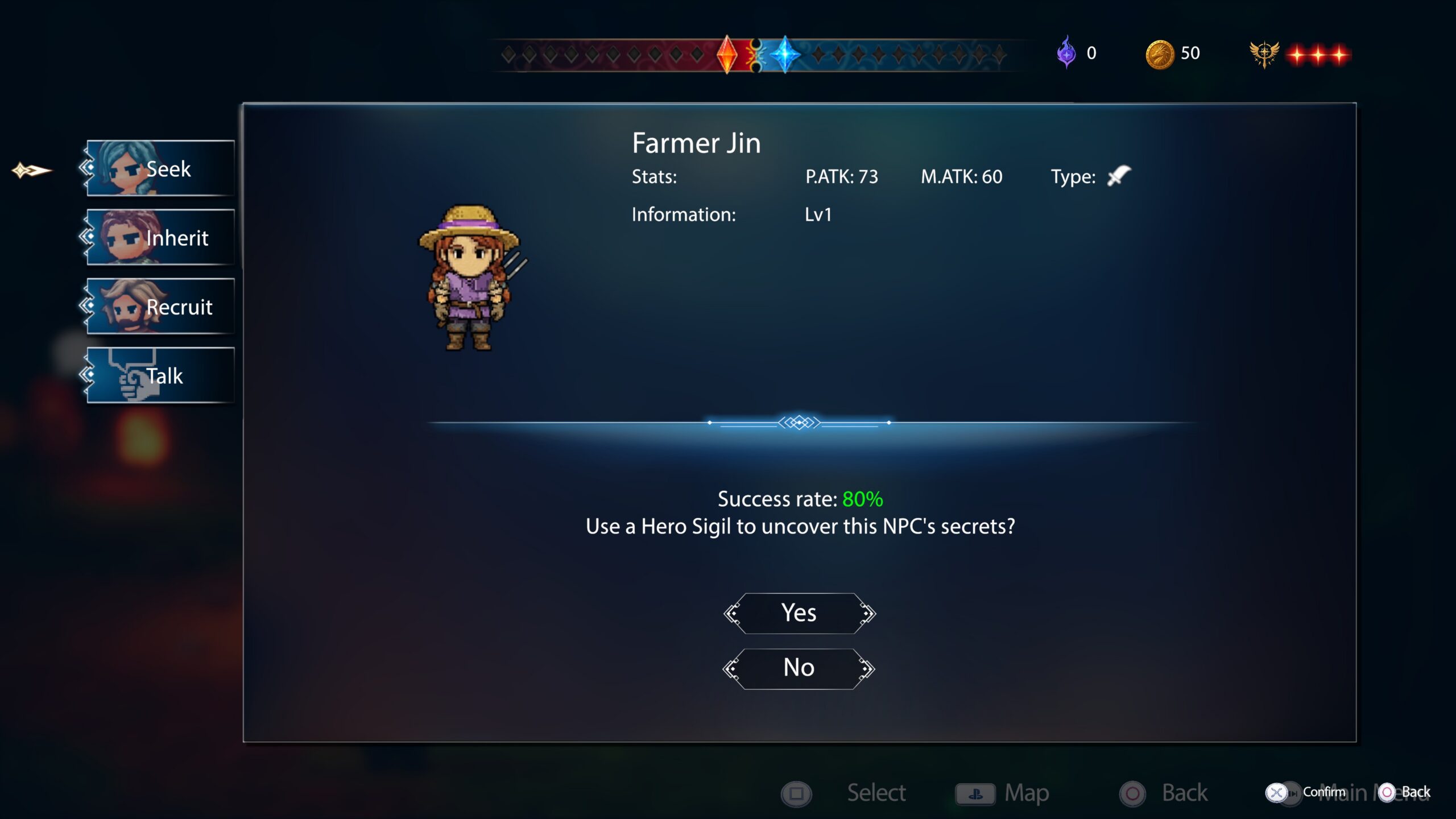
Additionally, after each run, you can give your acquired Hero Sigils to one of the other NPC’s for multiple purposes. Specifically, in exchange for a Sigil, you can inherit that NPC’s skills, attempt to recruit the NPC into your party (which is chance-based with no prior guarantee of success), or use the Sigil as payment to reveal a portion of the world map, helping you decide whether to take that path or avoid a potentially powerful enemy waiting there. Once sufficiently prepared, you start the run via the “Leave Spot” in camp.
The Art of Severing
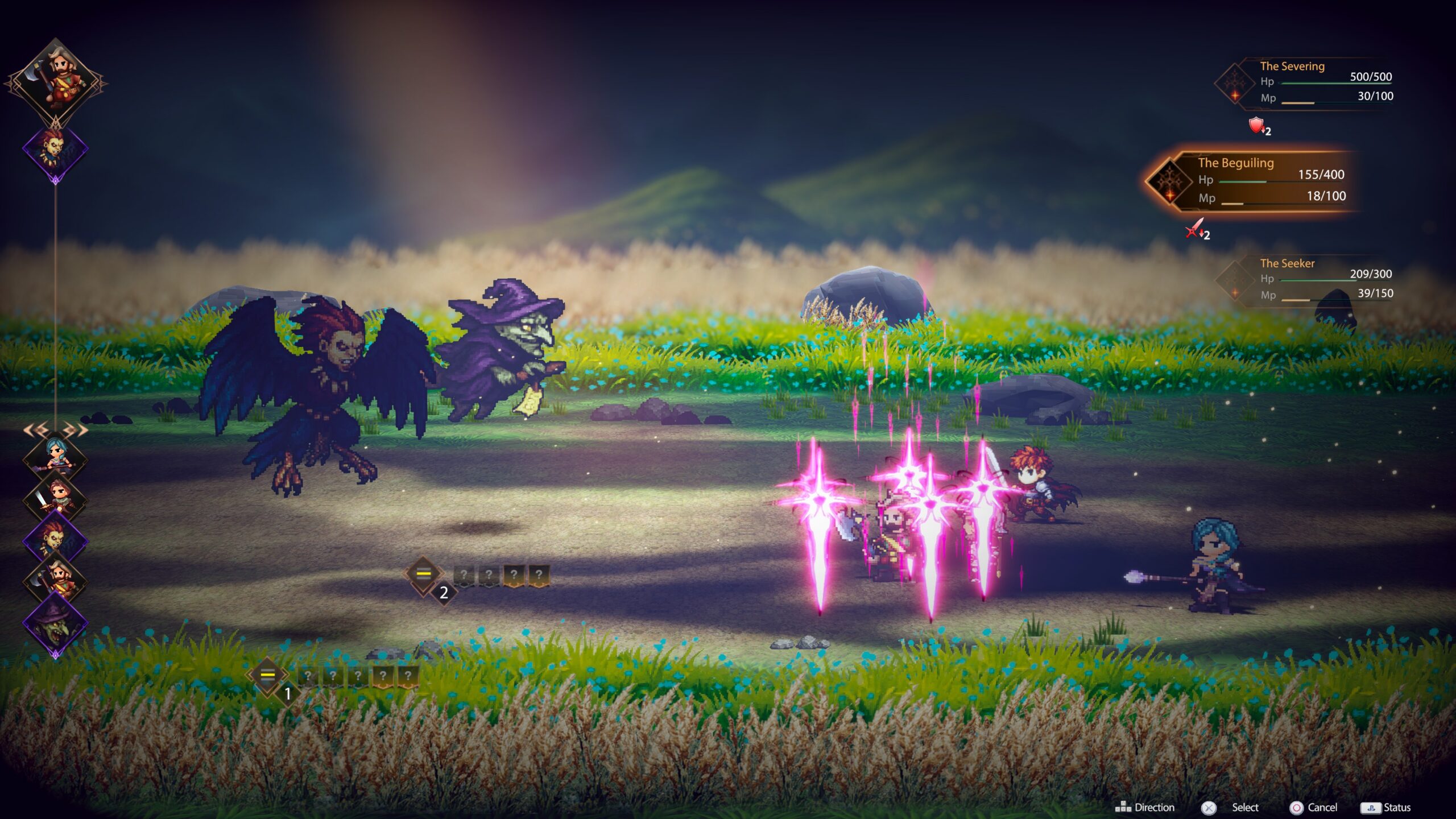
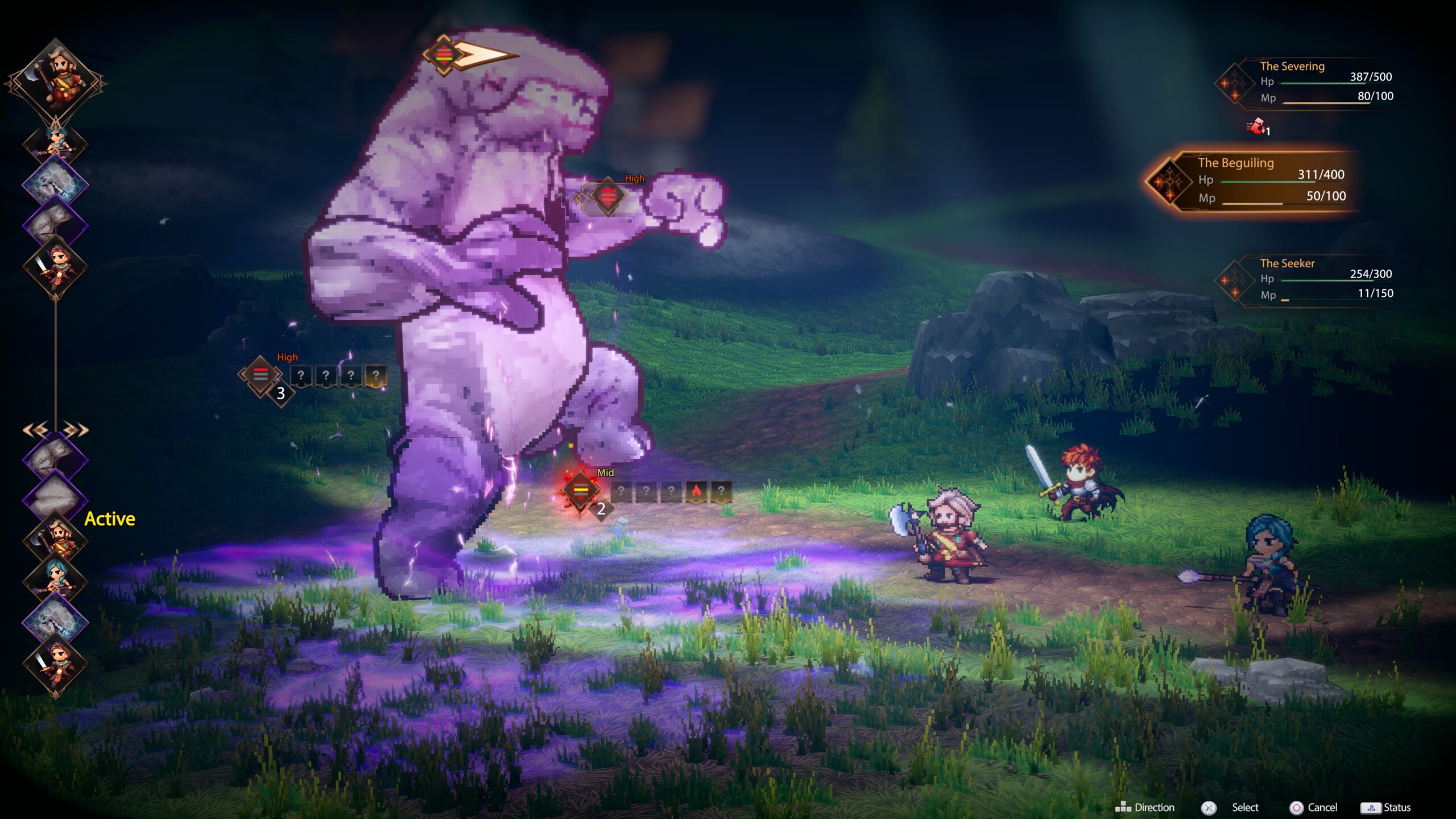
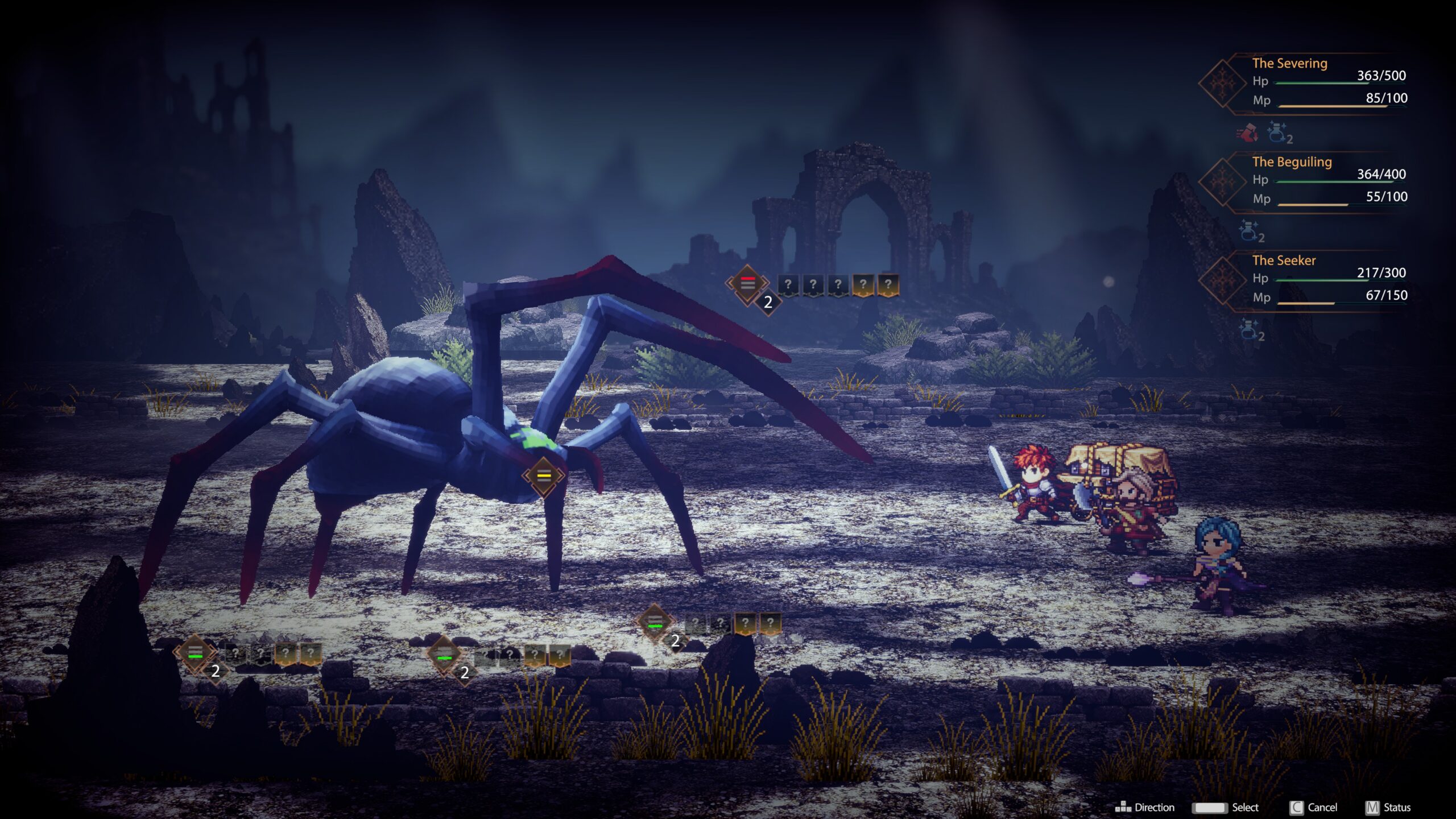
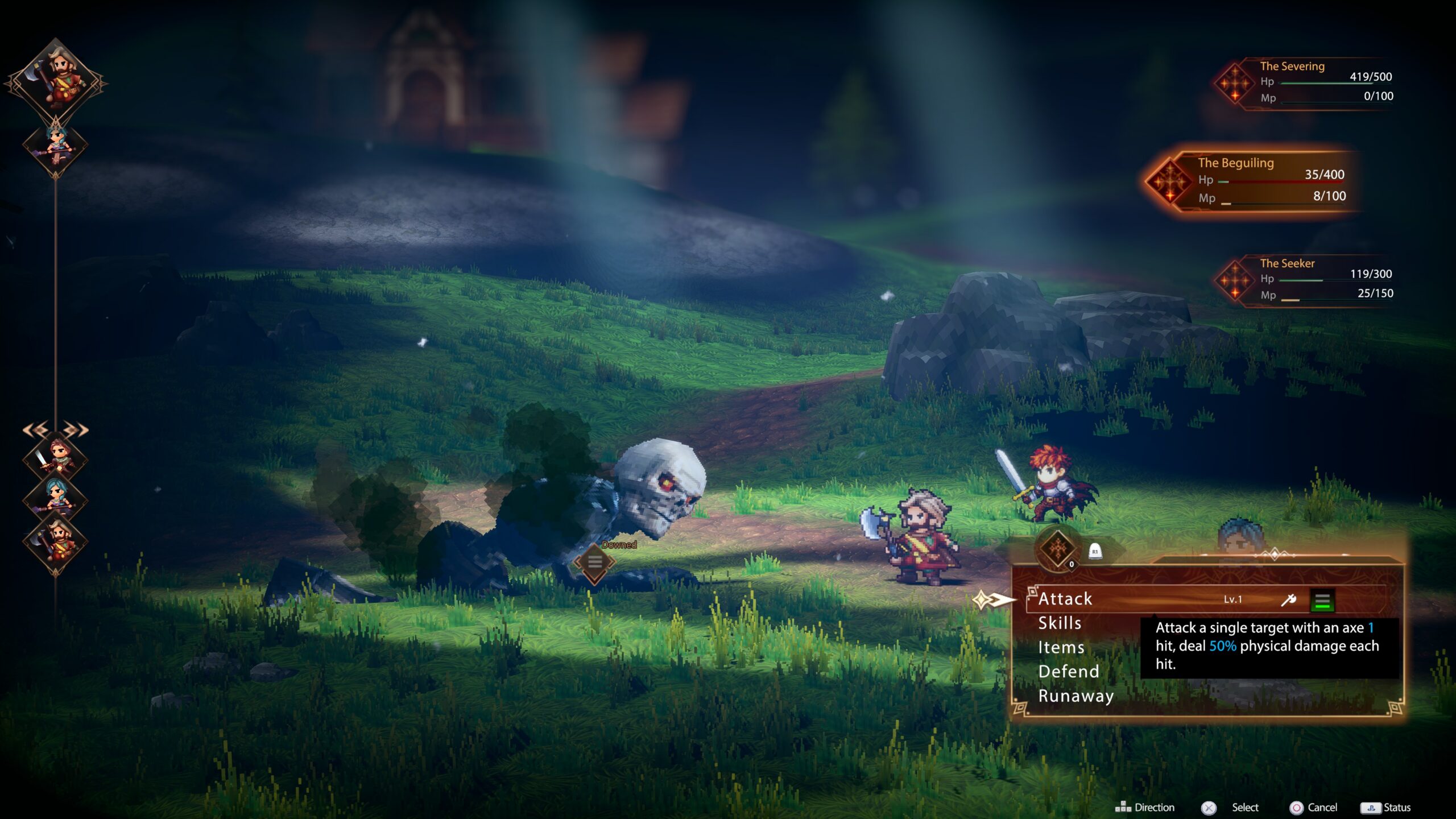
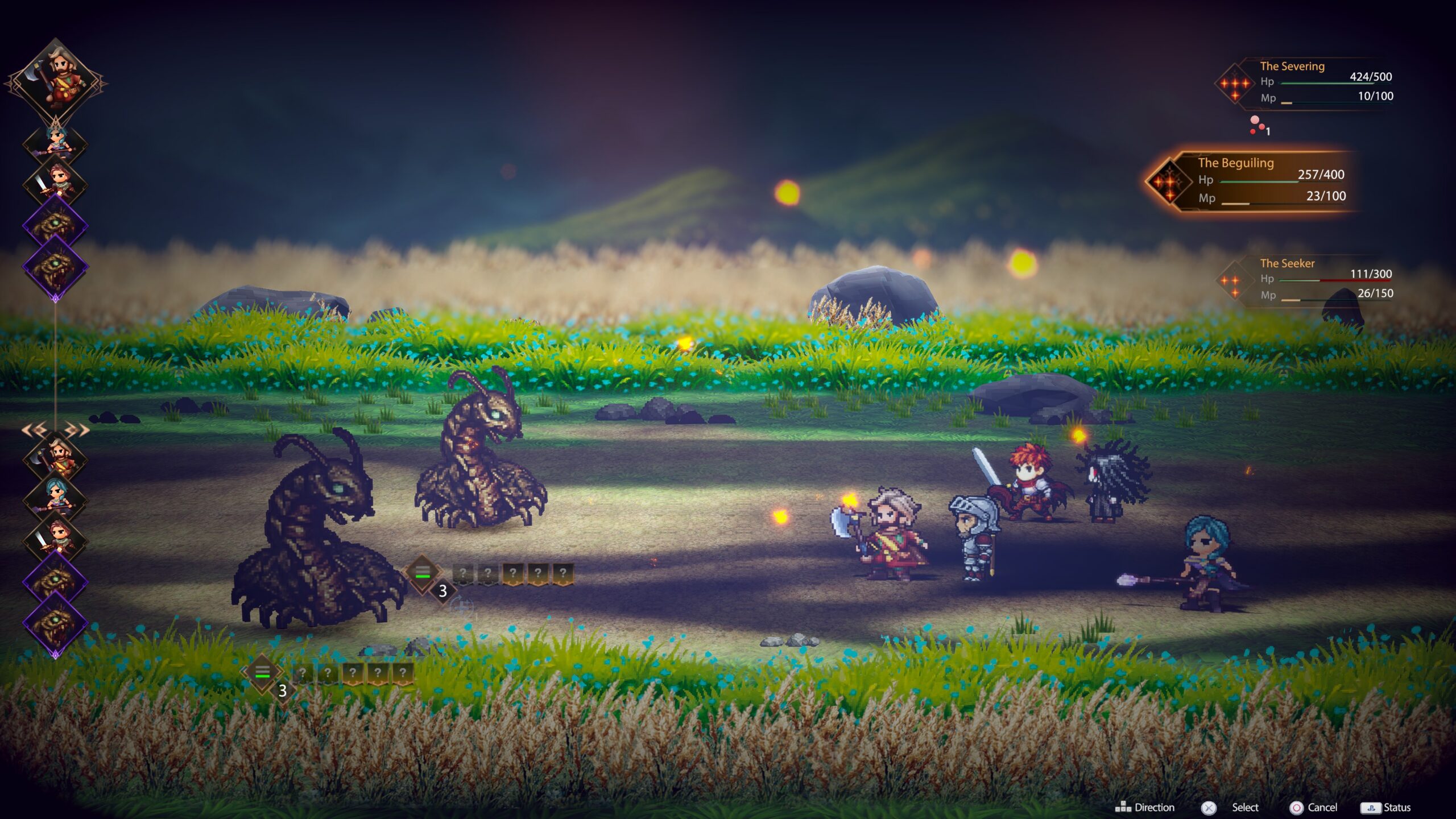
I must admit I immediately fell in love with the combat because it is genuinely fun—despite a steep challenge—and the selection of attacks and defenses is already remarkably extensive for a demo. First, there is the Essence Points mechanism: you must use these to boost your skills, strike downed enemies, and increase the number of hits for normal attacks. Depending on the character’s class, you can perform special attacks (sometimes 1vs1, sometimes hitting multiple targets at once) based on fire, wind, curses, axe throws, and more. As is typical for this genre, the strategic fun lies in testing enemy vulnerabilities and discovering which party combinations are most efficient. With powerful attacks, vulnerable enemies quickly become “downed”, causing them to take 50% extra damage from subsequent hits.
Naturally, defense is just as important in these sorts of tactical encounters. Choosing to defend recuperates 5 Mana Points and reduces all damage within the current turn by 50%. There are also skills that let you sacrifice yourself to protect a specific party member for one or more turns. And then, there is the “Severing” of larger bosses. Certain bosses possess a powerful ability called a Stance Skill and severing any of their body parts—often separate limbs or the head of the giant monster—will cancel this ability, making them easier to defeat, especially when they collapse helplessly on the ground.
Elevation, Randomness, and Powerful Rewards
Directly linked to the dismembering or decapitation of these colossal bosses is another innovative aspect of The Severed Gods‘ combat: the so-called ‘Elevation Precision’. Enemies and their individual body parts can have low, mid, or high elevation, just like skills do (indicated by the distinct colors of their ‘hamburger’ icons). Attacks targeting opponents at different heights have a chance to miss; so, the trick is to match your skill’s height to the enemy’s to ensure a hit. If a target is literally out of reach, you can throw objects like bombs to reduce the enemy’s height.
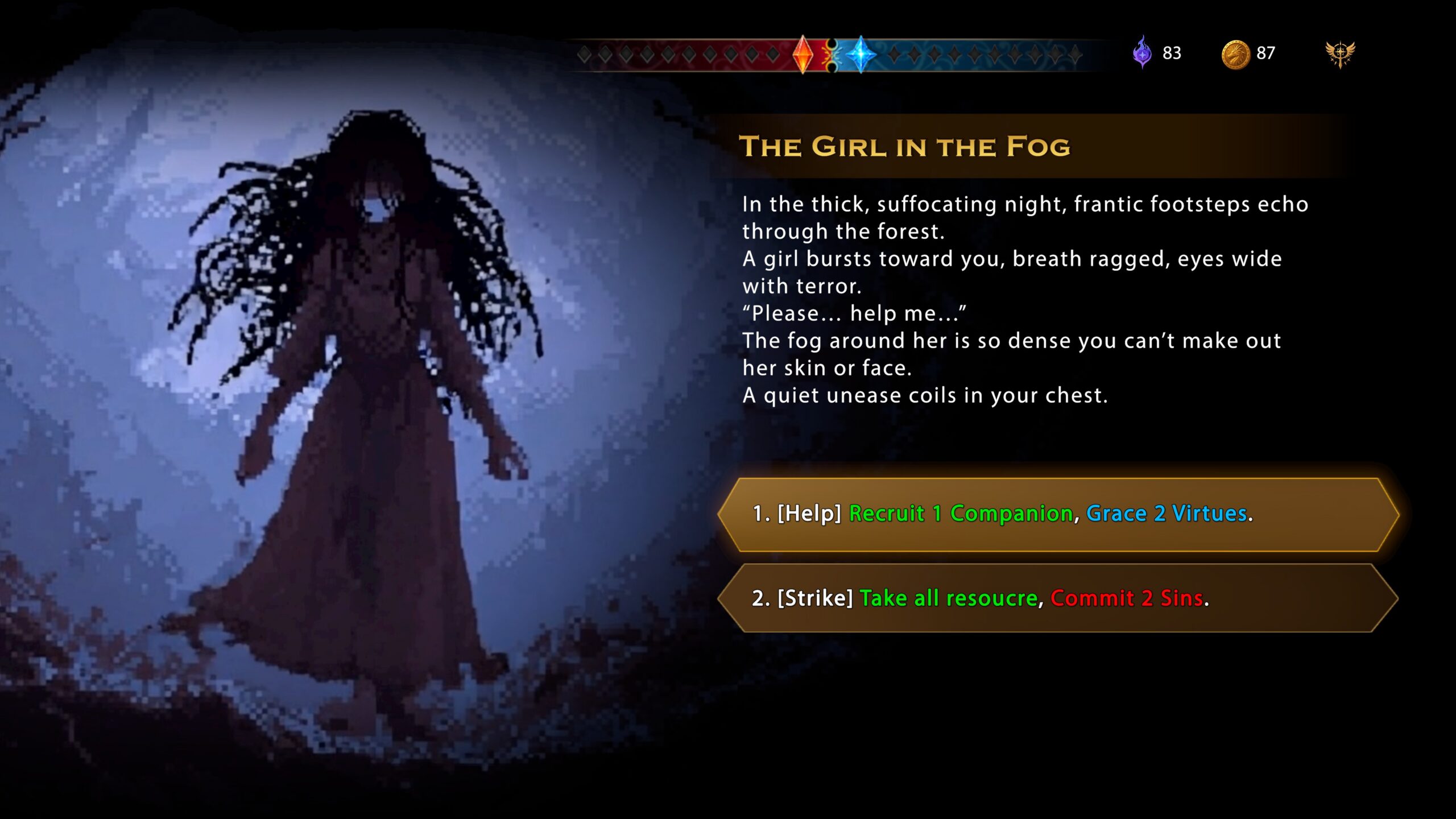
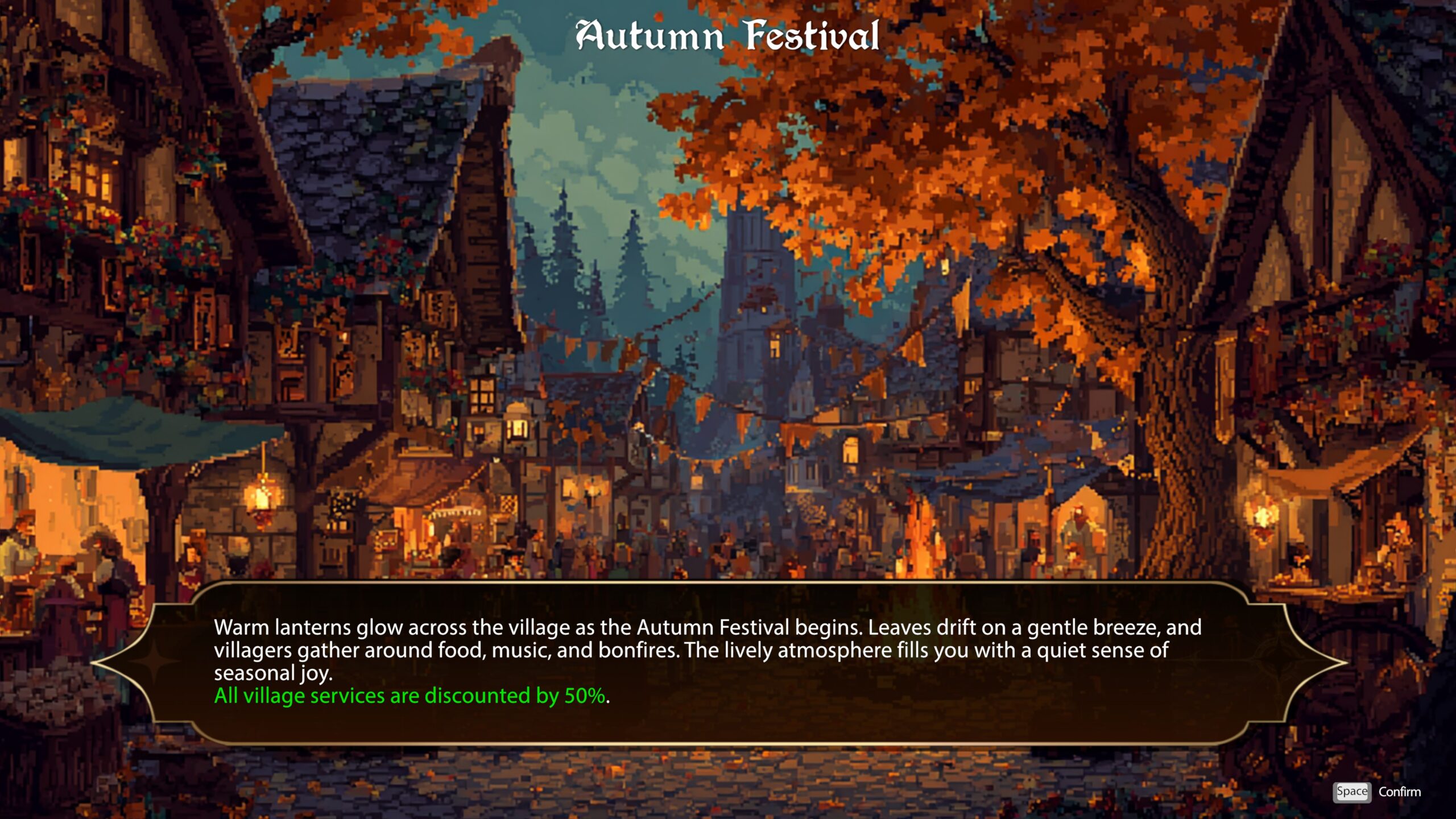
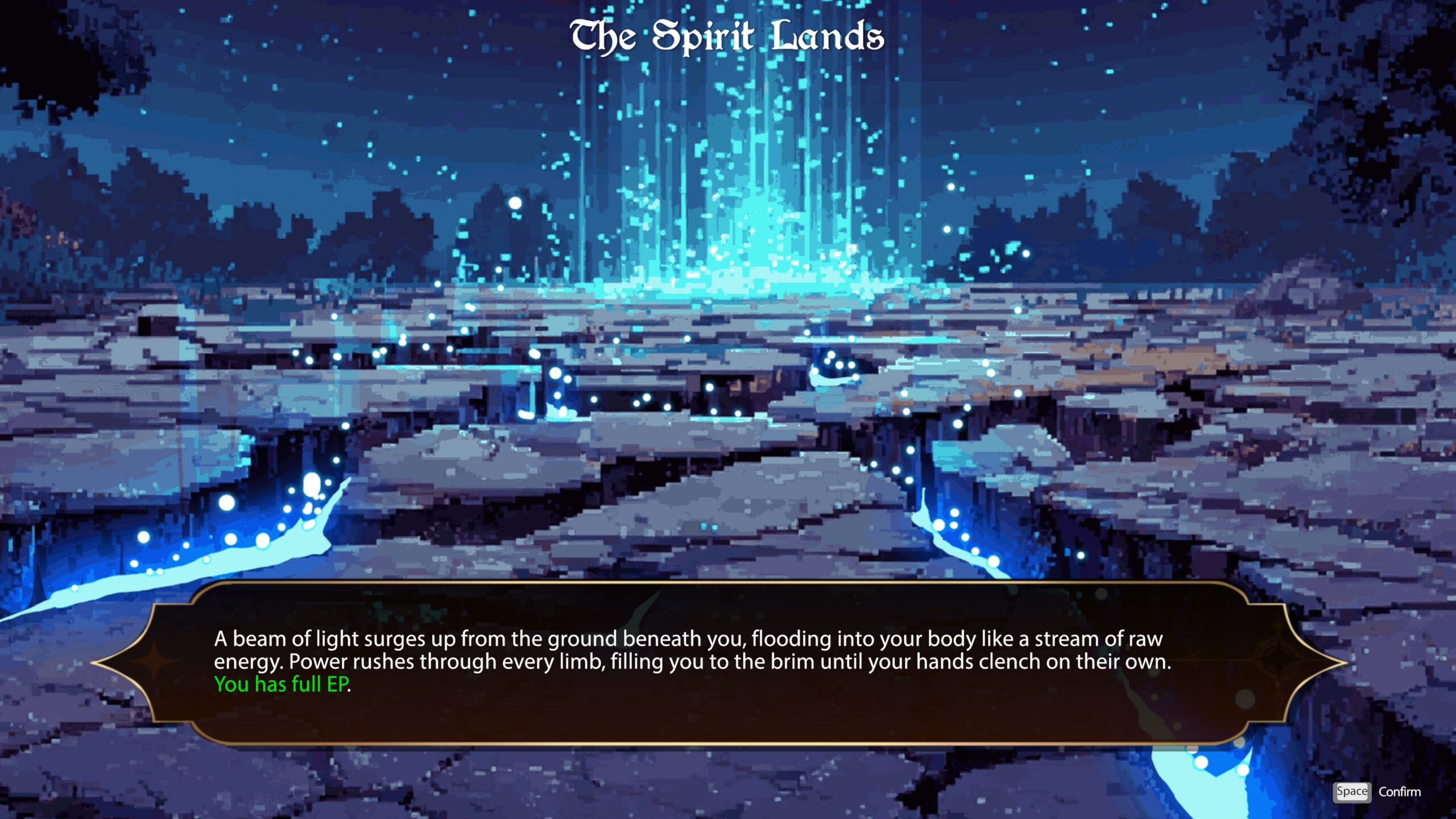
Meanwhile, random events occur before, during, and after battles—sometimes offering choices, sometimes not—such as a healing spirit, a merchant requesting goods, or a sudden curse. The game even throws surprises at you during rest moments in camp; a cavalry might suddenly appear with a batch of new NPCs to whom you can offer Hero Sigils, or a festival might be underway, granting a 50% discount in the shop. This randomness makes every run unique, though it remains a gamble whether the luck will swing in your favor.
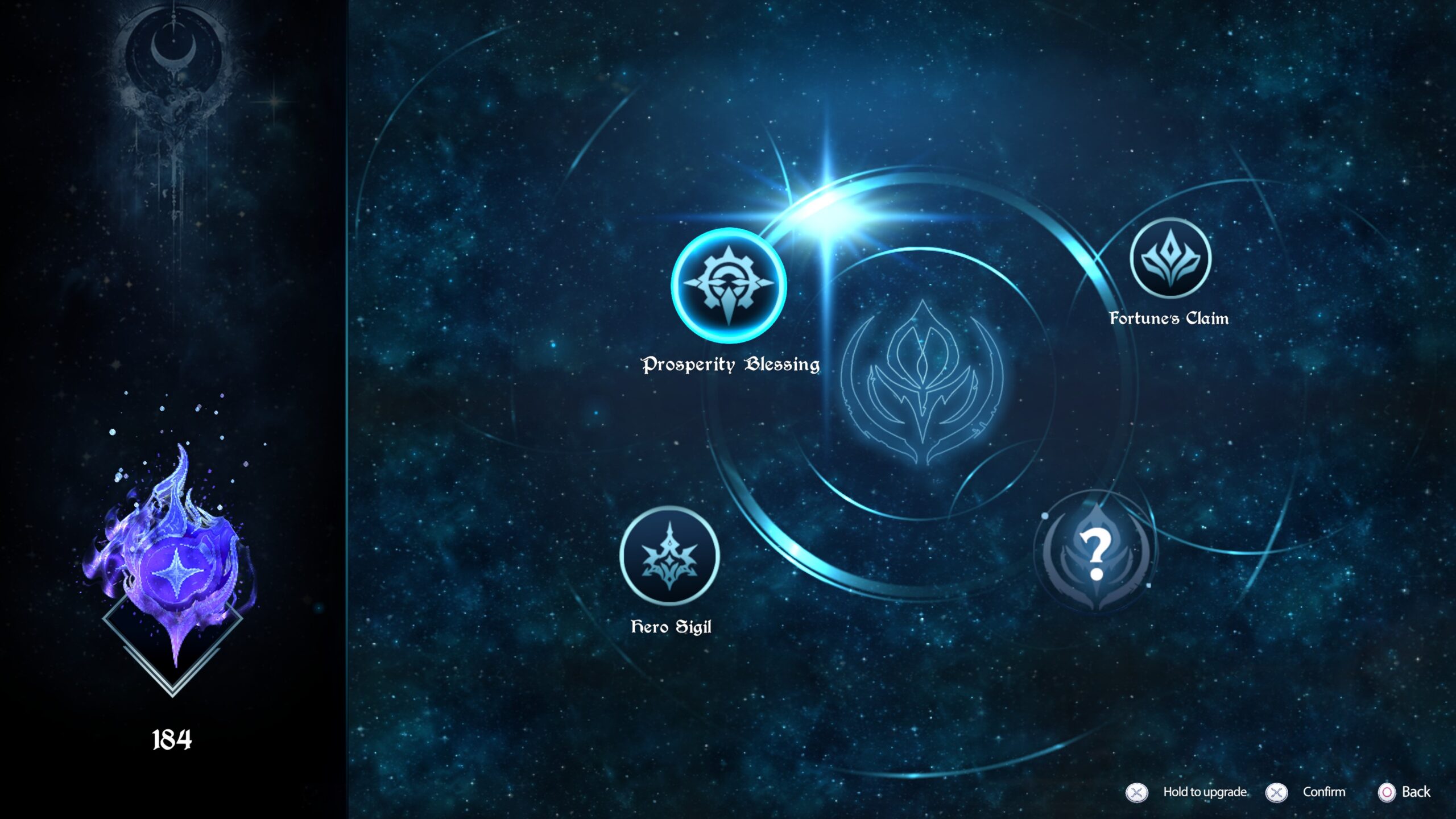
After each battle, you earn gold for trading and purchases, along with other run-specific rewards and upgrades—often items that adjust stats like HP, MP, or your main attack. When your party fails, you are transported to the Realm of Spirits. There, you can use your earned Souls to unlock powerful perks, relics, and skills—which can be upgraded and merged—based on how far you progressed. Then, a new run starts in the camp. Because, after all, this is a roguelike.
Finicky Controls, Captivating Vibes
Regarding controls, The Severed Gods unfortunately lacks mouse support, which will be a very welcome addition. This is especially true since gamepad controls are still inconsistent; button prompts are sometimes incorrect, and the UI navigation via d-pad or analog sticks is finicky. Depending on which NPC you speak to, you sometimes need a different button to progress, which is a bit confusing. The selection arrow also “shivers” significantly when using the analog stick, so it’s currently better to use the d-pad.
Some of the game mechanics could use a better explanation as well. For example, I found it somewhat confusing that when my party was already at the maximum of four members and I tried to recruit a fifth in camp, it succeeded, but I lost the previously recruited member along with my Hero Sigil. This is odd because during the run itself, you can collect more than four members via random events; these temporary members walk with you for a set number of steps, including into and after the camp. These extra members cannot be controlled manually but attack automatically as a passive perk, however, the game should provide clearer info on this beforehand.
Despite these minor points of confusion, The Severed Gods‘ audio-visual presentation is a standout. Flat-out eclectic, the soundtrack features a range of styles that adapt dynamically in rhythm and tone as battles progress, resulting in an often epic atmosphere—an impressive feat for such a small studio. Visually, the game is equally sharp, blending high-quality cutscene art with typical ‘pixel RPG’ graphics that radiate cozy charm. While this demo still contains some glitchiness, multiple typos, a locked 1080p resolution, several skill trees still in development, and no manual save system, these are to be expected in an early build.
Preliminary Thoughts
The Severed Gods is a fantastic pixel RPG in the making, standing out with its deep tactical combat and an incredible dynamic soundtrack. The ‘Severing’ and ‘Elevation’ mechanics feel fresh and rewarding, providing a unique strategic layer to every encounter. Besides making it feature-complete, the experience just needs some last strokes of polish by adding mouse support, fixing the glitchy UI selection, and better explaining the game’s rules and mechanics. Nevertheless, the foundations are already rock solid, and if these minor technical hurdles are smoothed out before release, this will be an outstanding strategic roguelite RPG.
Additional Information
Release Date: TBA (2026)
Previewed On: PC. Download code provided by the developer and publisher.
Developer: Topebox
Publisher: Topebox
Relevant Links: Demo available on STEAM