Revisiting Echo Generation: The Summer Mystery That Still Outshines Its Sequel
 DaRmaZat
 Now that Echo Generation 2 has officially arrived, revisiting Echo Generation: Midnight Edition feels more interesting than ever. Cococucumber’s new sequel dramatically expands the formula with multiple protagonists, nonlinear progression, cyberpunk settings, and deckbuilding combat systems, but returning to the first game highlights something surprising: despite its smaller scope, the original adventure remains the more cohesive and memorable experience overall.
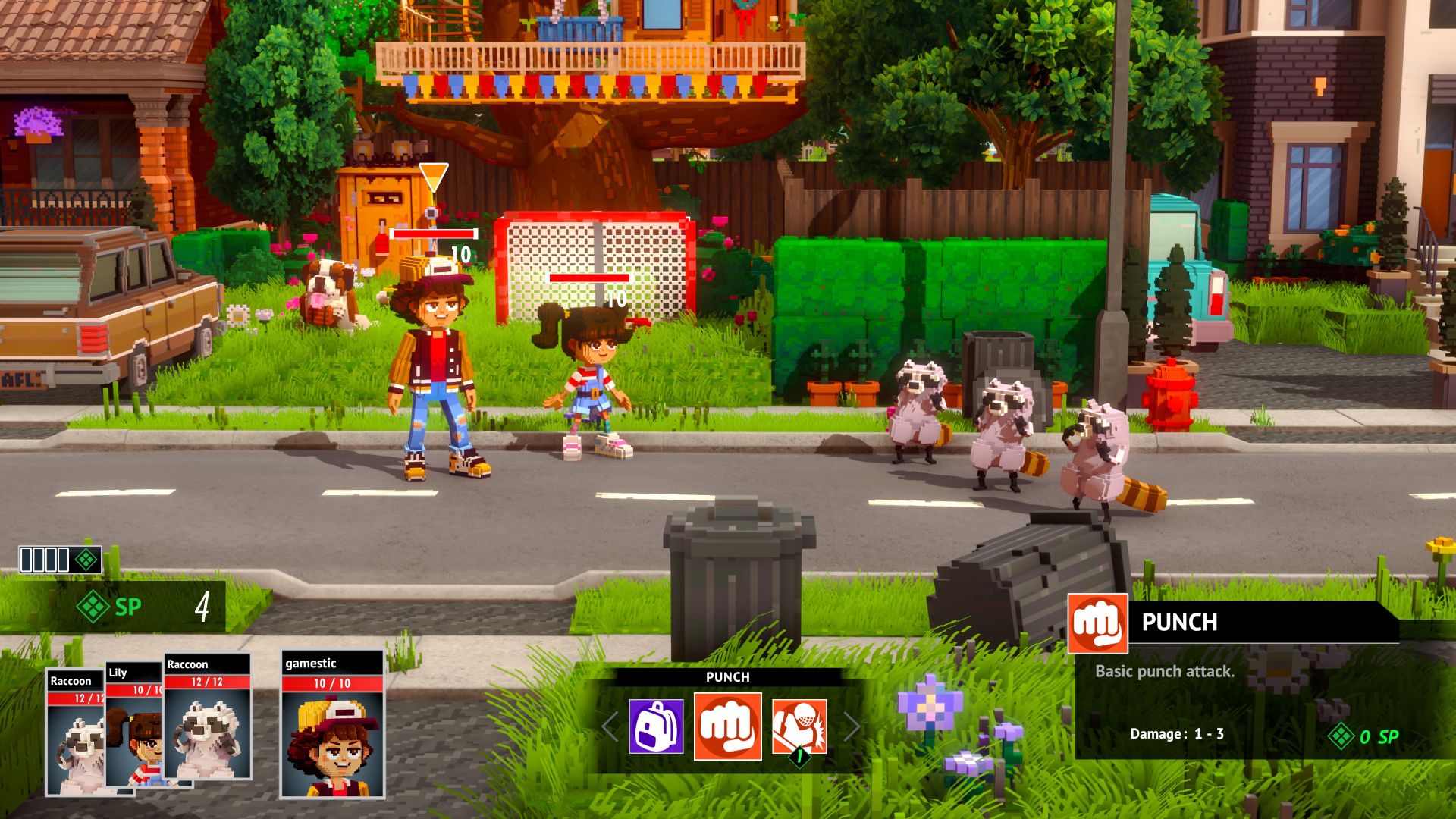
Two years later, what I remember most about Echo Generation is not a specific boss encounter, quest reward, or combat mechanic. It’s the feeling of wandering through Maple Town, soaking in warm summer evenings while synth-heavy music echoed through quiet suburban streets and something deeply unsettling lurked beneath everyday life. Looking back now, the original game still captures a sense of childhood adventure that the sequel, despite all its ambition, never quite manages to replicate.
Smaller Story, Stronger Identity
As the second chapter in Cococucumber’s Voxel Trilogy – following Riverbond and preceding Ravenlok – Echo Generation blended supernatural mystery, coming-of-age storytelling, and light horror into something that often felt like a playable 1980s summer movie. The story follows you and your friends as they investigate bizarre events overtaking Maple Town. What begins with strange neighborhood incidents quickly escalates into crashed spacecraft, secret experiments, missing people, grotesque creatures, and government conspiracies hiding beneath suburban normalcy.
Naturally, comparisons to Stranger Things were unavoidable at launch, but the game ultimately carved out its own personality through tone and pacing. Unlike Echo Generation 2, which constantly jumps between perspectives, timelines, and disconnected story threads, the original remains tightly focused. Everything revolves around a single town, a single mystery, and a small group of kids trying to make sense of increasingly impossible events.
That focus gives the adventure far more emotional clarity. The sequel may be larger and more ambitious, but its fragmented structure often weakens narrative momentum. Revisiting the first game makes it clear how valuable simplicity can be when paired with strong atmosphere and confident worldbuilding.
Maple Town Still Feels Special
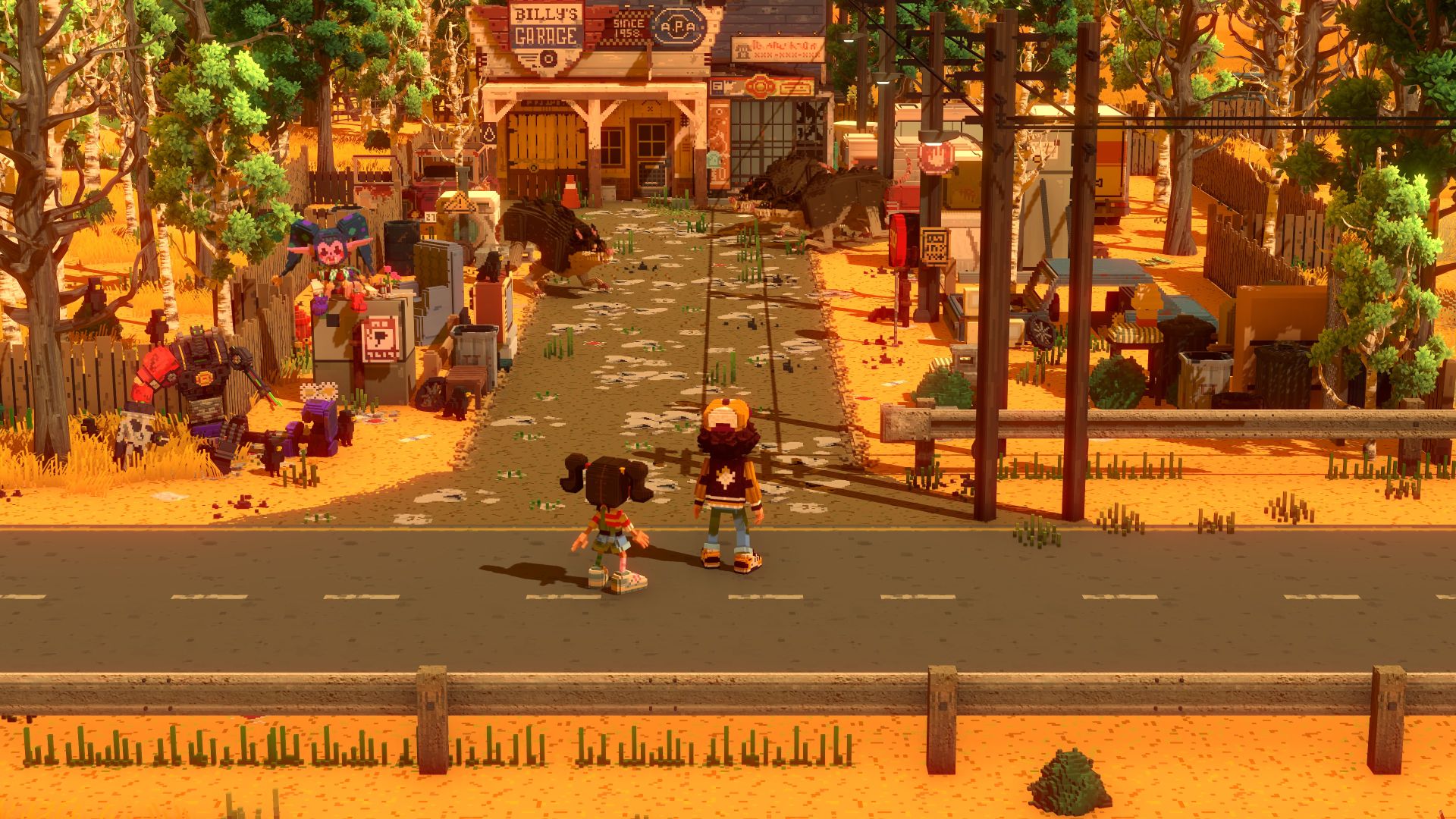
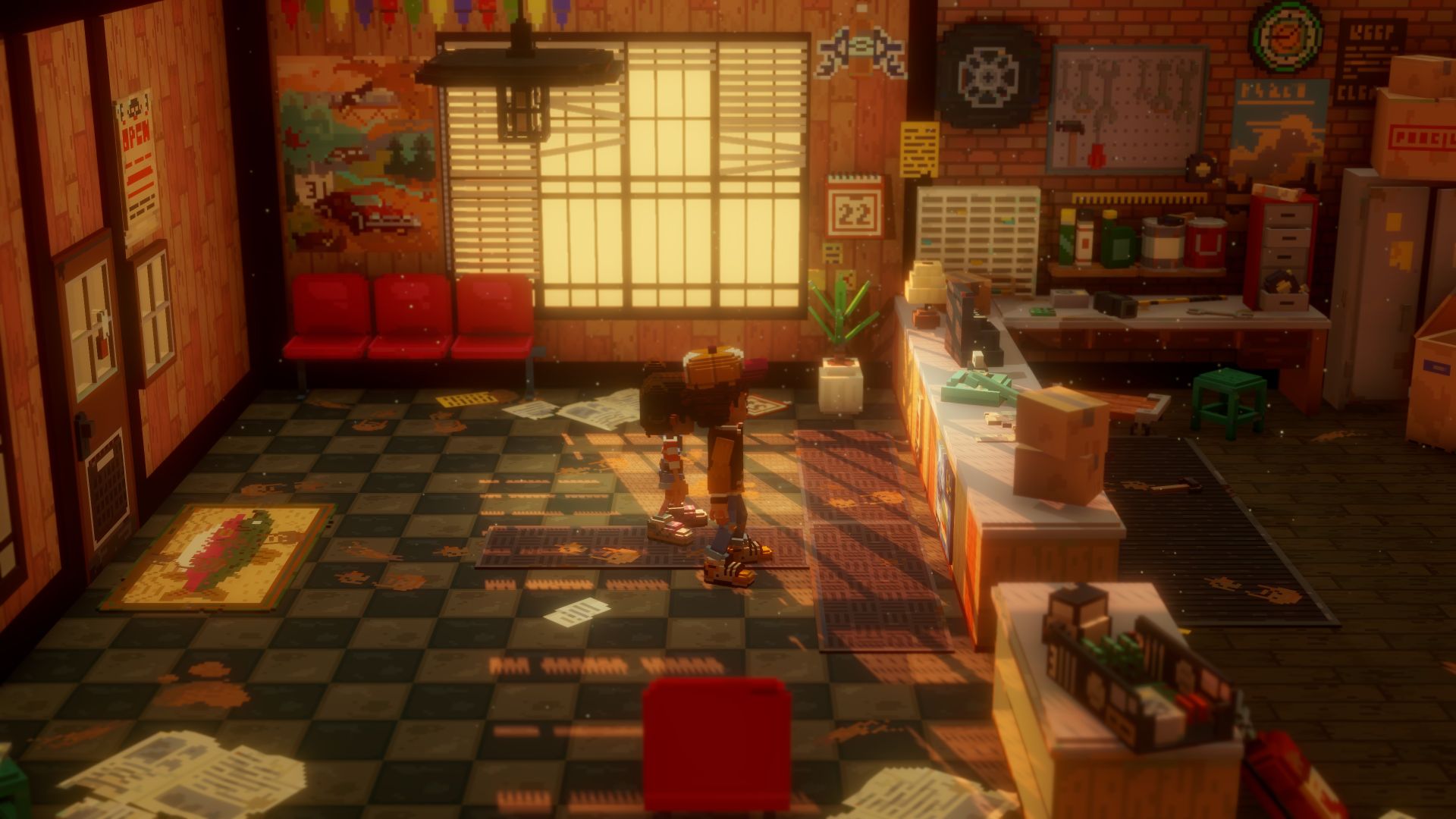
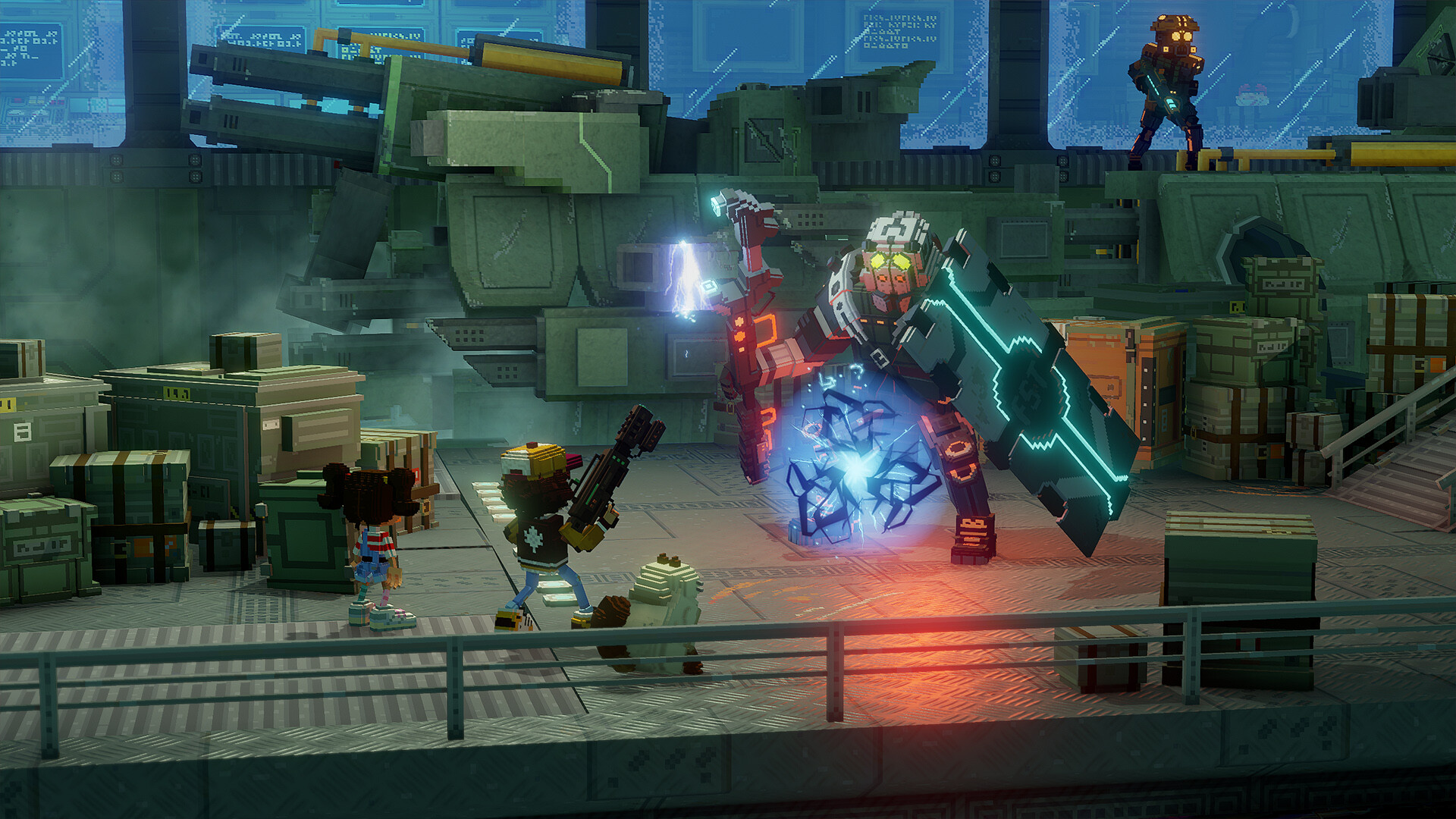
What has aged best about Echo Generation is easily its atmosphere. Maple Town remains one of the most memorable indie game settings of the past several years. Cococucumber’s voxel art style transforms every environment into a handcrafted diorama bursting with detail and personality. Residential neighborhoods, abandoned schools, forests, graveyards, cornfields, and hidden facilities all feel visually distinct while maintaining a cohesive identity.
Even after playing the neon-soaked cyberpunk and dystopian environments of Echo Generation 2, I still found Maple Town more memorable overall. The sequel’s locations are technically larger and often visually spectacular, but the original world feels more intimate and carefully curated. Every street corner, backyard, and hidden pathway contributes to the illusion that this is a real town hiding impossible secrets beneath its quiet exterior.
The lighting and skyboxes deserve enormous credit here. Dramatic sunsets, storm clouds, and colorful evening horizons constantly elevate otherwise ordinary locations. Simple exploration often becomes rewarding purely because the game is so pleasant to look at. Equally impressive is the soundtrack. Pusher’s synth-driven score still does tremendous work establishing mood, balancing nostalgia, mystery, and low-key horror with remarkable consistency. The sequel once again delivers excellent music, but the original soundtrack feels more emotionally tied to its setting and themes. Years later, many of these tracks remain instantly recognizable to me.
Combat That Was Simpler – And More Fun
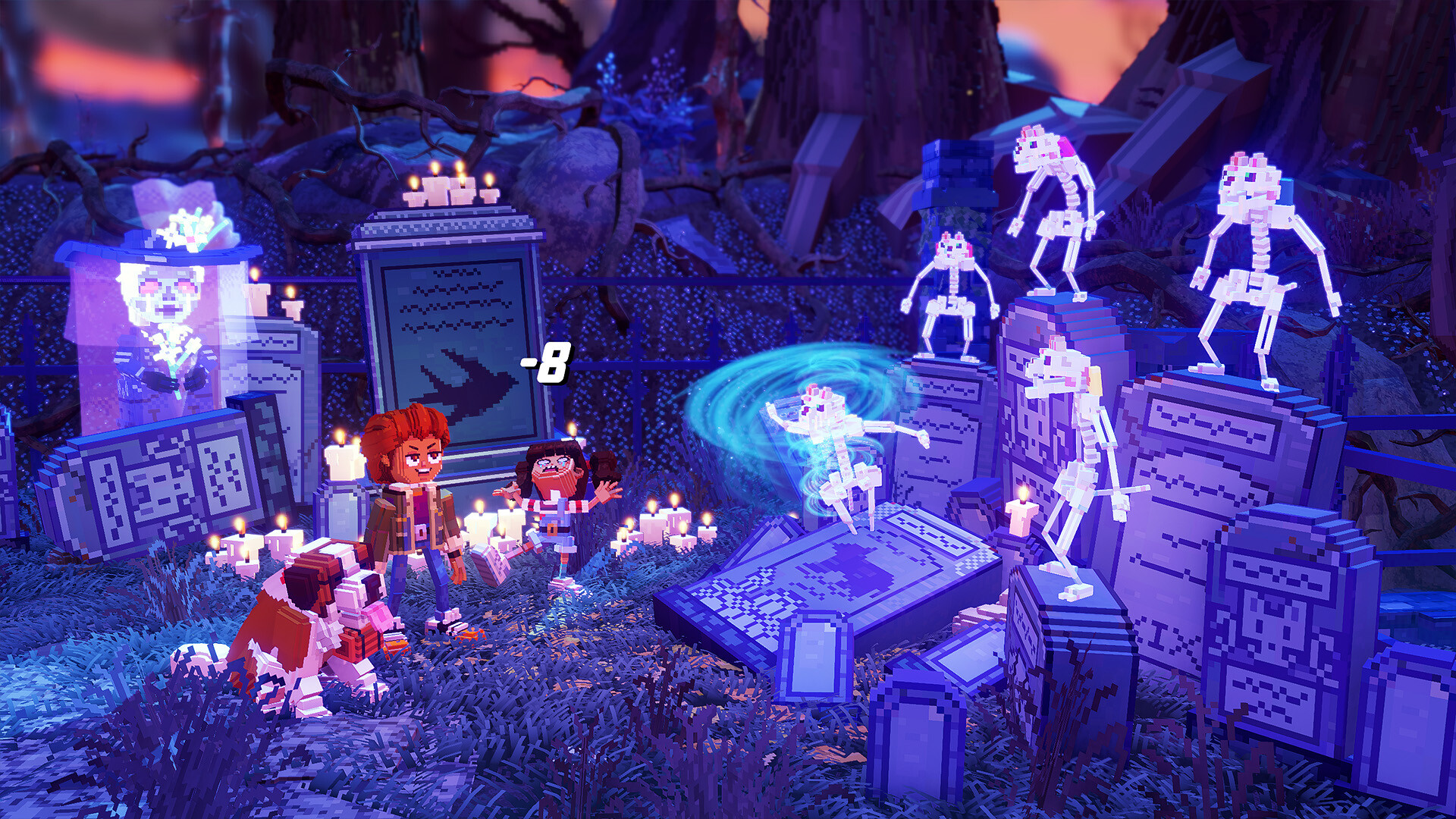
Ironically, revisiting the original shortly after Echo Generation 2 also makes its combat systems easier to appreciate. At launch, the first game’s active turn-based battles drew criticism for becoming repetitive over time, and those complaints remain valid. Battles rely heavily on timing-based inputs, simple minigames, comic-book abilities, and pet companions that provide different tactical options. Eventually, longer encounters begin to drag, especially once enemy health pools inflate during later chapters.
Still, compared to the sequel’s deckbuilding and stance-breaking systems, the original combat now feels refreshingly straightforward. Echo Generation 2 attempts to add strategic complexity through cards, synergies, weaknesses, and layered progression mechanics, but those systems often end up feeling restrictive rather than tactical. Many encounters boil down to exploiting displayed weaknesses while enduring punishing counterattacks. Combined with harsh difficulty spikes, combat can occasionally feel exhausting instead of rewarding.
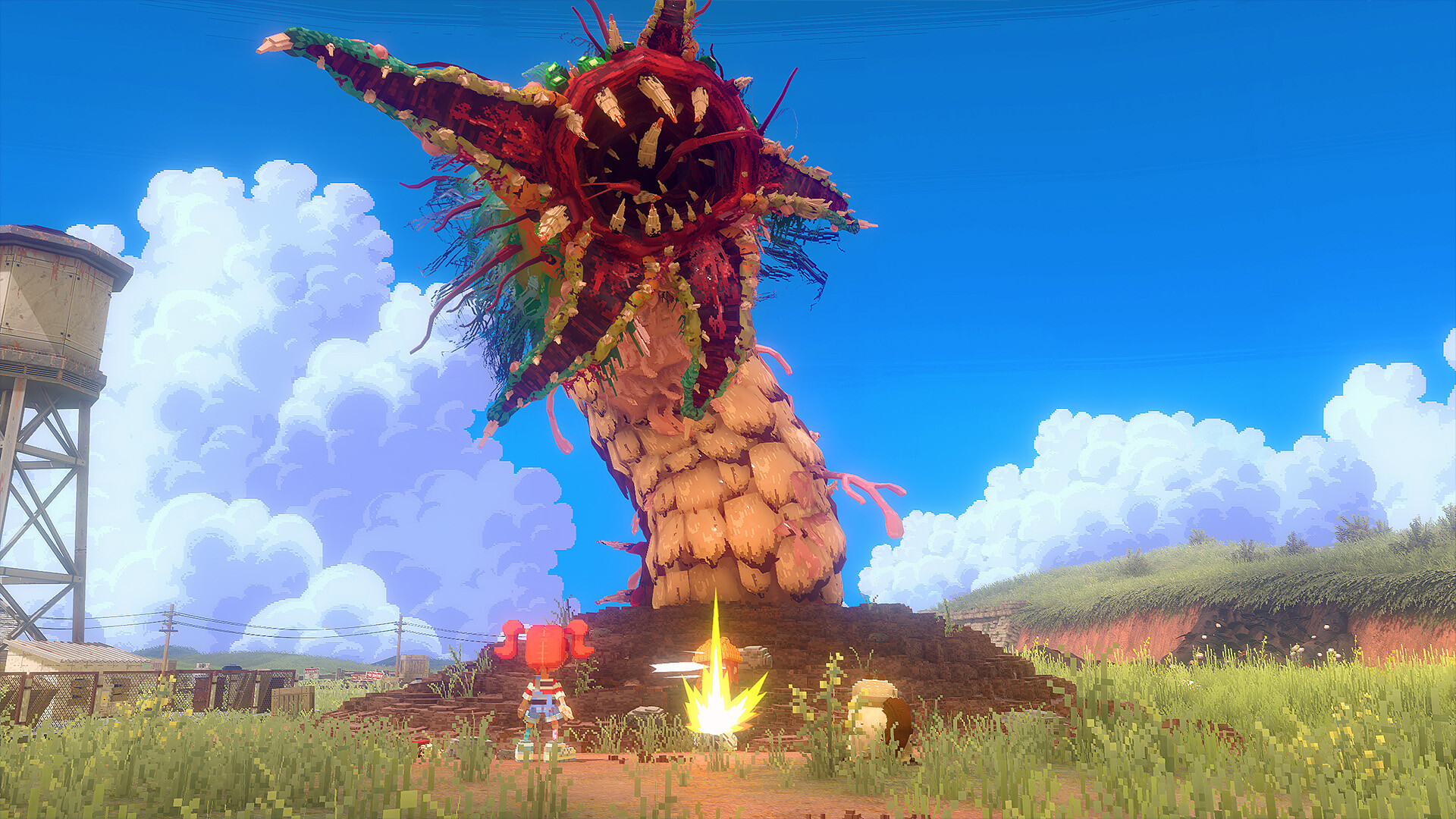
Echo Generation certainly lacks depth, but it also avoids overcomplication. Battles move at a steadier pace, progression feels cleaner, and the mechanics rarely overwhelm the core adventure. Even when combat loses momentum late-game, it never overshadows the exploration and mystery in the same way the sequel sometimes does.
That said, some frustrations absolutely remain. The fetch-quest-heavy structure becomes increasingly noticeable during a replay. Much of the progression loop still revolves around finding a specific item, returning it to the correct NPC, unlocking a new location, and repeating the process. Certain objectives also suffer from vague signposting, occasionally leading to aimless wandering while searching for a single overlooked interaction.
The pet system similarly feels somewhat restrictive. While you and Lily remain permanent party members, the third slot is reserved for companion creatures with specialized abilities. Arriving at a difficult encounter with the wrong pet equipped can still result in frustrating trial-and-error restarts. But even with those flaws, the original game’s systems feel more naturally integrated into the experience than the sequel’s more mechanically ambitious design.
The Things That Actually Lasted
What surprised me most during this revisit is how little I cared about the mechanical shortcomings once I settled back into Maple Town. I remembered the cassette tapes. The strange creatures hiding in abandoned places. The quirky residents. The eerie late-night exploration. The synth soundtrack drifting through suburban streets. The feeling that something unnatural was always waiting just beyond the next corner. That atmosphere still works remarkably well.
And that may ultimately explain why the first Echo Generation remains more memorable to me than its sequel. While Echo Generation 2 expands nearly every system on paper, the original understands exactly what it wants to be: a focused supernatural coming-of-age adventure driven by mood, mystery, and nostalgia. The sequel impresses technically and visually, but the first game lingers emotionally.
Final Thoughts
Revisiting Echo Generation after the release of its sequel only reinforces how special the original remains. Its combat systems still show cracks, its progression occasionally stumbles, and some mechanics undeniably feel repetitive by modern standards. Yet its atmosphere, presentation, music, and sense of childhood adventure continue to hold up exceptionally well.
Cococucumber may have delivered a bigger and more mechanically ambitious sequel, but the original game still feels like the stronger overall experience. Sometimes tighter focus, memorable atmosphere, and genuine personality leave a far more lasting impression than larger systems and grander scope ever could.
Additional Information
Release Date: June 19, 2024
Reviewed On: PC. Download code provided by the publisher and PR agency.
Developer: Cococucumber
Publisher: Cococucumber
Relevant links: Available on Steam.