DaRmaZat
 Well Dweller is a cute yet dark fairy-tale adventure from Kyle Thompson, the solo developer behind Crypt Custodian and Islets. Trading swords for a giant matchstick, you guide a brave tiny bird through a decaying kingdom to rescue a captured family from a tyrannical queen. On paper, the title looks like another cute Metroidvania taking a few notes from Hollow Knight and Ori. And while those influences are certainly noticeable, it gradually develops enough personality of its own to make the comparison less important.
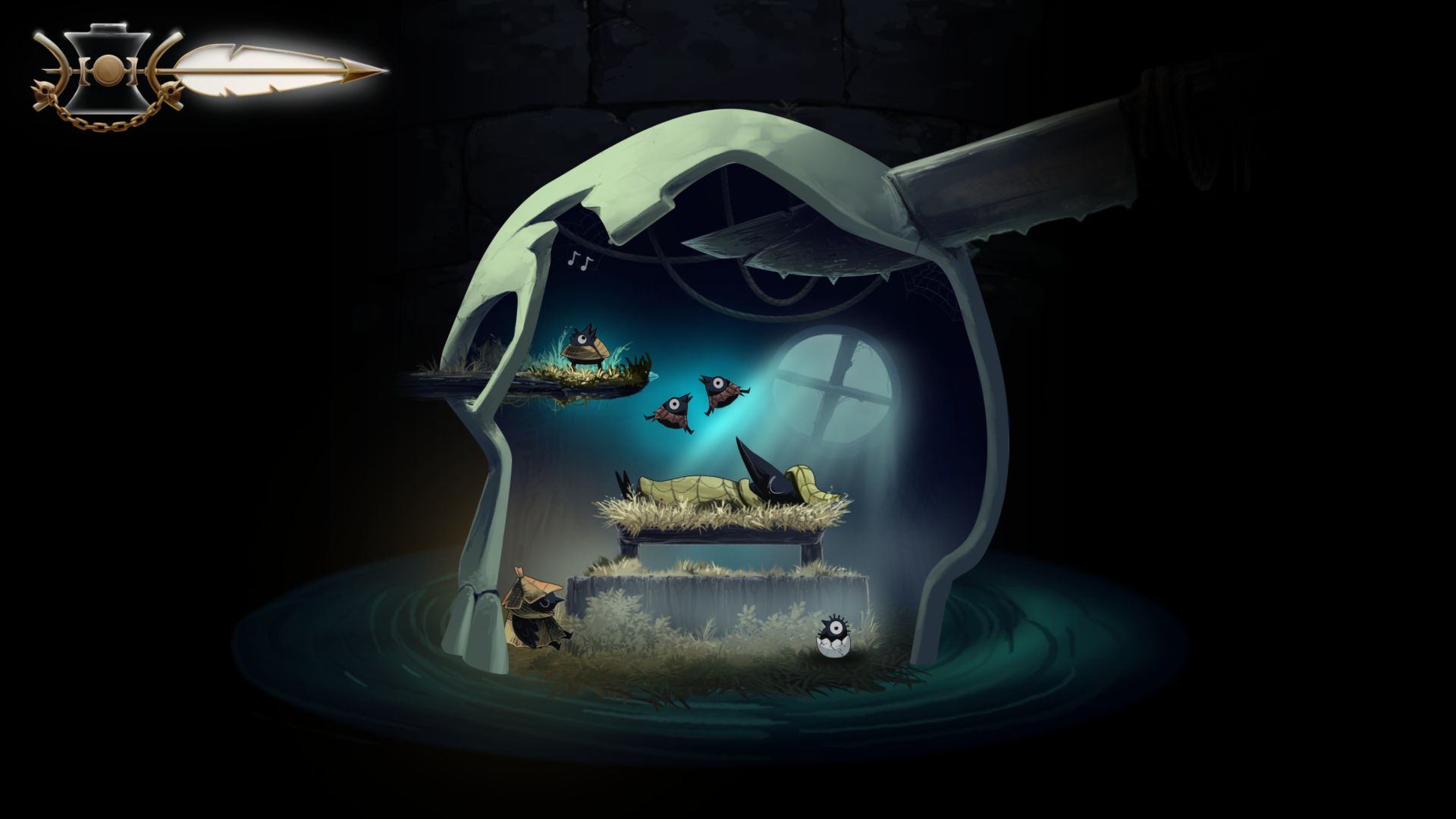
At first glance, Well Dweller looks like one of those many Metroidvanias trying to pull off a cute art style. The familiar ingredients are all there, but the game has a surprisingly deep story, a charming cast and plenty of humor. Unsurprisingly, the adventure begins at the bottom of a well. Mother Bird is weakened because of the wicked Queen, who has birds hunted all over the kingdom simply to pluck their feathers for her gown.
Playing as Glimmer, her eldest son, your first task is straightforward enough: venture into the Dark Forest, break into the home of a creepy beast, and steal some food off his plate while he is sleeping to bring back to your sick mother. To make the premise even worse-looking, a giant, crazed witch known as The Hunter kidnaps your mother and your siblings, leaving you as the sole survivor. Your main ally left behind is your friend Looter, who conveniently doubles as the local vendor along the way, and he knows there is still time to save them as long as you keep moving. Suddenly, the whole premise turns into a life-or-death rescue mission.
Honestly, I did not expect Well Dweller to put this much weight on its storytelling and emphasis on its characters. It is not only the dark fairy-tale-like narrative, which almost feels like a sprawling epic; it is also the combination of weird inhabitants and casual humor that comes as a pleasant surprise.
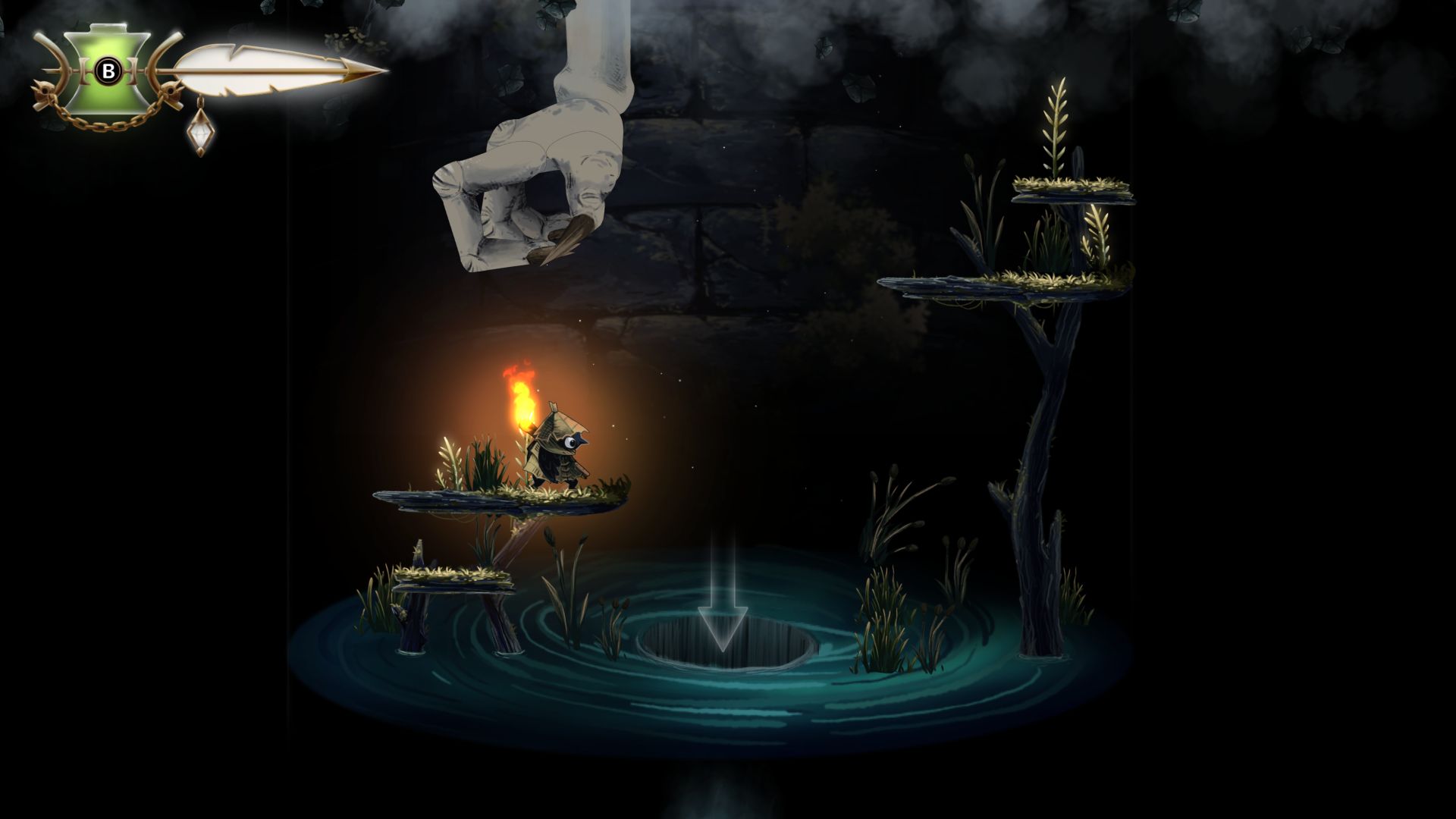
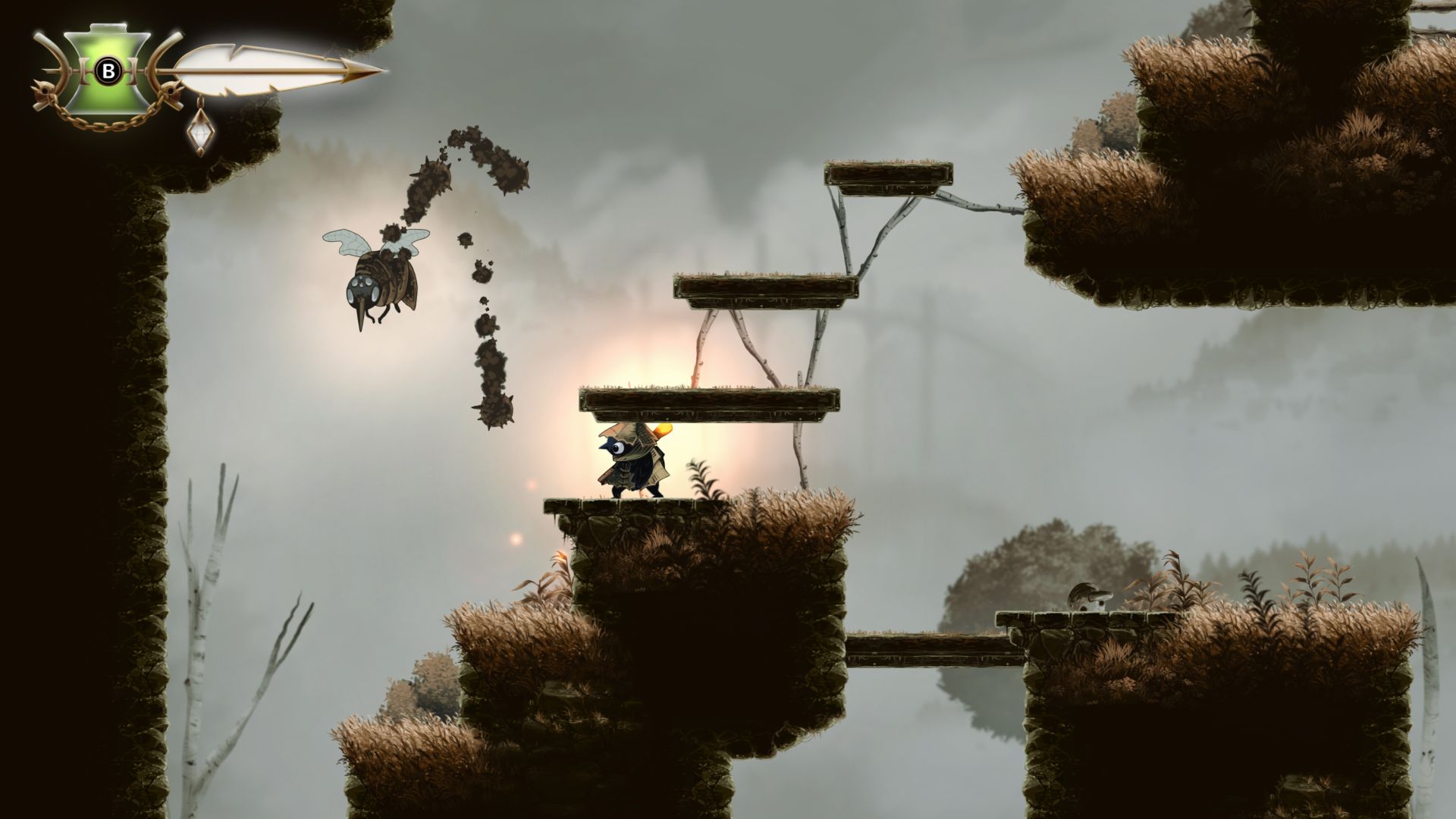
While Well Dweller is clearly not trying to put a brutal Hollow Knight challenge on the table, combat is reasonably challenging, though. Combined with a slide mechanic that provides an invincibility window, the game stays approachable. Just keep in mind that stamina limits how often you can slide, preventing you from spamming it through every encounter. Serving a dual purpose, your matchstick acts as both your weapon and your health indicator, with its flame reflecting how much health you have left.
Here and there, you need to collect Oil vials that relight your matchstick while restoring some health, at least once you get the hang of the inventive healing system. You have to hold the button and release it right as a marker overlaps with the glowing section on a visual slider. And for those who find this annoying, you can simply turn the mechanic off. With multiple difficulty settings and diverse accessibility modifiers, Well Dweller happily offers a compromise that makes the journey far more forgiving if you need it, with even an option to grant extra time during Time Trials.
The map also clearly marks unexplored sections and hints at where secrets remain hidden in already visited spots. Dying is relatively painless too, since you respawn close to where you fell. Boss encounters follow that same forgiving philosophy. Attack patterns are generally simple, meaning the game does not expect you to spend hours learning elaborate move sets, and fights never become grueling endurance tests. Nevertheless, facing the first boss, the Groundskeeper – essentially a gigantic spider – shows that encounters can still be tense enough. I also found it pretty funny that the moment you beat a boss, a gravestone simply slides up out of the ground right on the spot.
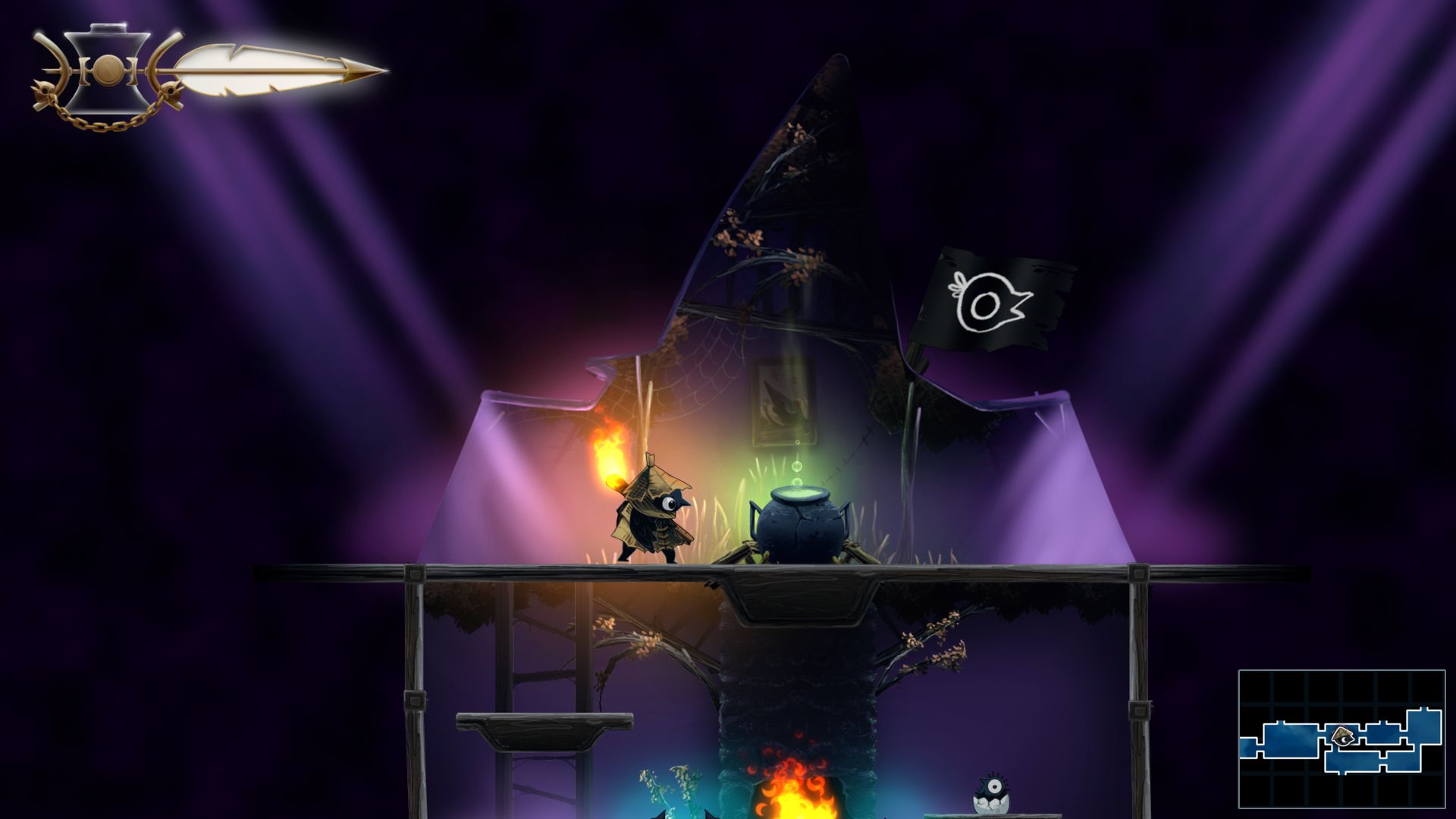
Every so often, you also find a safe haven in the form of a huge tent. These act as save points where you can talk to your rescued siblings and assign Trinkets. Equipping these passive upgrades requires enough Trinket Points alongside an available slot, giving you a solid reason to explore surrounding areas and hunt down secrets. You also unlock extra tools, like the Flaming Vessel, which charges up as you strike enemies and offers welcome variety beyond repeatedly whacking everything with your matchstick.
Notably, the game does occasionally put you on a more linear path. For example, your first encounter with Looter is hard-woven into the story by actually forcing you to buy something to progress. Certain directions also stay blocked until you have found the required ability, so you cannot always wander wherever you want. None of this feels particularly bothersome, but it does make Well Dweller feel a little more guided than classic Metroidvanias where you can go as far as you want, provided you have the required abilities in your possession.
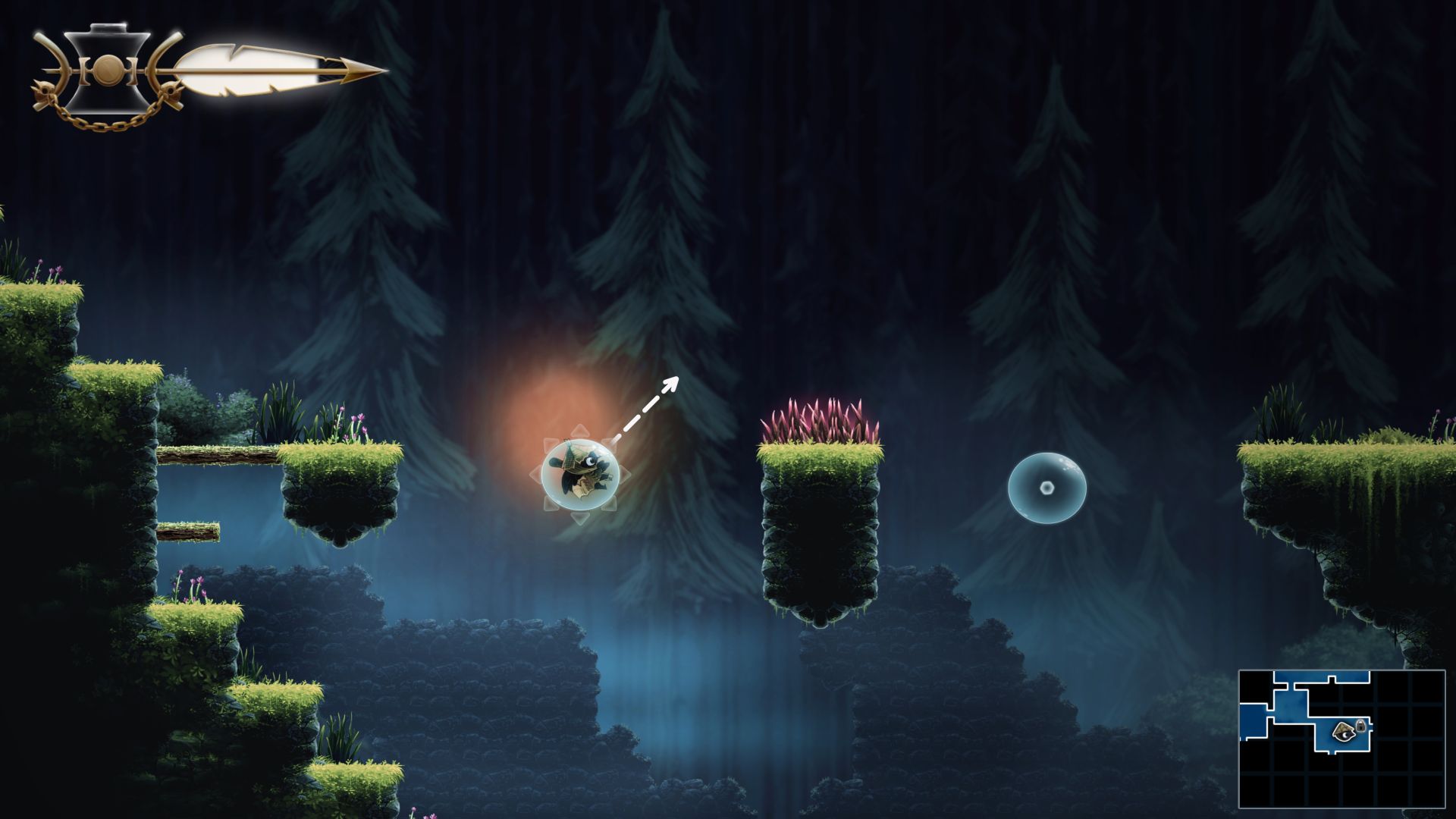
Well Dweller‘s gameplay really becomes addictive once the traversal mechanics open up. Early on, you get Ori-style launch bubbles that fling Glimmer across spikes and abysses, often requiring perfect timing to launch yourself properly. Useful as those are, things get even more interesting once you acquire the Slingshot. This upgrade allows you to shoot your matchstick into specific walls, pulling yourself toward higher positions whenever a suitable surface exists. Reminding me immediately of the sticky arrows from the nineties classic QuackShot, this mechanic completely changes how you look at the environment. Suddenly, a wall that previously looked like background decoration becomes the key to reaching a higher platform or a hidden area. This is where Well Dweller really started clicking for me.
Well Dweller is undeniably at its best when asking you to figure out how to get somewhere. Acquiring new abilities and returning to previously visited areas to see what they now contain delivers that exact slow, rewarding progression that makes the genre so satisfying. That gradual evolution mirrors the game as a whole. Starting out feeling familiar – and perhaps a bit derivative – the experience becomes increasingly enjoyable the more abilities you unlock and the more of the kingdom you explore, building a great rhythm between platforming, puzzle-solving, secret hunting, and backtracking. Sometimes that means stopping to think about which switch opens the next passage; other times, it is all about quick fingers and precise timing.
Every now and then, there are also tense escape sequences that put your platforming skills to the test. They can be challenging, even if they lack the audiovisual and cinematic punch that made similar sequences in Ori so memorable for me. Initially, the in-game music was one of the weaker aspects for me and felt downright sleepy in the earlier sections. Things improve dramatically upon reaching The Bog, however, where environments take on a much more distinctive look and the soundtrack finally finds its groove as well.
Final Thoughts
Well Dweller initially looks like yet another cute Metroidvania borrowing familiar ideas, from ability-gated exploration to its platforming structure. But the further I got, the more I enjoyed my time with it. This is not a hardcore title built around punishing combat and brutally difficult bosses. Forgiving respawns, a plethora of accessibility options, and straightforward boss patterns make that very clear.
Instead, Well Dweller puts its weight behind surprisingly substantial storytelling, a weird cast of characters with genuine charm, and exploration that gradually unlocks clever ways to move through its dark yet intriguing fairy-tale world. It is a very accessible adventure with plenty of personality – one that grew on me considerably the deeper I ventured into its rotten little kingdom.
Additional Information
Release Date: September 22, 2026
Reviewed On: PC. Download code provided by the publisher and PR agency.
Developer: Kyle Thompson
Publisher: Kyle Thompson, Top Hat Studios, Inc., Doyoyo Games
Relevant Links: Available on STEAM