DaRmaZat
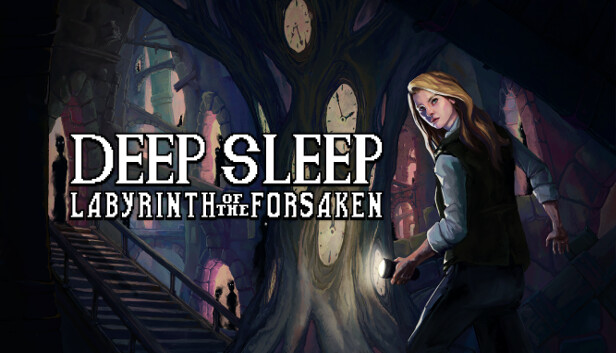
 Deep Sleep: Labyrinth of the Forsaken’s concept immediately recalls classics like the Dreamfall franchise, where protagonists shift between realities using strange devices or otherworldly abilities to enter entirely different dimensions. Here, Amy dives into preserved dreams to uncover the truth behind the death of her brother Thomas—only to realize that reality and illusion might not be so easily separated.
A Brother Lost, A Mystery Unearthed
Deep Sleep‘s story opens quietly, with Amy and her brother Thomas travelling together on a train. A seemingly ordinary tutorial moment—handing your ticket to the conductor—introduces how to manage your inventory and interact with objects. But the illusion of normalcy doesn’t last. Dialogue choices with Thomas and Amy’s sister quickly reveal a branching narrative tone, and by the end of the prologue the rug is pulled out: Thomas is dead. Or is he?
Strange messages appear on Amy’s answering machine. An otherworldly voice calls her within her dreams, warning her of sinister beings known only as the Shadow People. Whatever the truth is, the tone is set early—mysterious, unnerving, and charged with the question of whether Thomas’s fate is truly sealed.

Labyrinths Between Worlds
Determined to find answers, Amy arms herself with a Dream Journal and an electrode cap that lets her navigate layers of lucid dreaming. Each dream links back to a place tied to Thomas’s life: an abandoned train station, a decaying hotel, fragments of familiar places warped into eerie dream logic. Every new location hides another piece of the mystery, presented as self-contained sandbox puzzles or tense action-driven obstacles.
Rooms feel like miniature escape scenarios—spaces that demand observation, experimentation, and sometimes a little trial and error. And because each dream is grounded in Thomas’s memories, the exploration never feels like random surrealism; there’s always a personal tether pulling Amy deeper into the maze.
Tools of the Mind
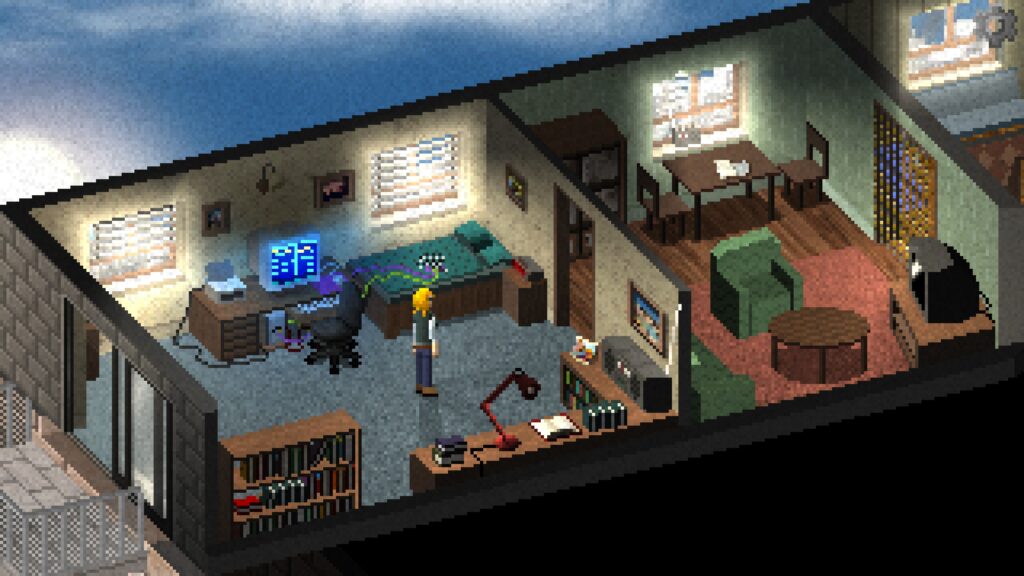
The core gameplay revolves around examining, manipulating, and combining items scattered throughout these dreamscapes. Expect the familiar—keys, wrenches, and flashlights—but also more inventive puzzles, like repairing stuff, decoding cryptic messages, or dousing fires. Dialogues often drop hints without being heavy-handed, keeping the flow moving without frustrating dead-ends.
Deep Sleep‘s combat adds a surprising wrinkle: certain items can be repurposed as weapons during turn-based encounters, complete with durability systems. Amy has a health bar and relies on medicines to recover, but her most unique ability is Imagination—a Focus-driven power to conjure lost or broken objects back into existence. It’s a clever twist that turns the idea of inventory management into something far more dynamic, especially when a fight depends on whether you can recall a weapon into being at the last second. Choices also matter. Using certain objects may alter outcomes down the line, reinforcing that sense of unease: you never quite know if solving a problem in one way has doomed you in another.
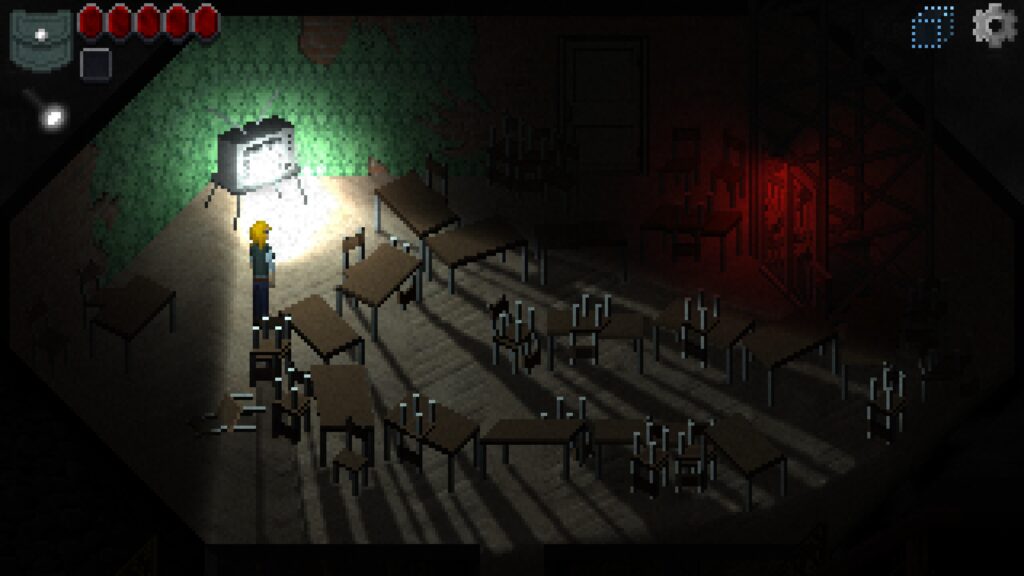
Evolving Systems, Chaotic Combat
What keeps Deep Sleep engaging is how its systems gradually expand. Echoes collected throughout dreams unlock upgrades to Amy’s inventory and skills, granting new abilities that reshape how you approach later puzzles. Researching objects allows Amy to summon them at will inside dreams, further blurring the line between memory, imagination, and reality.
These layered mechanics ensure the game rarely feels static. Yet the combat system is a mixed bag—conjuring weapons requires Focus points, and stumbling unprepared into a fight often means unavoidable death. Worse, the Escape mechanic that should let you disengage doesn’t always function reliably, which makes certain encounters feel more punishing than intended.
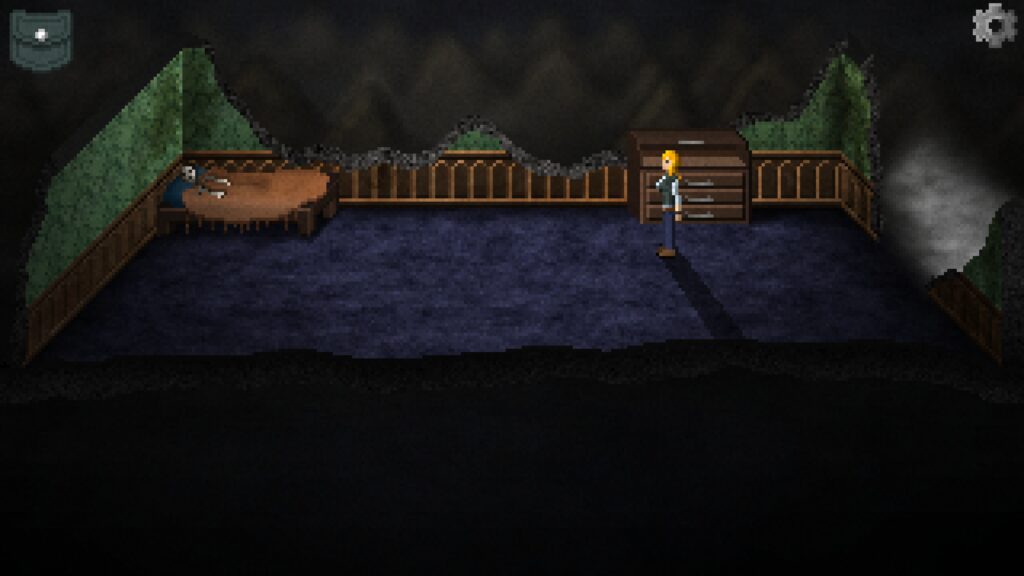
A Pixelated Dreamscape with Smooth Controls
Visually, the game leans on richly detailed pixel art, a style that perfectly suits its dreamlike and unsettling atmosphere. While the chunky resolution can look less sharp on large screens, the game shines in handheld mode—intimate, moody, and easy to lose yourself in. Thanks to its smooth mouse and controller support, the portable format makes its dreamlike puzzles even more absorbing.
Deep Sleep’s sound design is exquisite, with the opening theme immediately setting a cinematic mood. From there, the score drifts into layers of mysterious ambient textures that cling to the background like a lingering fog. The sound effects carry weight too: echoing footsteps, the piercing ring of a phone, the unsettling static of a television with no reception—all heightening the uncanny mood.
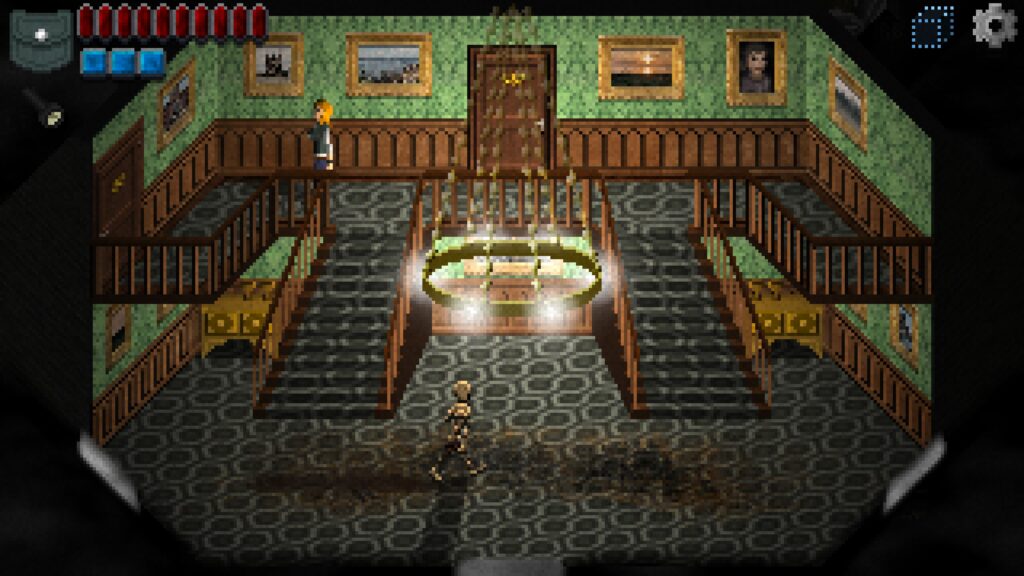
Final Thoughts
Deep Sleep: Labyrinth of the Forsaken is an intriguing puzzle thriller that thrives on atmosphere and curiosity. Its dreamlike setting, evocative pixel charm, and ethereal soundtrack pull you into Amy’s desperate search for answers, while the mechanics of imagination and echo-driven upgrades ensure the gameplay feels consistently fresh.
It isn’t flawless—the turn-based combat can be clumsy and occasionally unfair—yet the game’s impression lingers well beyond the moment. What begins as a nightmare steadily evolves into something more layered, leaving you to wonder whether the truth Amy finds will be salvation or a darker, more harrowing outcome. For fans of narrative-driven mysteries, lightly challenging puzzles, and retro-styled adventures, this one is easy to recommend. Just don’t expect to sleep soundly after you close your eyes.
Additional Information
Release Date: August 21, 2025
Reviewed On: PC. Download code provided by the publisher and PR agency.
Developer: scriptwelder
Publisher: Armor Games Studios
Website: Deep Sleep: Labyrinth of the Forsaken
Relevant links: Deep Sleep: Labyrinth of the Forsaken on STEAM