DaRmaZat
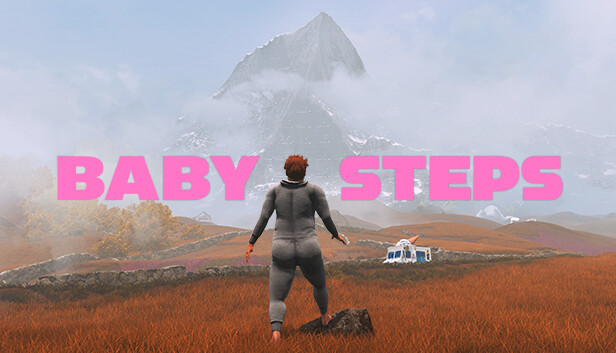
 On paper, Baby Steps is a “literal walking simulator”. Every step you take across misty mountains is yours to command, one leg at a time. The pitch is straight from the makers of Ape Out and Getting Over It, and it embraces the same brand of absurd physical comedy. You don’t just play the game—you wrestle with it.
Stumbling Into Existence
Nate isn’t a hero, or even particularly likable. He’s an unemployed, socially awkward loner with little going for him, until one day he discovers his one and only hidden gift: putting one foot in front of the other. That fragile premise unfolds across a surreal, mist-shrouded world, where every step becomes a precarious balance of absurdity and challenge. It’s punishingly funny, strangely captivating, and sets the tone for a journey where clumsiness defines the experience.
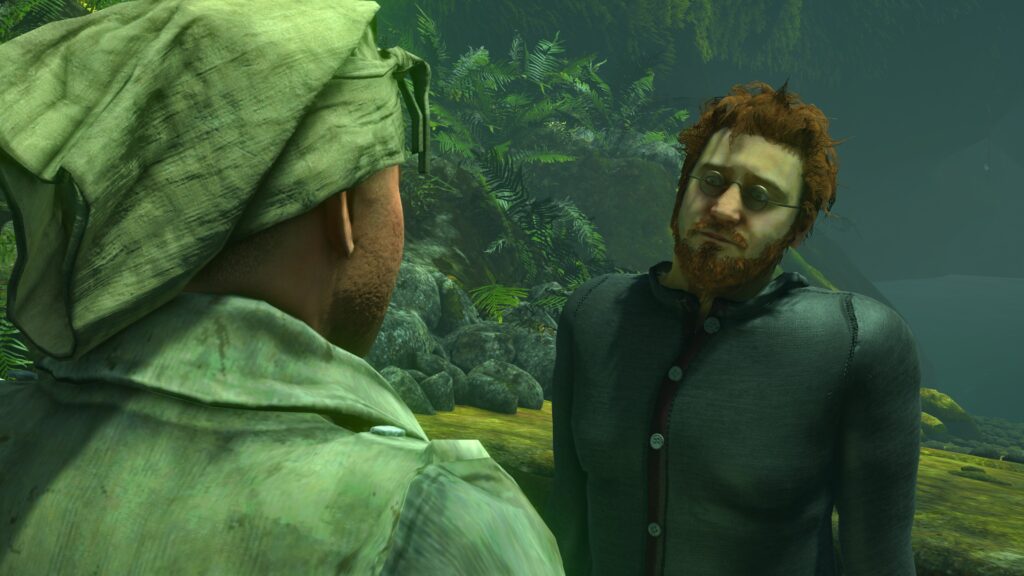
Right away, it’s clear that Baby Steps‘s humor leans into deadpan, uncomfortable awkwardness. To help you out of a deep pit, a pushy road worker insists on grabbing your hand, to which Nate blurts out the bizarre lie: “I have pee on it.” A bit later, a shoe seller points out you’re not even wearing socks, thus refuses to sell you anything, and twists the knife by saying he doesn’t stock your child size anyway.
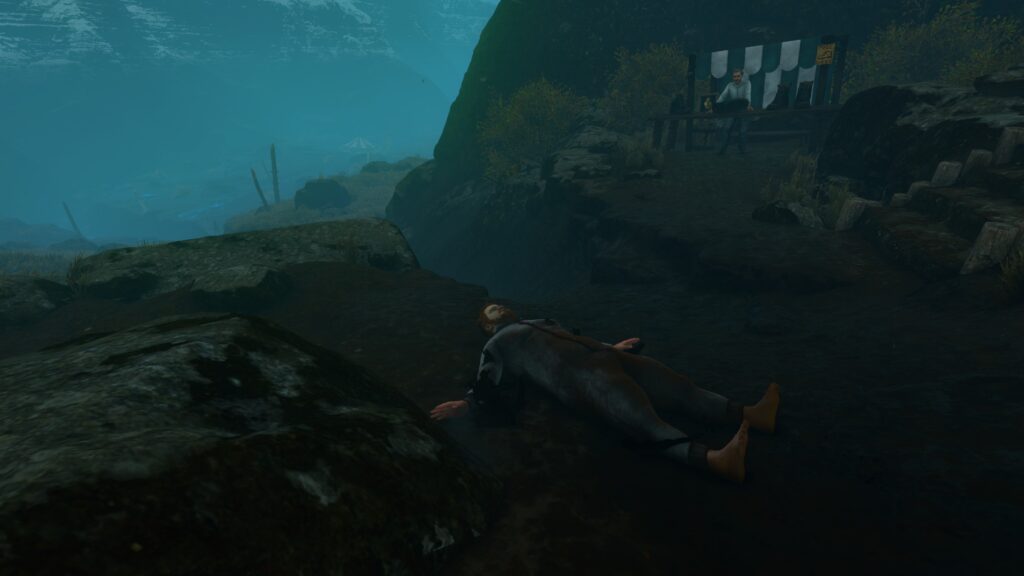
This bizarre exchange is just one example underlining how everyone else in the Baby Steps universe feels ‘normal’ while you’re the odd one out, shuffling around in your onesie. Sadly, the amusement quickly fades. Once the dialogue is over, the NPC literally freezes in place, scattered like a statue across the land. The world that just felt so alive becomes disappointingly static, and that will not be the only time this happens.
Gravity Against Patience and Endurance
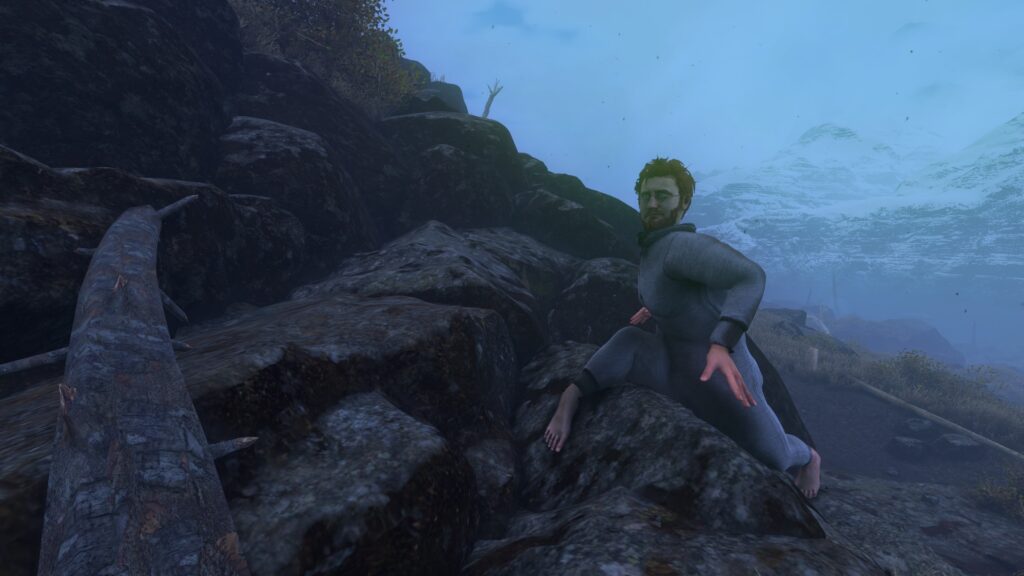
Naturally, the physics system in Baby Steps delivers the real spectacle. Each leg, knee, and foot can be rotated with unusual precision, letting you fumble through steps in a way rarely seen in games. Push the left stick too far forward, and Nate collapses face-first in the mud. Bend backward too far, and he slips comically onto his spine. Both extremes create slapstick hilarity, especially in landscapes built to amplify failure: mudslides that shoot you down slopes, pits that swallow you in ugly falls, broken bridges that taunt you mid-crossing, and uneven trails that climb and dip more sharply than you expect.
But the joy of stumbling soon curdles. Losing your way is constant. Once you end up on rough terrain, it can take dozens of minutes of awkward wrangling to escape. The combination of endless wandering, repeated failure, and glacial pacing wears you down. Control never feels fully secure, as the uneven world conspires to throw you off balance.
A World That Plays You and Wants You To Get Lost
Even the few rewards feel empty. After a brutally steep climb, the prize of putting on a silly non-collectible hat lands with a thud, offering no real sense of achievement. From there, you are simply out of ideas about what to do next. Guidance is almost nonexistent.
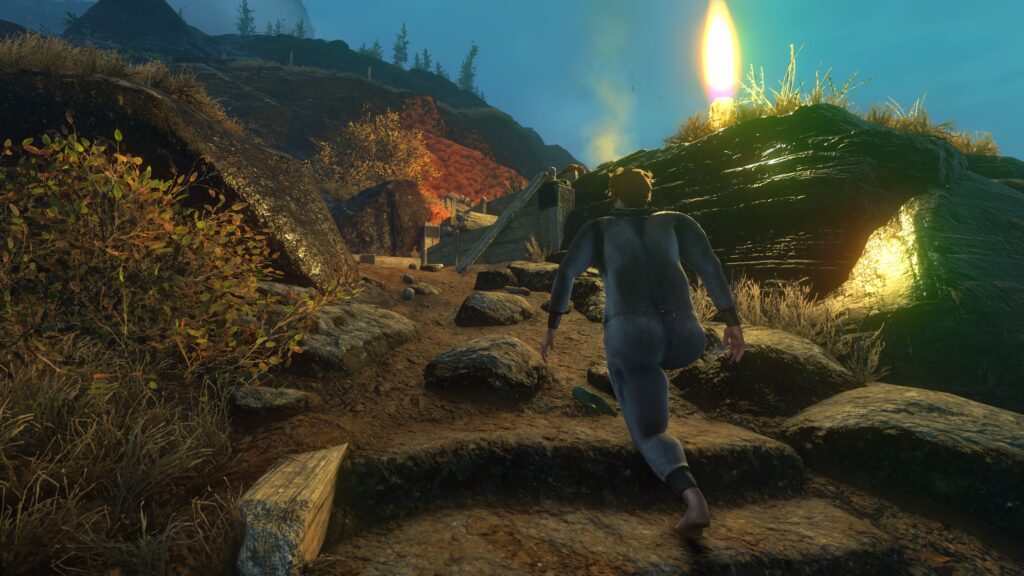
Burning candles and lonely campfires occasionally signal a vague direction forward, but once passed, the game abandons you again to guesswork. Compared to Death Stranding, which layers its isolation with variety, purpose, and a sense of progression, Baby Steps feels more like an endless sandbox: fun for giggles at first, then slowly collapsing into frustration and fatigue.
Endless Steps, Endless Rhythms
On a purely graphical level, Baby Steps looks surprisingly modern. Odd, broken carnival attractions dot the terrain purely as visual quirks, evoking a sense of childhood lost and faded glory—a subtle metaphor, perhaps, for lingering traumas of youth. Lighting strikes just right across misty valleys, while distant vistas shimmer with atmosphere. Close up, the detail impresses even more. Sludge, water, and gravel cling stubbornly to Nate’s onesie, staining and weighing him down in ways that look remarkably lifelike. The world may be empty in terms of interaction, but the technical fidelity of how it renders mud on fabric, or sunlight catching the edges of a broken bridge, adds a sharp visual punch. For the most part, the frame rate also delivers a smooth experience, interrupted only by minor stutters.
Yet the most curious beast in Baby Steps’ playpen is actually the soundtrack. Its “420 beats and vibes” are woven into a dynamic score that builds and shifts as you move. At first, it feels like a clever companion to Nate’s clumsy rhythm. Before long, though, those beats loop into monotony, more distracting than energizing. Instead of carrying you forward, the soundscape highlights the very emptiness you’re trudging through.
Final Thoughts
Baby Steps begins with a spark: hilarious cutscenes, bizarre humor, and impressively detailed physics make every slip and fall entertaining. For a time, learning to literally walk like a baby is its own reward. Yet soon, the emptiness sets in. What starts as a unique concept with moments of genuine fun eventually spirals into exhaustion. With too little narrative, too little direction, and too much sandbox wandering without purpose, Baby Steps ends up as wasted potential.
Additional Information
Release Date: Sep 23, 2025
Reviewed On: PC. Download code provided by the publisher and PR agency.
Developer: Gabe Cuzzillo, Maxi Boch, Bennett Foddy
Publisher: Devolver Digital
Website: Baby Steps
Relevant links: Baby Steps on Steam