DaRmaZat
 Trapped in a house that won’t let you leave, Luto casts you as a man haunted by grief, spiraling deeper into a distorted reality with every failed escape. Developed by Broken Bird Games, this psychological horror title blends abstract puzzles with slow-burning dread, confronting players with themes of loss, depression, and the unreliable nature of memory. Released on July 21, Luto dares you to find clarity in a place where nothing behaves as it should—and where the scariest thing might be what’s buried inside yourself.
It begins with a nightmare. Sam finds himself caught in a sandstorm, slowly dying. The screen cuts to a shattered mirror and a sink full of pills — a quiet introduction to a psychological loop he can’t seem to escape. A voice begins to narrate, both mocking and oddly intimate, gently pushing us into a world where memory, trauma, and perception blur into one.
It’s an intriguing start — smart, self-aware, and clearly influenced by titles like The Stanley Parable, complete with a narrator who coughs between jabs. But the promise of something narratively bold quickly fades.
Lost in the Loop
Luto positions itself as an emotional horror experience about loss, mental health, and unresolved grief — and those themes are present, but poorly executed. After the game’s opening chapter, the narrator largely disappears, and what’s left is a puzzle-heavy walking sim that struggles to respect the player’s time or intelligence. You’re meant to feel trapped in a maze of memory and fear, but more often, it just feels like you’re blindly clicking every object in sight, unsure what the game even considers interactive.
And that’s if you can even see them. Luto’s visual design, while atmospheric, makes interactive elements difficult to spot — and progress often hinges on surreal, abstract logic. For puzzle fans with an appetite for obscure solutions, there’s satisfaction to be found here. For everyone else? Frustration is never far away.
The only “hint” system comes in the form of Sam’s sketchbook, filled with childhood scribbles and vague symbolic clues. It’s a nice narrative touch, but functionally useless. As the story unfolds, new themes emerge — family trauma, abuse, and suicide among them — and while these are weighty subjects worth exploring, Luto handles them with such abstraction and overuse of metaphor that emotional connection becomes nearly impossible. It’s all ideas and no anchor.

Static Terror
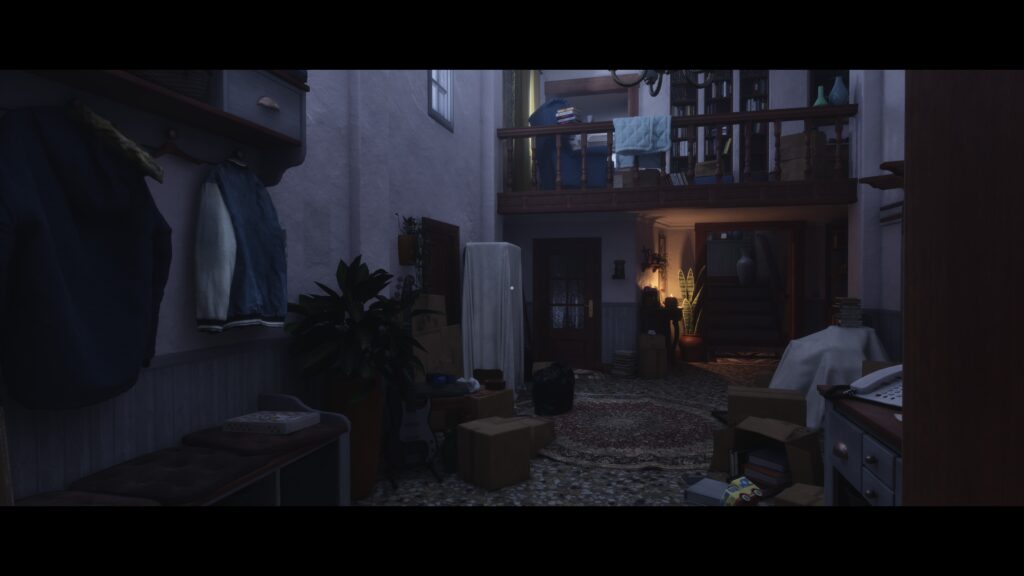
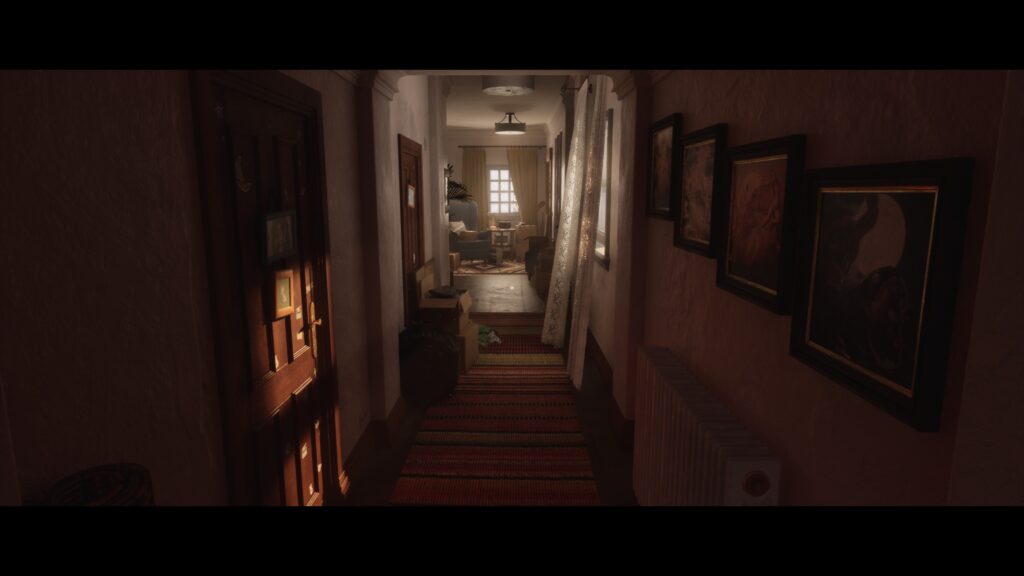
Despite being built in Unreal Engine 5, Luto also never really impresses visually. The environments are serviceable — gloomy hallways, flickering lights, shadows where they shouldn’t be — but it’s nothing genre fans haven’t seen before. Worse, horror takes a backseat. There’s little to no build-up or release, just a lingering sense of mild unease that never escalates. No standout scares, no clever subversion — just surreal repetition.
Even technically, the game stumbles. Early on, auto-save points are spaced awkwardly, leading to forced repetition. There’s an odd blur or bloom effect layered over movement that creates a woozy, near-drunken sensation when looking around. Disabling the “cinematic mode” option helps — a little — but the issue never fully goes away. Control schemes are locked, and button mappings are non-standard. Text sometimes still appears in Spanish, and you’ll occasionally get keyboard prompts while playing with a controller. There’s no language option beyond English voice-over either — a missed opportunity for something as rooted in Spanish identity as Luto. That said, performance on PC is solid. No major crashes, and frame pacing is consistent even in heavier sequences.
Hollow Echoes
There’s a real story buried in Luto — one about fractured families, fading memories, and mental illness. But the game buries it under thick layers of abstraction, frustrating mechanics, and silence. Without any real interaction or pacing, you’re often left wandering in circles, staring blankly at walls and clicking on everything just to make something happen. That doesn’t make for tension. It makes for tedium.
Worse still, the game feels like it lacks faith in the player. It offers little guidance, few rewards, and no emotional payoff for those who stay the course. The narrator, so promising in the intro, could have easily served as a dynamic hint system or emotional guide. Instead, he’s relegated to rare, scripted moments, fading just when the experience needs him most.
Final Thoughts
Luto wants to be a haunting reflection on grief and trauma — a surreal dive into the pain of loss. And conceptually, it’s all there. But concept is not execution. Its puzzles are cryptic, its horror toothless, and its storytelling too abstract to resonate. The few bright spots — a strong start, solid performance, and a few narrative ideas — are drowned out by design choices that feel cold and disconnected.
In the end, Luto is a game about being trapped. Unfortunately, the player ends up feeling the same way.
Additional Information
Release Date: July 21, 2025
Reviewed On: PC. Download code provided by the publisher and PR agency.
Developer: Broken Bird Games
Publisher: Broken Bird Games, Selecta Play, Astrolabe Games
Website: https://www.brokenbirdgames.com
Relevant links: Luto on STEAM