DaRmaZat
 A Stylish Nightmare That Fights Itself.
A cursed landscape, reality-bending monsters, and a comic-book presentation soaked in ’80s horror flair? I Hate This Place seemed right up my alley. Developed by Rock Square Thunder and published by Feardemic, the isometric survival horror game releases on January 29. Its pitch is immediately evocative—part Darkwood, part Stranger Things—and at first glance, it absolutely lands. But a game is more than just a visual concept or an artistic pitch, right?
A Ritual Gone Wrong
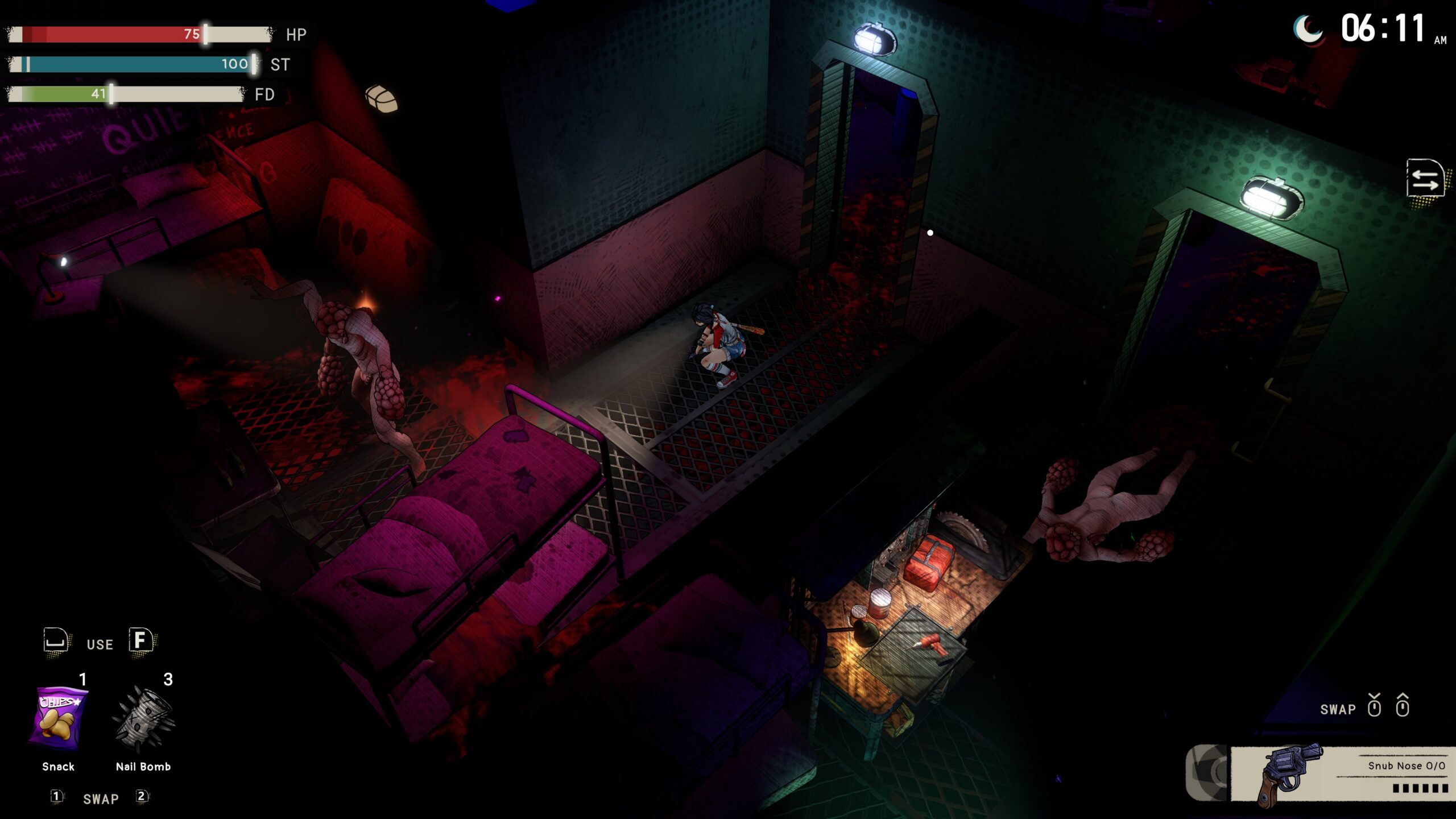
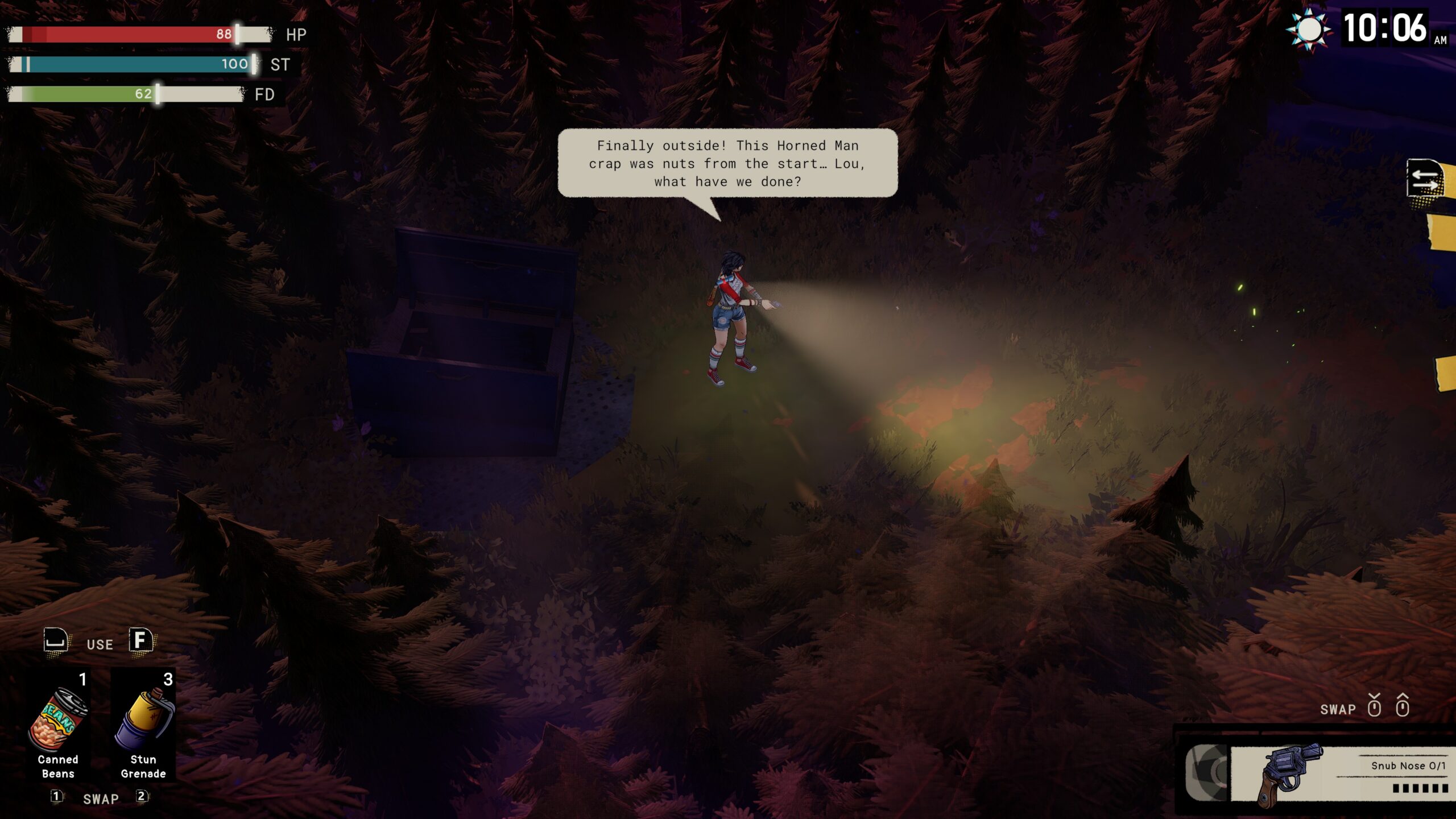
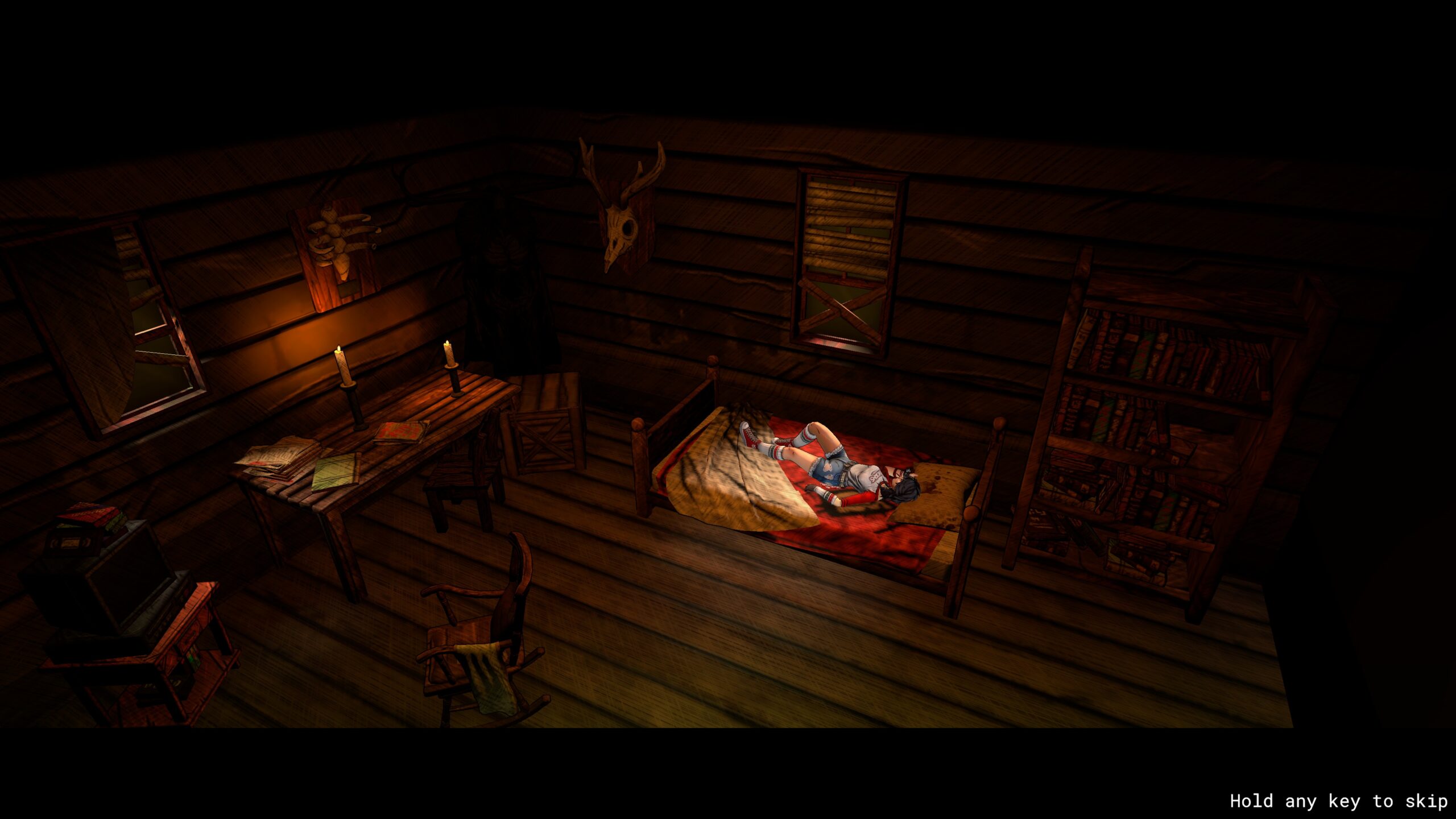
In I Hate This Place, you play as Elena, who ventures into a dark forest together with her friend Lou in a desperate attempt to reconnect with the past. They perform a ritual meant to summon the Horned Man, a pagan deity tied to the disappearance of Elena’s mother. Unfortunately, the ritual goes wrong almost immediately. The two are separated, and Elena starts looking for Lou in a dark warehouse nearby. From there, the nightmare properly begins upon encountering Adam, a deeply unsettling figure wearing the skull of a horned beast. He clearly knows far more about what’s happening than he lets on, but his help comes wrapped in cryptic half-truths rather than clarity. This early stretch, especially the cramped underground laboratory where some obscure experiments appear to have birthed grotesque creatures, is genuinely effective. The mood is unsettling, strange, and tonally strong.
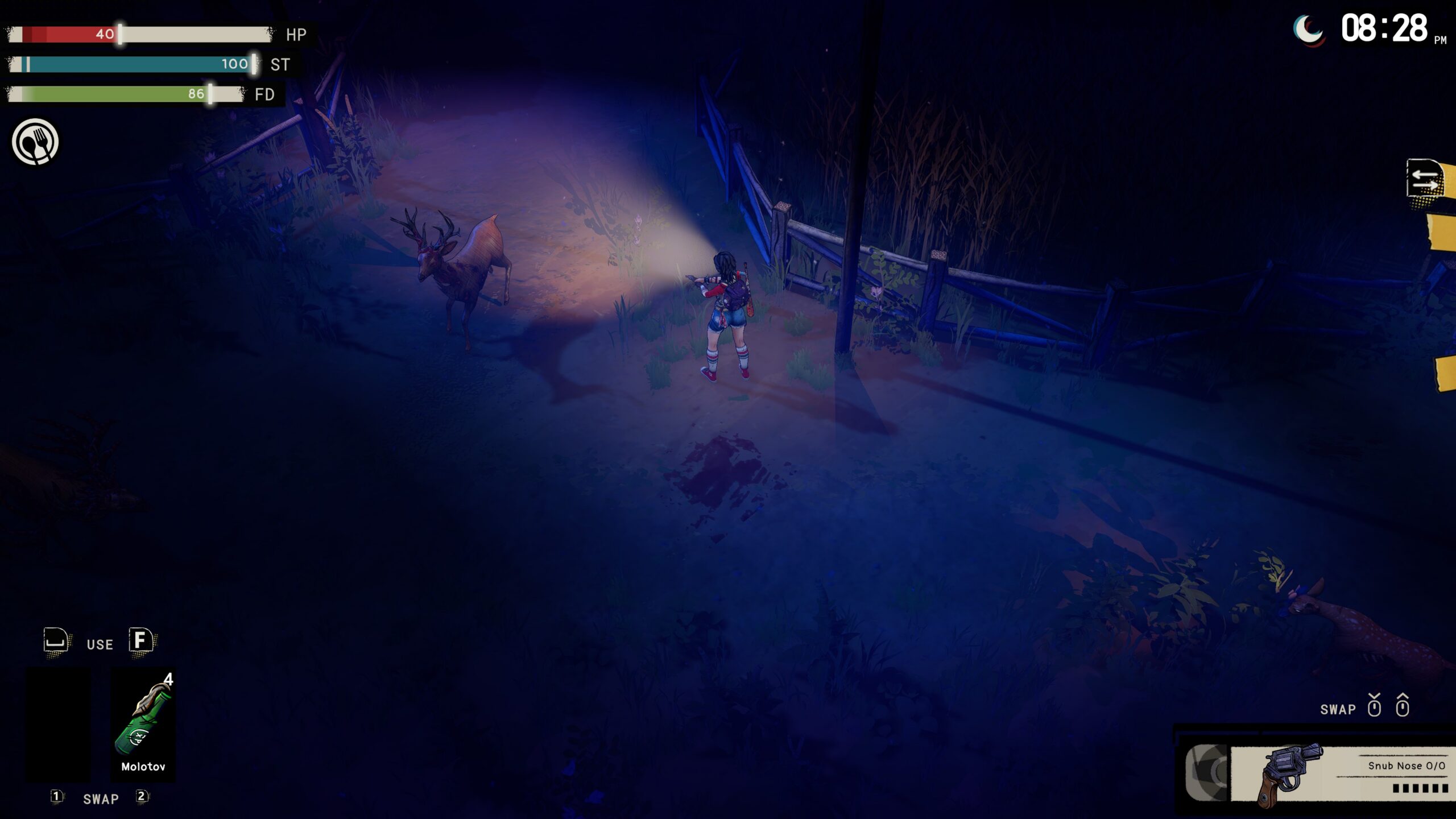
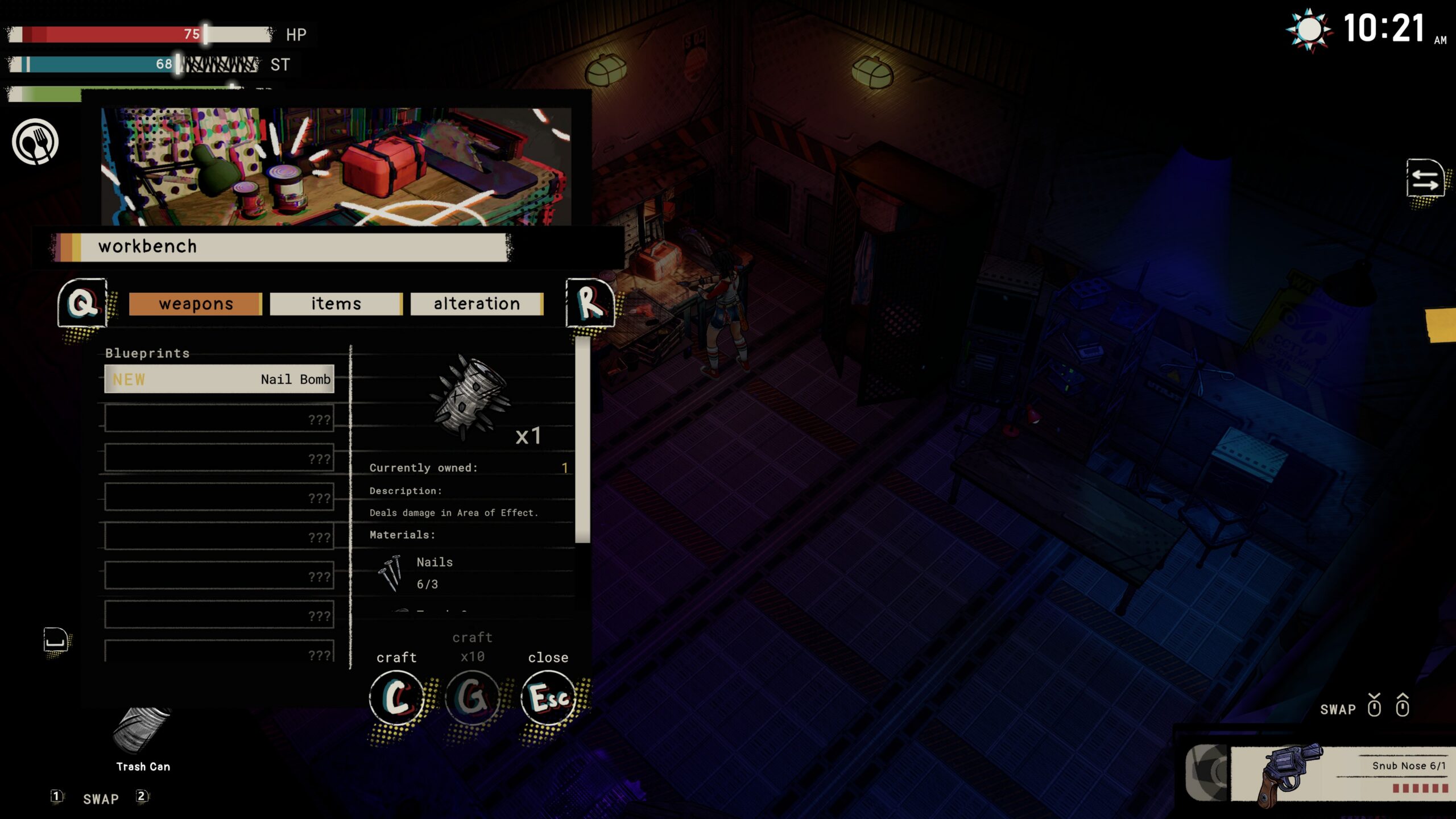
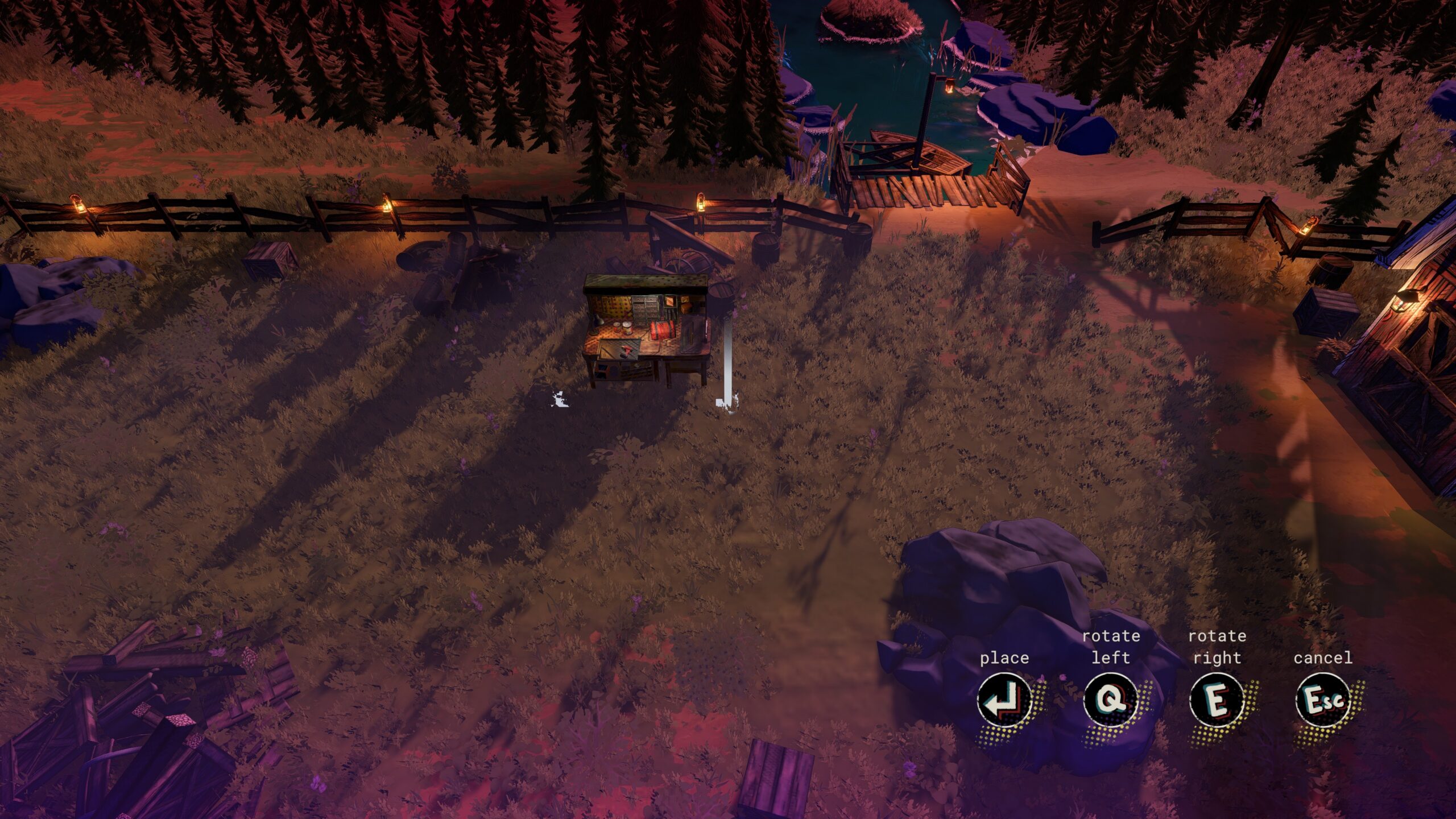
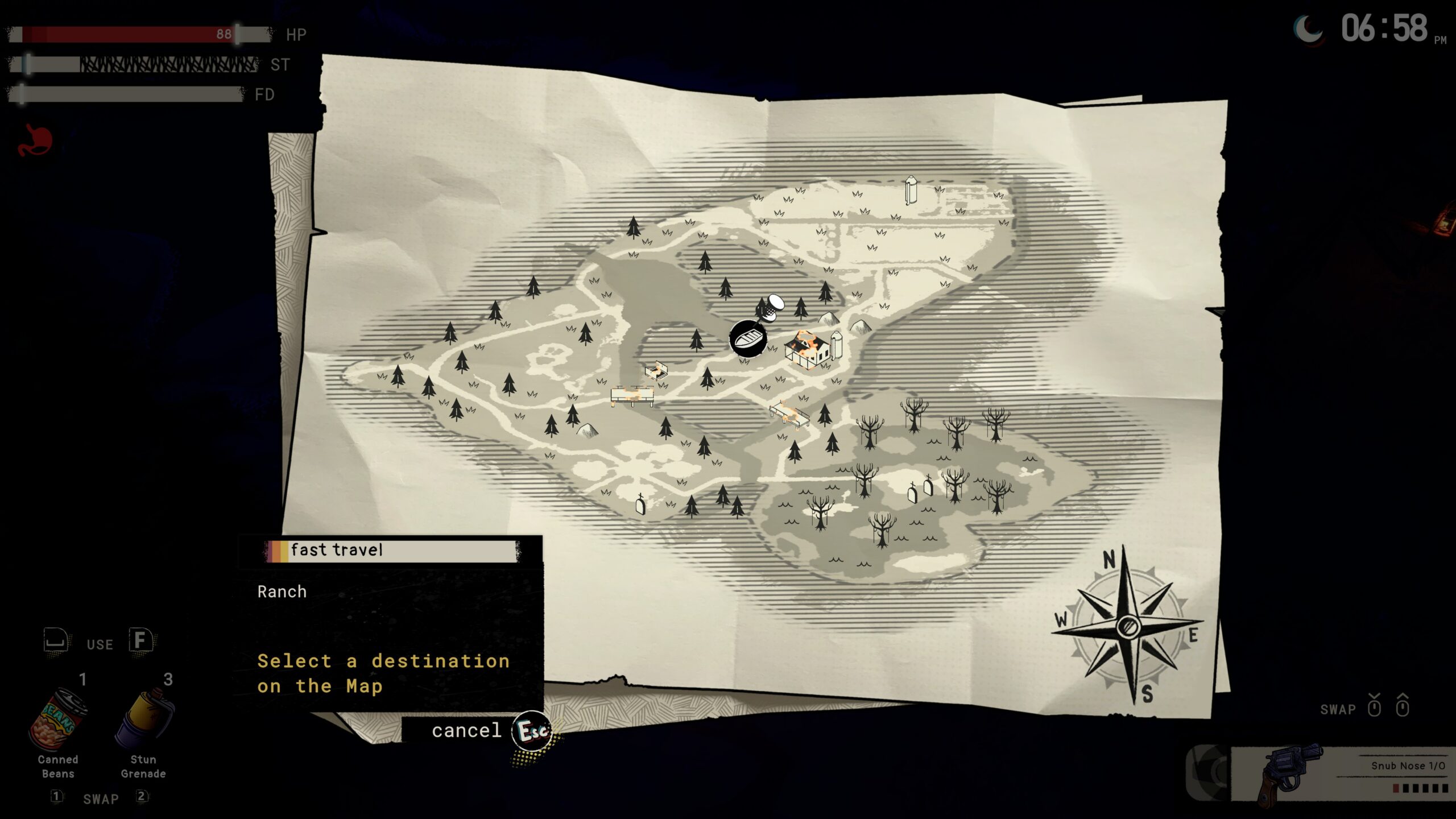
That same grim atmosphere carries into Rutherford Ranch, a much more open area reached after escaping the labs. Here, the game opens up and the mechanics focus more on scavenging, crafting, and survival management. Day and night cycle rapidly—perhaps too rapidly—pushing you to explore and prepare in daylight before hunkering down when darkness brings stronger, more aggressive enemies. The ranch acts as a central hub from which you can travel to other regions by boat, and it allows a surprising amount of freedom in how you build and place structures, including workbenches and defensive setups. Unfortunately, even here friction creeps in, as build times cannot be skipped or accelerated, so sometimes you just have to go to sleep or find something else to do while waiting, which is a bit destructive for the pacing compared to the beginning of the game.
Survival Systems Without Much Consequence
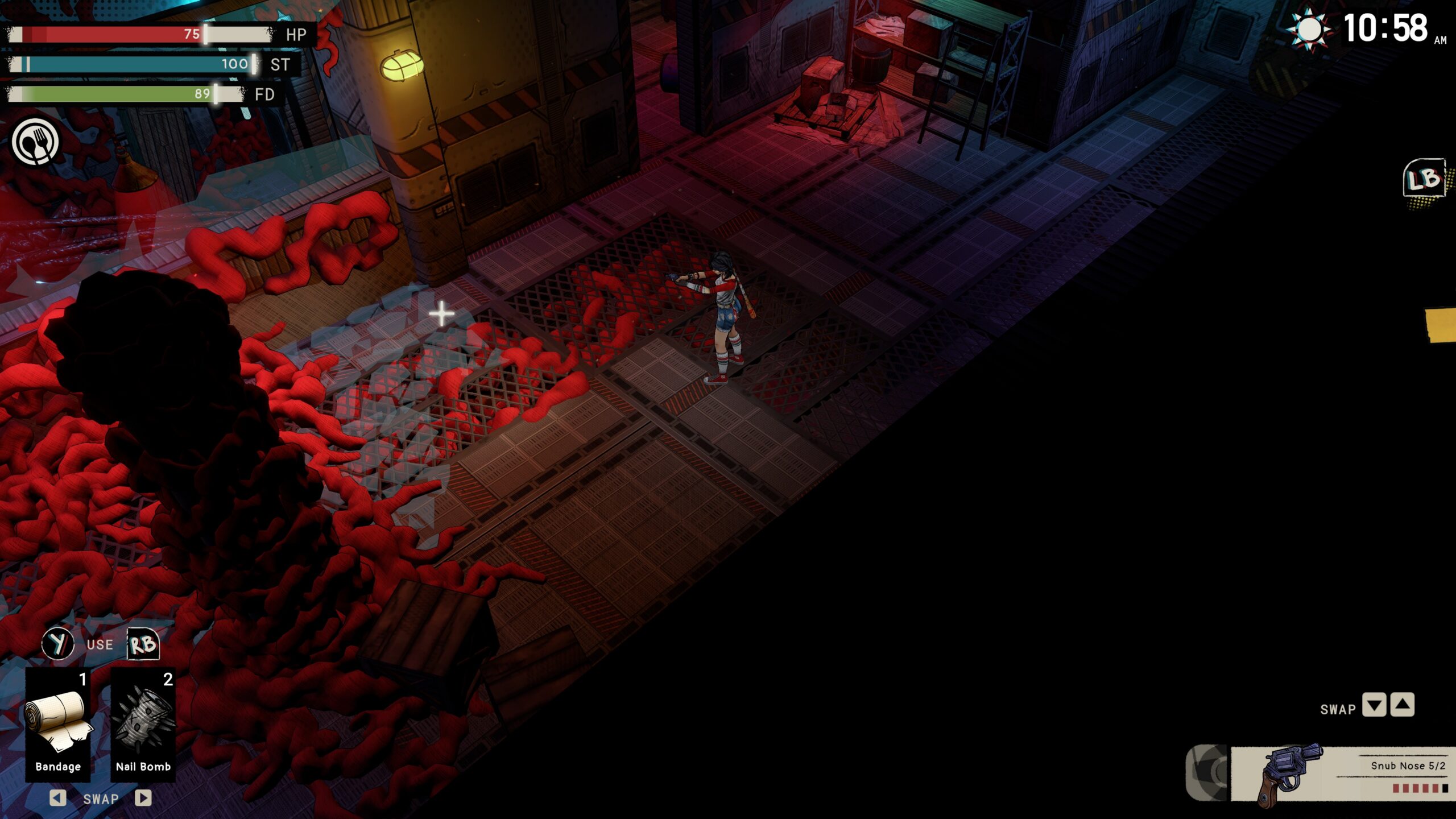
Mechanically, I Hate This Place is built around three main gauges: health, satiety—which functions like stamina—and a separate food meter. On paper, it’s a very familiar survival loop. In practice, it often feels undercut by how progression is structured.
The world is filled with static number codes and key items you must discover to progress, but because neither the codes nor the locations where these objects are found ever change, dying carries little real consequence. You can simply sprint or sneak back to where you left off and continue progressing. The fastest way forward often becomes repeated backtracking to save points rather than stealth, which seems to clash a bit with the game’s intended design. Unless it was done on purpose.
Escalating Chaos, Undermined Tension
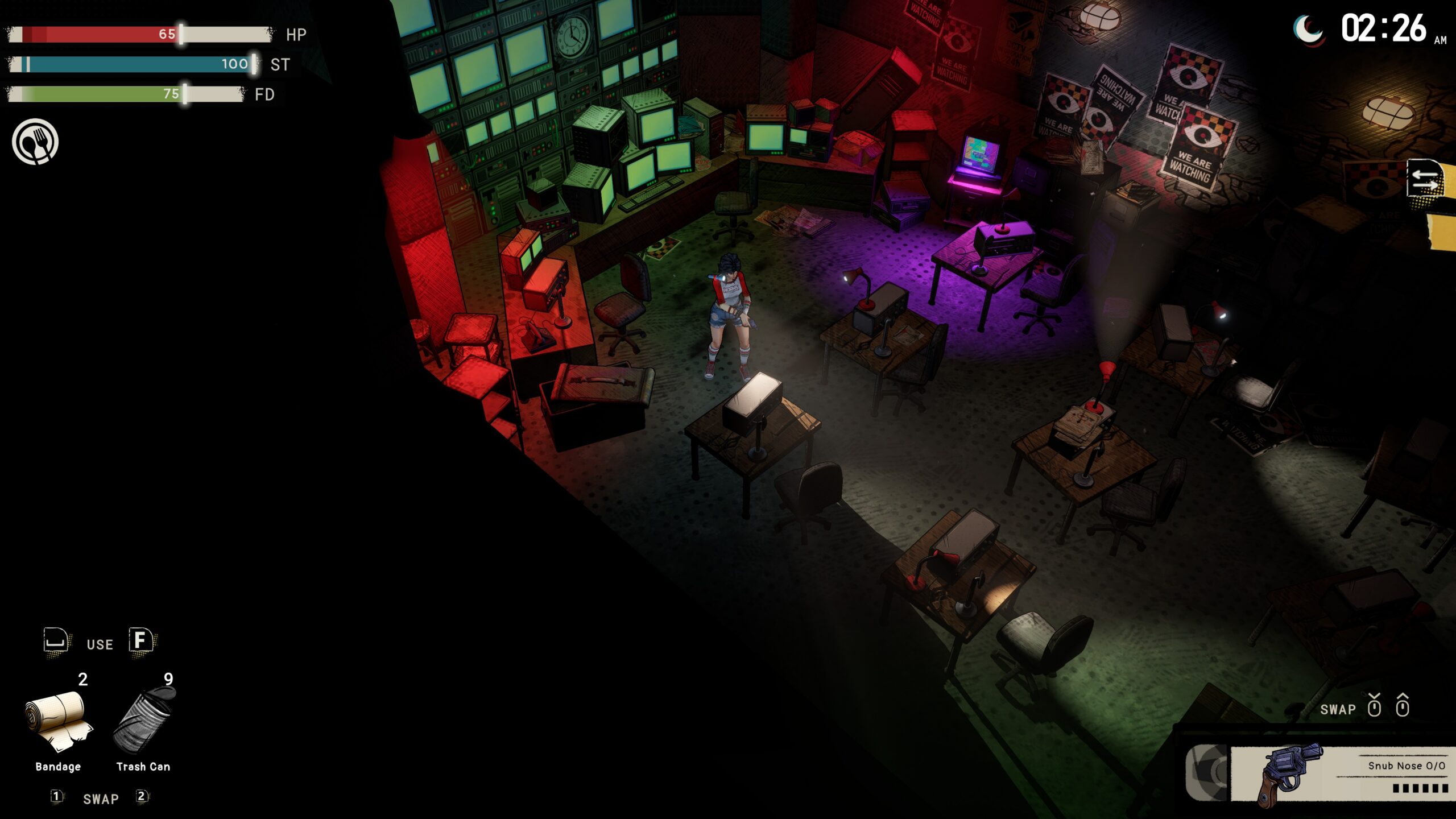
Because, now getting to the point, combat and stealth are exactly where I Hate This Place‘s cracks become impossible to ignore. Enemies are blind and thus supposed to hunt primarily by sound, encouraging careful movement, environmental awareness, and creative use of distraction. In reality, they often seem to know where you are regardless. Even in pitch-black rooms, and even when crouching, avoiding glass shards, and moving slowly, enemies frequently charge straight at you, only to stop dumbly at closed doors. Step through that door again, and they’re still waiting there and grab you instantly. Throwing objects to lure them feels unreliable to the point of uselessness, and encounters quickly devolve into chaotic, awkward scrambles where running to a safe spot they can’t reach seems about the only thing you can do. There is no block, no dodge, no roll. Reloading is painfully slow, movement is sluggish, with the environment itself often working against you via blood-vein growths that slow your steps and tentacles that grab at you unless shot apart in advance.
There is a lot of variety in weapons, though. You start out with a baseball bat, later gaining access to a pistol and limited ammunition. Firearms are loud and risky, so melee is often preferable. Tools like nail bombs and stun grenades do work, even hitting enemies through objects, but once multiple enemies occupy the same space, the systems begin to buckle. The control scheme doesn’t help either. Instead of a radial wheel, item management is split awkwardly across controller bumpers, with one side reserved for healing and food and the other for combat items. A sidebar menu accessed through a separate button stacks multiple options in a way that’s difficult to memorize, feels less intuitive under pressure, and is fundamentally at odds with a game that relies so heavily on split-second decision-making. Difficulty settings are also absent, which only accelerated the urge for me to exploit flaws rather than engage with the systems as intended.
A Striking Comic-Book
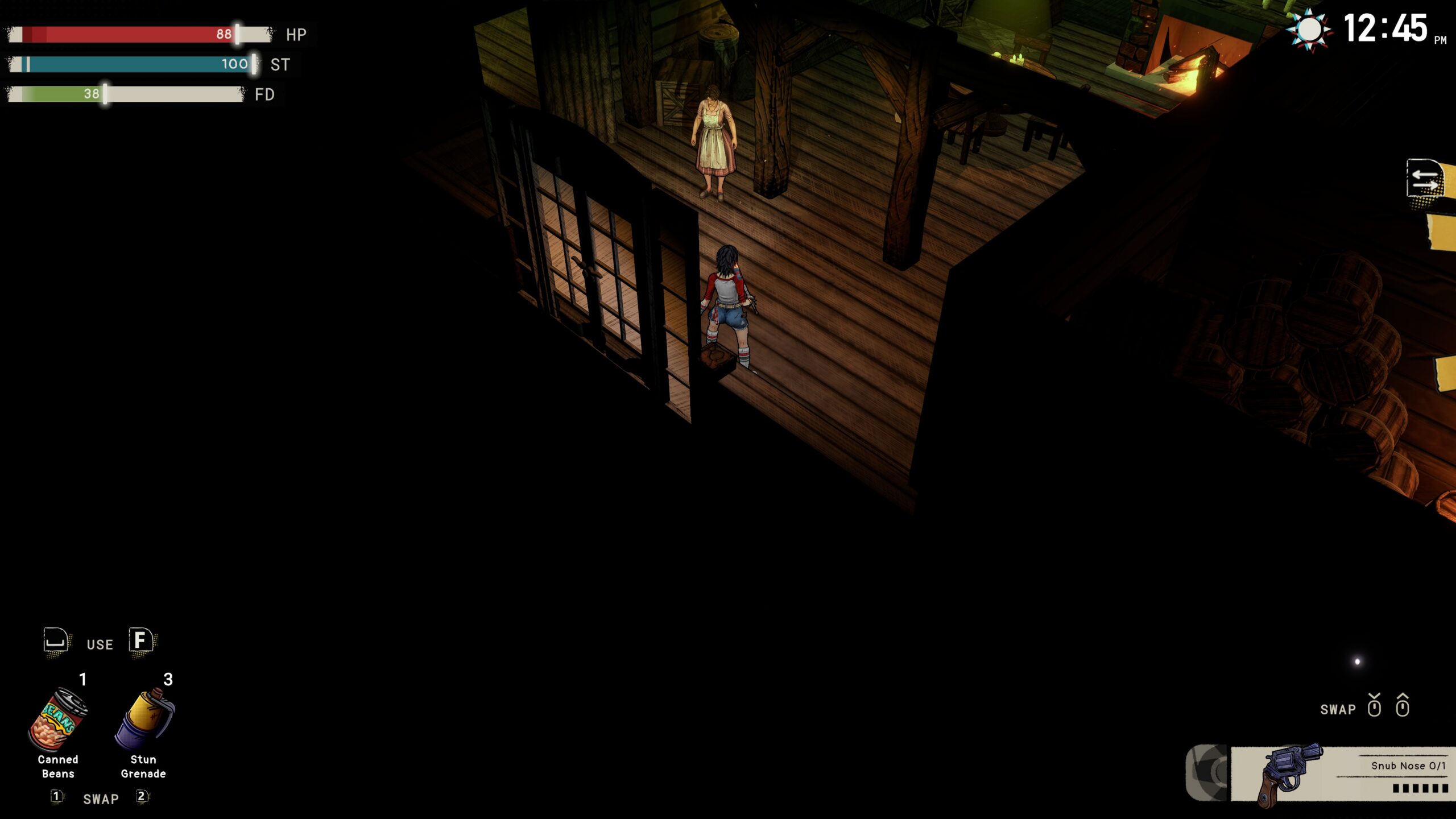
Where I Hate This Place truly shines is in presentation. The bold comic-book art style is striking, with thick lines, aggressive colors, and on-screen sound effects rendered visually like panels ripped straight from a graphic novel. The influence of the award-nominated comic series by Kyle Starks and Artyom Topilin is unmistakable, and the blend of horror, dark humor, and campy gore gives the world a distinct identity.
That said, a myriad of technical issues currently undermine this strength. Performance is inconsistent, with noticeable stuttering in more open areas, and enemy behavior bugs are frequent enough to break immersion. Not seldom, an enemy that grabbed me near a door triggered bizarre animation glitches, like Elena flying or the enemy itself disappearing for a few seconds while I couldn’t do anything. As already stated, there’s also a lot of work to do when it comes to enemy pathing.
Final Thoughts
In the end, I Hate This Place is a game carried by its aesthetic and concept more than its execution. The Stranger Things–meets–Darkwood vibe is real, and the world it builds is genuinely compelling. But clumsy controls, unpolished combat, unreliable stealth, and framerate issues repeatedly pull you out of the experience. However, with further optimization, bug fixes, and refinement, I Hate This Place could become a decent survival horror game.
Additional Information
Release Date: Jan 29, 2026
Reviewed On: PC. Download code provided by the publisher and PR agency.
Developer: Rock Square Thunder
Publisher: Feardemic, Broken Mirror Games, Meridiem Games
Relevant links: Available on STEAM