DaRmaZat
 Gatekeeper to Humanity’s Last Stand.
After racking up more than a million wishlists and surpassing a million demo plays since its debut during Steam Next Fest in May 2025, Quarantine Zone: The Last Check has finally arrived carrying the kind of hype most indie sims can only dream of. A partnership between Brigada Games and Devolver Digital only amplified expectations for the zombie management sim, promising extra polish, broader reach, and a more complete vision after the release window slipped from September 2025 to this week’s launch.

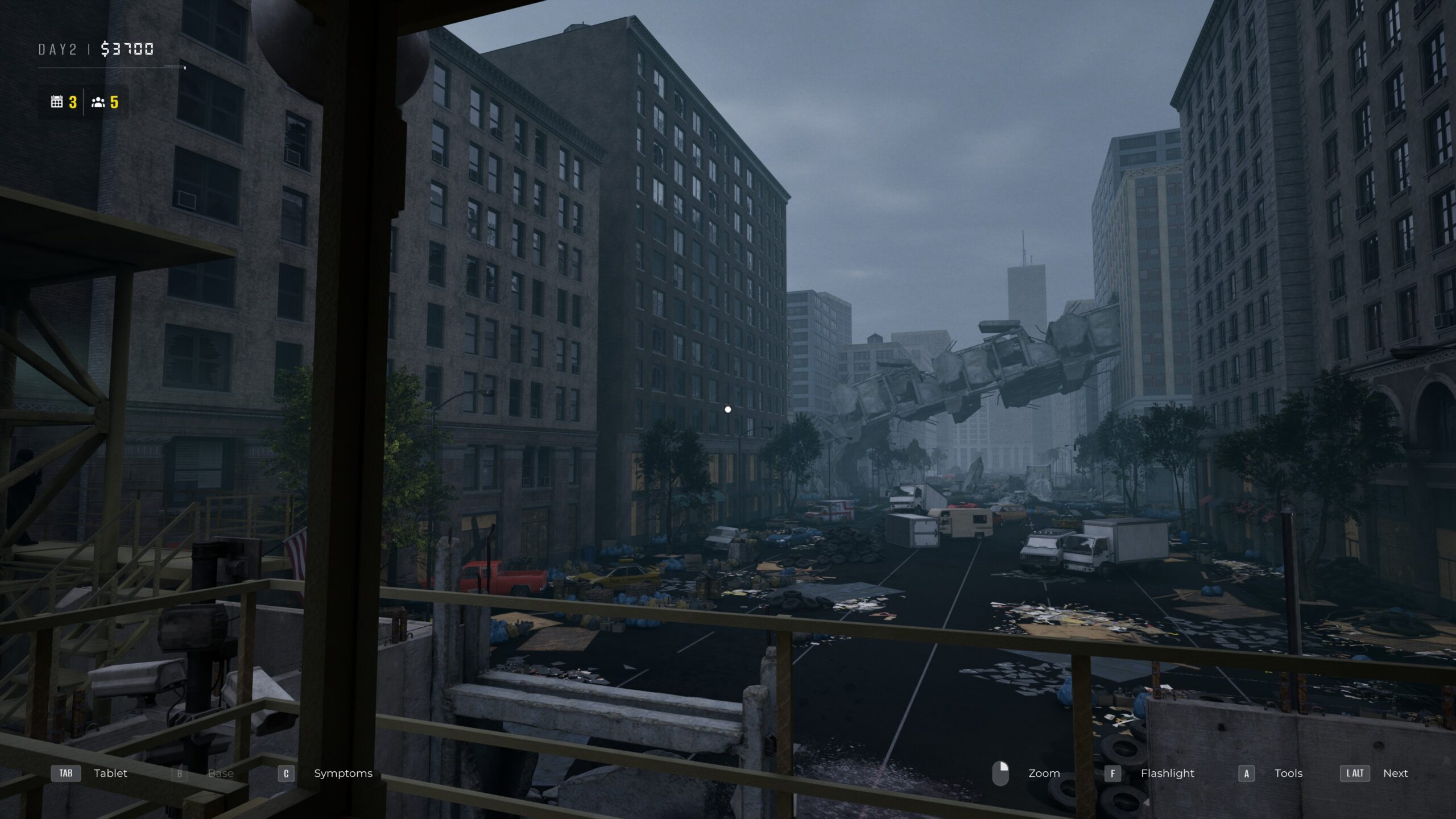
On paper, Quarantine Zone: The Last Check delivers on that promise. It puts you in the role of a checkpoint officer during a zombie outbreak, deciding who is granted safety, who is quarantined, and who never leaves alive. Advanced screening tools sit within reach, but your instincts do the real work—one bad call is all it takes for the infection to slip straight into your camp. Holding the line quickly proves to be the easy part. Keeping everything behind it alive, with the prospect of safe extraction in mind, is where things begin to unravel.
Lines, Lies, and Evolving Symptoms
As you’d expect from a simulator rather than a story-driven apocalyptic game, Quarantine Zone’s narrative seeps in between inspections, alarms, and daily routines. Every day, new survivors—infected or not, that’s the puzzle you have to solve—shuffle forward, hoping to be admitted to your base camp, their half-hidden symptoms on display. They often deny there’s anything wrong with them before you’ve even had a proper look. Reminiscent of Papers, Please and Contraband Police, your daily task is managing the steady stream of incoming people, while Georgie, your assistant, mumbles a fresh set of instructions and demonstrates new tools every day to help you handle that very same routine. There’s a persistent sense that the rules are shifting faster than you can keep up, never laid out explicitly but implied instead—through briefings that hint at viral evolution, new developments explained only in passing, and periodic disasters that interrupt the routine just often enough to keep the tension simmering.
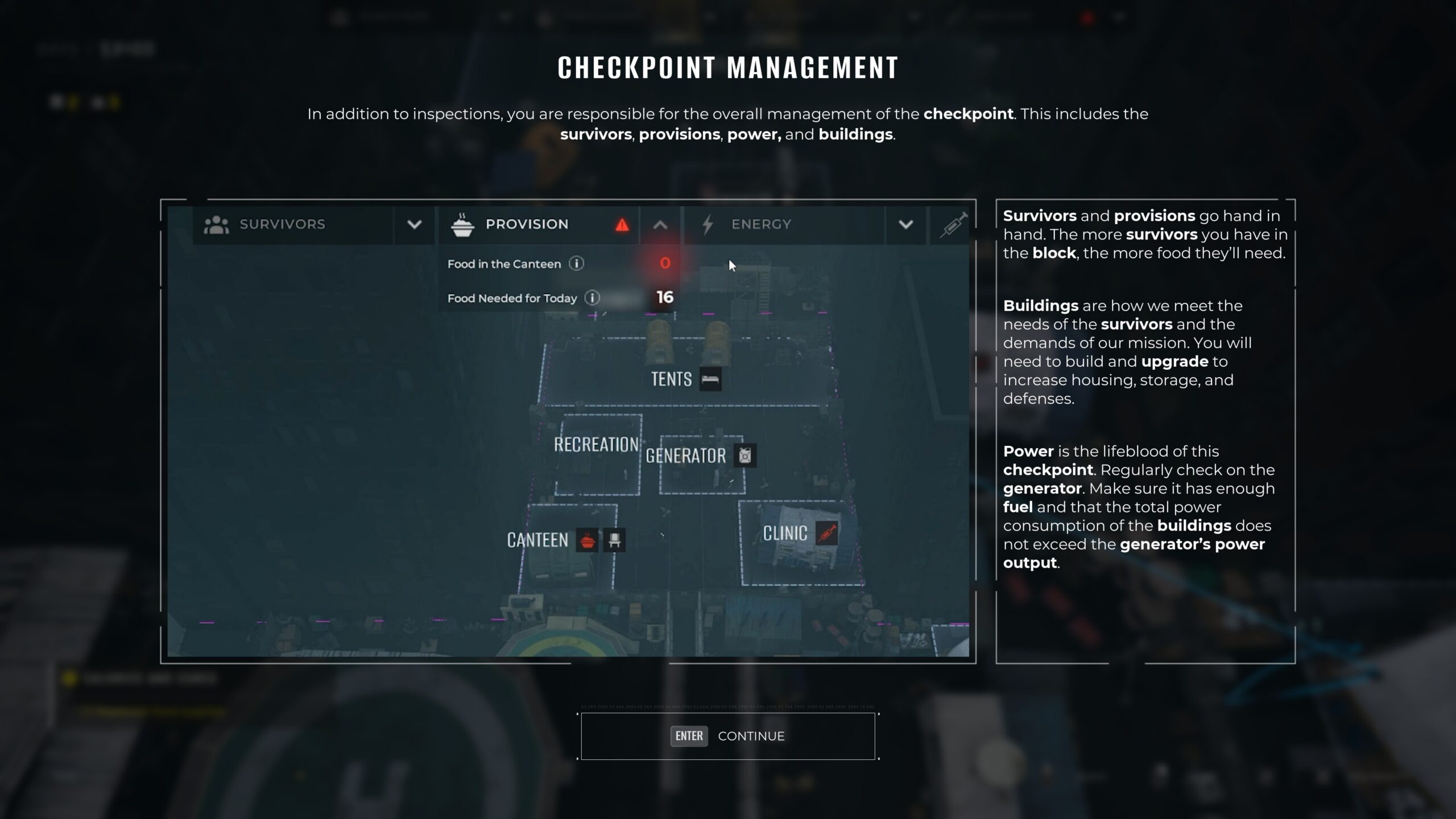
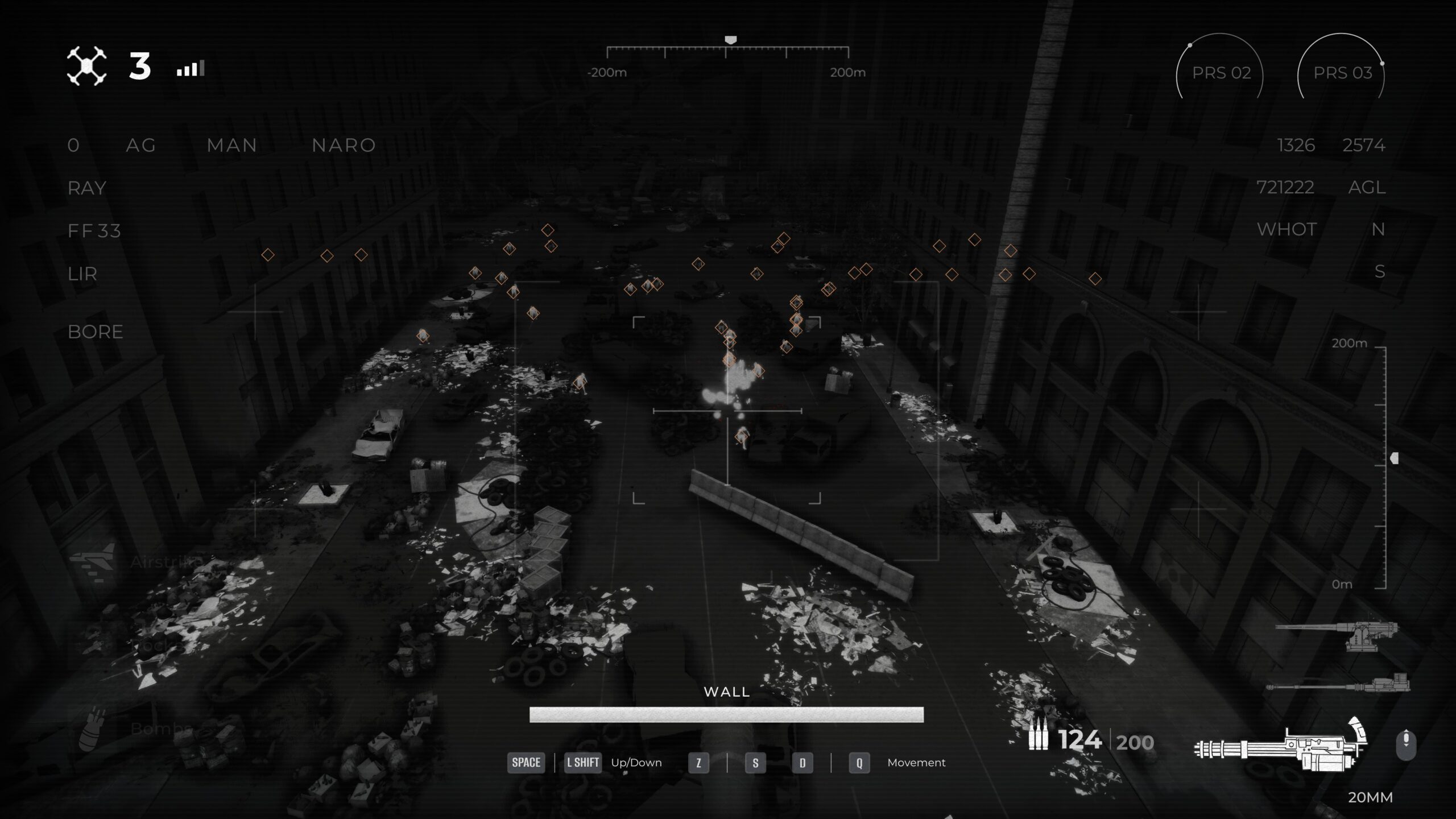
Other gameplay variations—or interruptions, really—are far more mundane. Managing the base camp and its resources often comes down to the checkpoint management UI simply asking you to open your wallet when food stores run low, clinics demand med kits, or generators run dry. Other times, you’re sent walking back and forth to handle tedious busywork, like fixing levers. Meanwhile, zombie attacks punctuate otherwise methodical days, pushing you into isolated combat sections where you’re suddenly expected to master a drone turret with a minigun and rockets, shooting wave after wave of infected as they close in and test the compound’s defenses.
Next, recurrent extraction days raise the stakes even further, imposing quotas that force hard choices about who gets shipped off—scientists for research points, soldiers for quick cash. One poorly timed pause—stepping away mid-interaction at an extraction terminal, for example—can lock in that entire decision, leaving dozens stranded and command quietly unimpressed.
Inspection as Punishment
At the core of Quarantine Zone’s gameplay sits the inspection loop, shared between Campaign and Endless Mode. In Campaign, every correct call nudges humanity closer to evacuation. In Endless Mode, that framing disappears and you’re left with pure survival math. Either way, you’re sorting people—housing, quarantine, the lab, liquidation—and once you decide, there’s no undo.
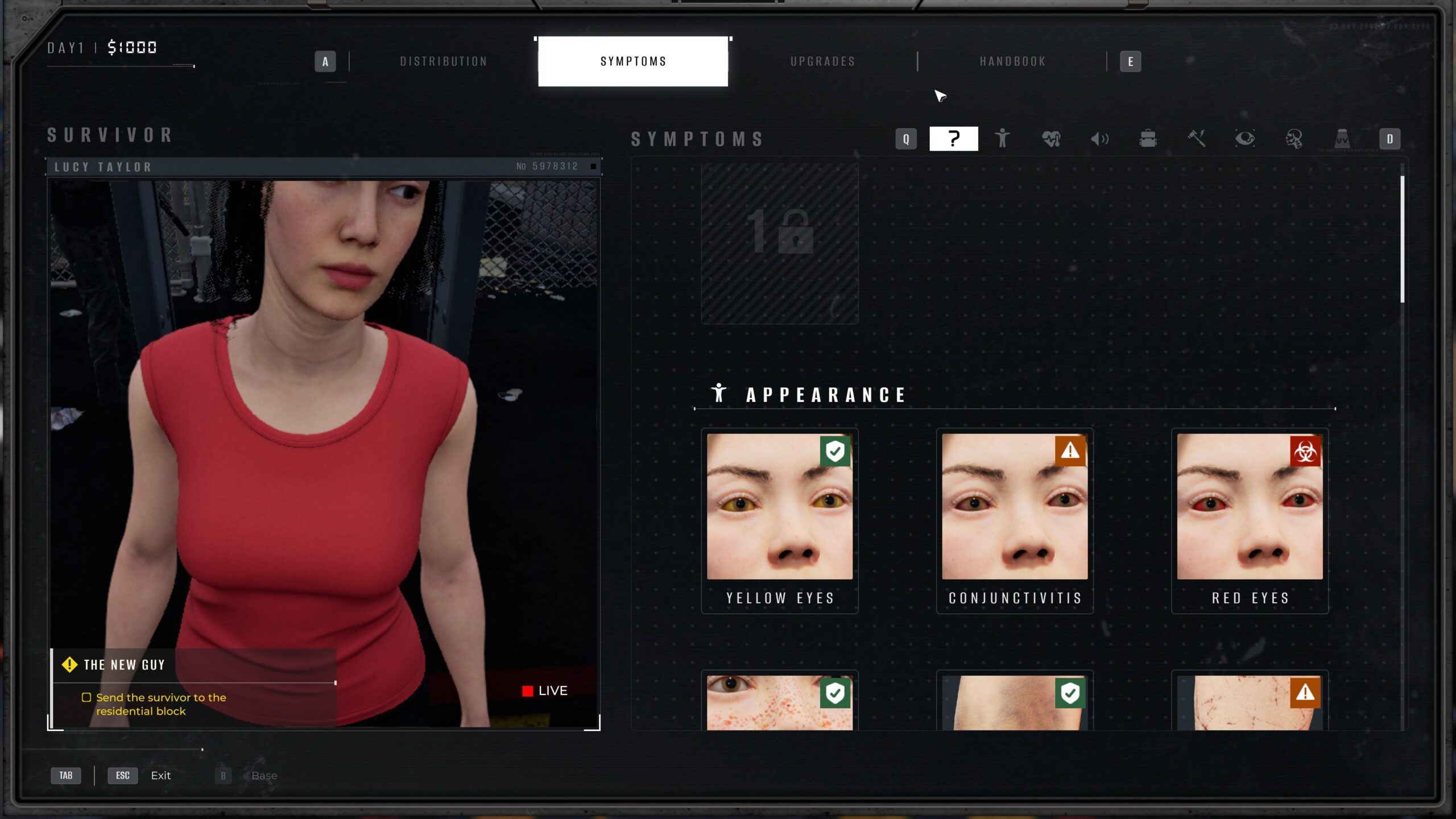
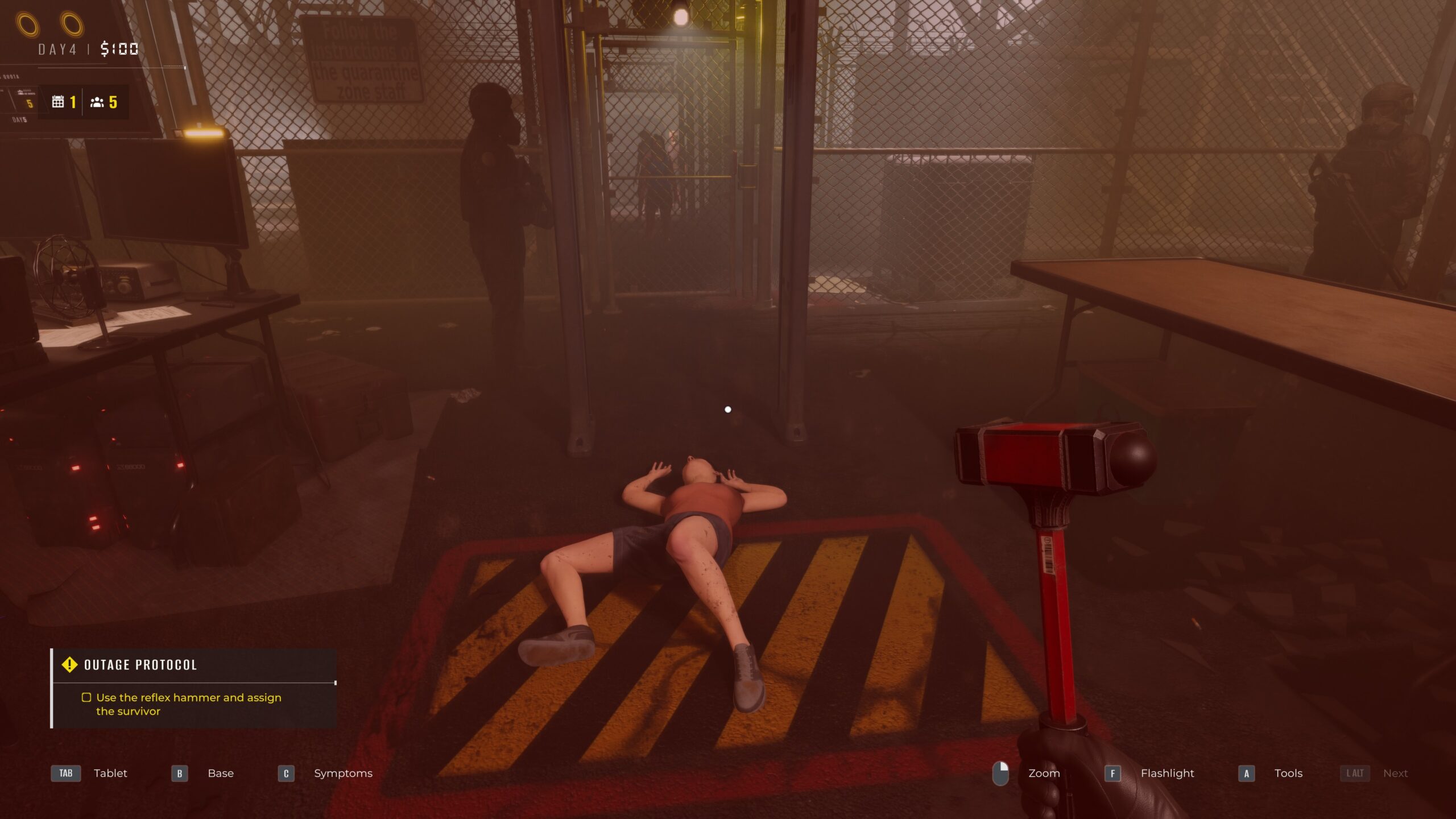
Before long, inspections turn into a trial-and-error minefield. Some freckles matter. Others don’t. Necrosis is described as grotesque, pus-leaking decay, yet in practice it’s just a black smudge that could be grease. Red skin might mean infection—or just sunburn. Vitiligo looks important, behaves like a symptom, and ultimately means nothing. What surprised me most is how little your final decision matters compared to the process. Spotting a massive bite and immediately sending someone to liquidation feels efficient, even humane. The game disagrees, awarding research points only after you’ve logged every relevant detail. Miss a freckle on the back of a right leg, a bruise half-hidden under clothing, … and your work is quietly labeled “poor”, no matter how well and thoroughly you had handled the job.
As days pass, your inspection toolkit expands, with the starting thermopulsometer soon joined by a reflex hammer, matioscope, UV scanner, X-ray, … and so on. Each new tool makes you feel more qualified and more bogged down at the same time. Often, you’re expected to memorize what “normal” looks like through repetition and failure. For me, the regular contraband checks also quickly slid into routine busywork. Open the backpack, scan for forbidden items, remember which ones imply liquidation but can’t be confiscated, then manually log everything afterward… Miss one checkbox and the whole inspection is invalid.
And yet, failing can feel strangely satisfying. One missed detail can spiral into alarms blaring, fires raging, and drones scrambling as you desperately try to contain your own mistake.
Money, Power, and Friendly Zombies
All the while, resource management remains tight and cruel, constantly forcing you to ask whether compassion is worth it. Few moments feel more powerful than rationing food while a zombie pounds on the gate—because you were too kind earlier. Liquidation becomes increasingly tempting too, since, just like in the real world, money apparently makes everything go round in Quarantine Zone: $400 for each confirmed infected survivor, while bulletin board requests—finish something before day’s end, confiscate specific items, …—paid a steady $1,200. As you’ expect, tents, clinics, labs, and defenses only grow if your inspection work brings in enough money to sustain them.
Outside the inspection area, I also constantly felt the pressure of keeping the checkpoint alive at any cost. Every survivor under my watch needed a bed, a place to eat, and food on their plate, and missing even one of those needs caused things to unravel quickly. With illness spreading rapidly, med kits become a survival currency, and the generator demands fuel and constant attention as new buildings push its limits.
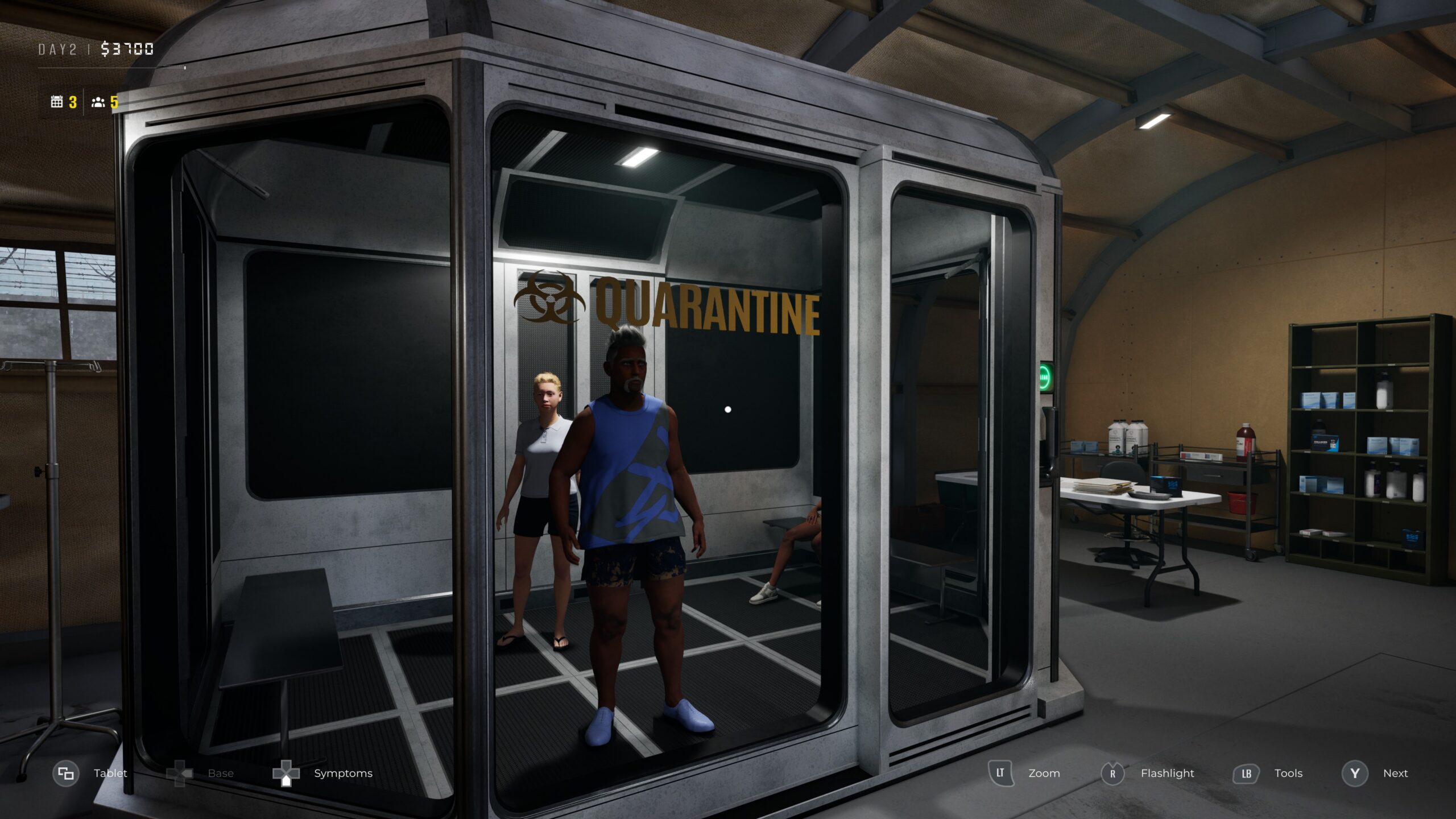
Quarantining another survivor—assuming there’s space available and you don’t need to liquidate anyone—becomes both a safety net and a looming risk, buying time on uncertain cases until someone inevitably turns and forces you to wipe the entire area clean. Liquidation, meanwhile, remains final and unforgiving—framed as mercy in a world with no cure. Strangely, the zombies themselves rarely live up to that tension. Inside the camp, I often found them wandering aimlessly or stuck in corners, ignored by soldiers and barely threatening anyone. In fact, whether by bug or design, the undead in Quarantine Zone often come across as broken set dressing rather than an existential threat.
Bugs Beneath the Biohazard
Even as a full release, Quarantine Zone: The Last Check often feels like it’s still finding its footing. While I played, systems frequently behaved inconsistently, with tools working against the very decisions I was trying to make—an X-ray that wouldn’t clearly reveal contraband or directives offering incomplete guidance—all slowly eroding my trust in the rules. No, Quarantine Zone isn’t bug-free yet, and it may take a while to iron out the kinks.
That same friction carried over into the interface. As my toolkit and symptom list grew, navigating inspection menus became increasingly cumbersome, dominated by endless scrolling. When inspections failed without explanation, the challenge felt less demanding and more confusing, leaving me unsure whether I had made a mistake or simply tripped over the system again.
Final Thoughts
Quarantine Zone: The Last Check lives in an uneasy space between brilliance and frustration. The concept is sharp, often funny, and morally uncomfortable in exactly the right ways. Acting as the bouncer of the apocalypse often works remarkably well, especially when one bad call sends everything spiraling and forces frantic damage control.
At the same time, the gameplay doesn’t always hold up. Trial-and-error design, unclear symptom logic, inconsistent tools, and persistent bugs pile up into an experience that can feel less like intentional challenge and more like friction. Even so, Quarantine Zone already knows how to make you feel important, stressed, and ethically compromised. It just hasn’t quite learned yet how to make that feel fair.
Additional Information
Release Date: January 12, 2026
Reviewed On: PC. Download code provided by developer and publisher.
Developer: Brigada Games
Publisher: Devolver Digital
Relevant links: Available on Steam