DaRmaZat
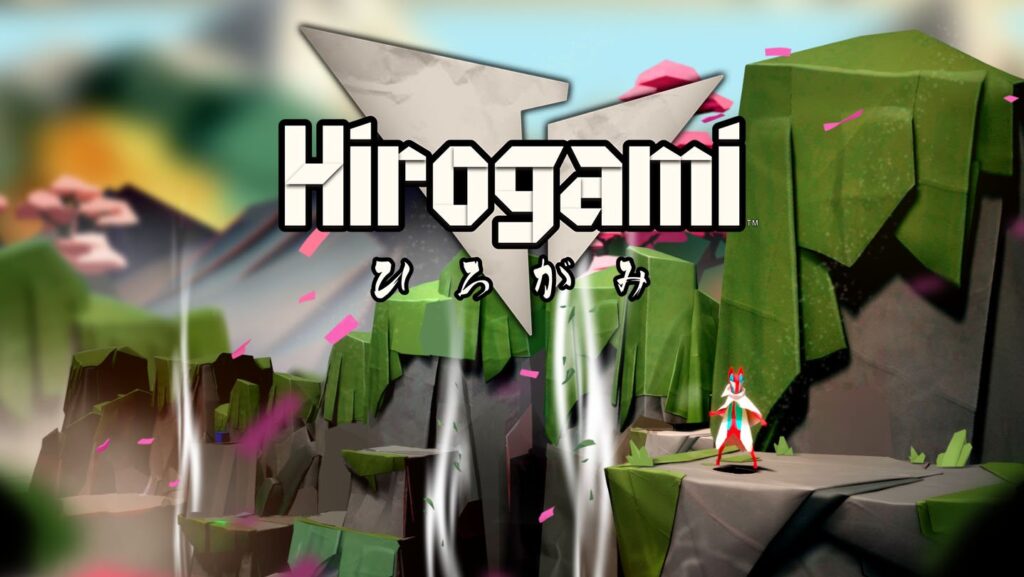
 Origami comes alive in Hirogami, a 3D action platformer developed by Bandai Namco Studios Singapore and published by Kakehashi Games. Releasing September 3, the game places you in the delicate paper form of Hiro, a fan-wielding performer whose world of folded paper faces a creeping digital plague known as the Blight. The concept promises whimsy, transformation, and papercraft wonder—or is it just a paper dream?
A World of Paper Under Siege
Hirogami‘s story leans heavily on familiar beats. Once again, a mysterious Blight—purple, of course—descends upon a peaceful village. Due to the incident, Hiro, an origami figure and reluctant chosen one, has lost his ability to shapeshift into animal forms. Guided by his companions Ruz Pappy and Shiori, he must now cleanse the Celestial Shrines from infestation. These shrines are vital to the village’s protection, and only by purging them can balance return.
It’s a premise that could have been charming, but little stands out. Hiro himself never quite radiates the cuteness or personality you’d expect from a folded-paper hero, and his journey feels more like a checklist of duties than an epic tale.
Creased Gameplay, Easy Combat
When it comes to gameplay, the promise of depth is there—but the reality feels shallow. Hiro begins with the most basic toolkit: a double jump and the sacred fan, used to sweep away purple Blight as if spring-cleaning corrupted corners. The move has no real weight, quickly becoming repetitive.
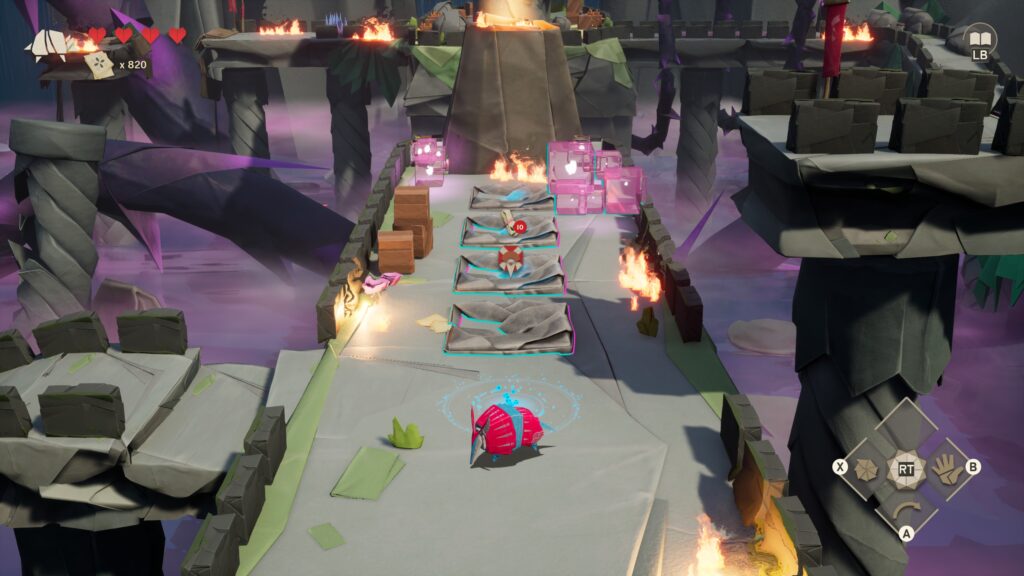
Combat against Glitchers, the game’s roaming enemies, is similarly shallow. They shuffle toward you, sometimes firing projectiles later on, but go down quickly with frantic button-mashing. Hiro has no dodge or roll, which makes fights look more rudimentary than they should. Bosses, unfortunately, are even more disappointing: the first, Ama Jii the Armadillo, falls in seconds without requiring strategy, yet rewards Hiro with a restored fold form.The second form, a poison frog, and the third, a mighty ape, follow the same formula. Fortunately, the restored forms do liven up traversal: drifting like paper on the wind, rolling through walls as an armadillo, or vaulting upward while spitting venom as a frog, and so on.
Systems That Don’t Quite Unfold
Hirogami‘s world is dotted with spawn altars that serve as checkpoints, but many must first be repaired through a “Sacred Fan dance,” consuming parchment you’ve collected. The same ritual applies to broken objects scattered throughout the environment. Defeating enemies drops paper scraps, which can then be traded at these altars for healing. While functional, the combination of repairing and healing quickly feels more like busywork than an engaging gameplay loop.
The overworld map isn’t a true world to explore either, but instead functions as a hub to pick up upgrades from Ruz Pappy before entering the next sandbox-like level. Each chapter clearly presents main objectives alongside optional side missions, but with little reward for completing them, the optional tasks often feel like filler. For those who enjoy unlocking extras, Relics provide art gallery images, while upgrades revolve around Ornaments. In practice, these amount to little more than toggles in a menu or abilities which are added automatically through progressing.
Blurry Paper Edges
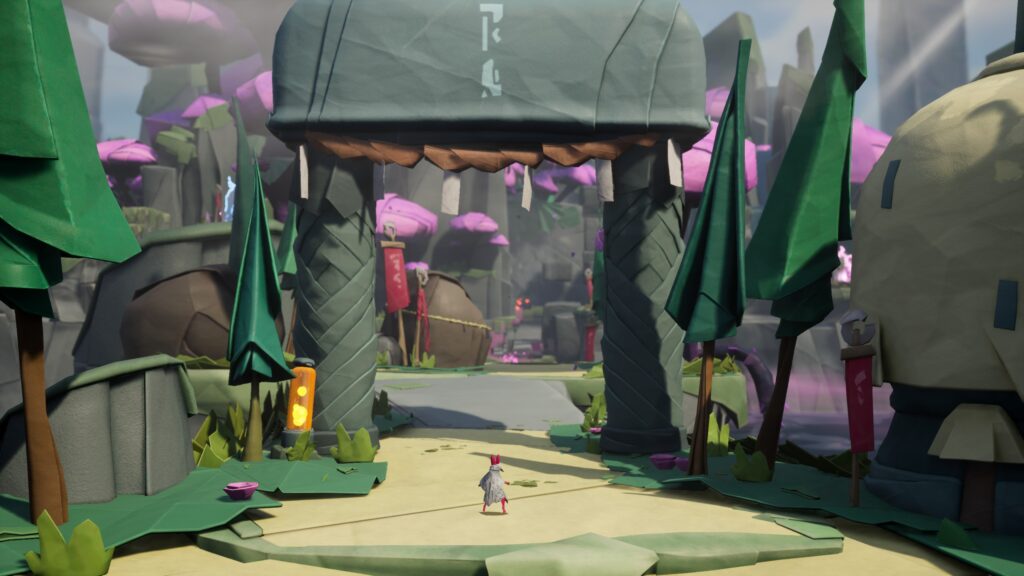
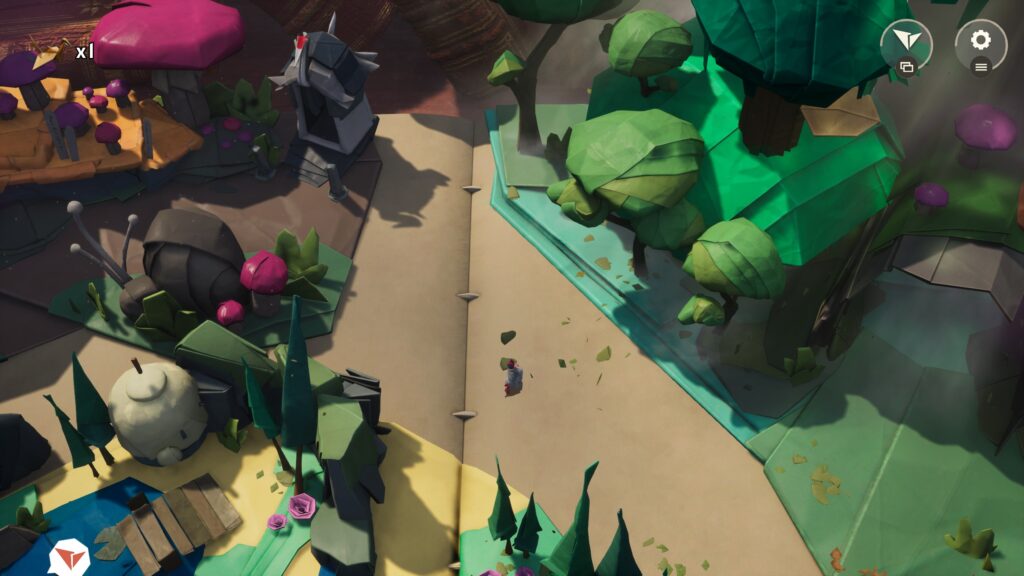
Visually, Hirogami embraces its origami theme with folded landscapes and papercraft animals. At times, the art style is bold and attractive; at others, it blurs together, muddling silhouettes and making environments harder to read. Performance is stable, but the image lacks crispness, leaving the paper world oddly fuzzy at times.
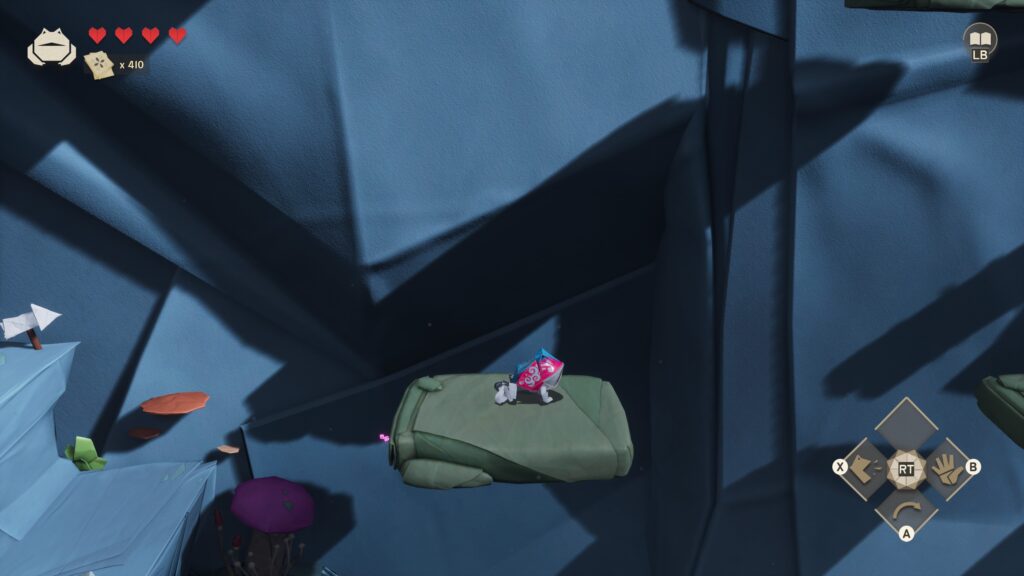
Camera control adds to the limitations, as rotation isn’t free but locked to horizontal and vertical panning. This may suit 2D and top-down sections—Hirogami does mix perspectives often—but in full 3D view it makes platforming awkward. Missed jumps often land you stuck behind scenery, with no easy fix. Adding to the inconvenience during replays, cutscenes cannot be skipped.
The Sound of Silence (and Repetition)
Hirogami‘s score, composed with traditional Japanese instruments, aims for cozy atmosphere. But in practice it’s muddled, meandering, and forgettable. Worse, Hiro’s repetitive fan-swing effects dominate the soundscape, growing grating with time.
With no voice acting and no character sound effects, the cast feels lifeless, as though performing silently behind glass. Some occasional English typos also pop up in the text, which can pull you slightly out of the experience.

Final Thoughts
Hirogami is a game full of ideas but the execution often feels flimsy, as if its folds were never pressed sharp enough. Its origami aesthetic carries charm, and transformations hold promise for both puzzles and combat. Yet too often, the game undercuts itself: bosses are pushovers, combat lacks feedback, puzzles feel childlike, and exploration is hemmed in by camera frustrations.
Like a piece of paper folded without care, Hirogami’s design struggles to hold its shape. Beauty is there in flashes, but it collapses too easily, leaving you with an adventure that’s more fragile than fulfilling. For younger players or those who enjoy cozy, light puzzles, it can still be an enjoyable papercraft adventure.
Additional Information
Release Date: September 3, 2025
Reviewed On: PC. Download code provided by the publisher and PR agency.
Developer: Bandai Namco Studios Singapore Pte. Ltd., Bandai Namco Studios Malaysia Sdn. Bhd.
Publisher: Kakehashi Games
Website: Hirogami
Relevant links: Hirogami on STEAM