DaRmaZat
 Final Case That Cuts Deeper Than Expected.
February 5th, 1945. A private detective sits on the brink of bankruptcy, recovering from a surgical intervention on his prefrontal cortex and haunted by the disappearance of his trusted assistant, Penny. The Last Case of John Morley positions itself as a narrative investigation set in the noir gloom of the 1940s, inviting you to step into Morley’s mind as you explore a murder long forgotten by time—chasing a merciless killer who withholds a truth buried for decades.

A Case That Won’t Stay Buried
It all begins in complete darkness. A forest swallowed by fog, lanterns tossed carelessly on the ground as if someone had fled in panic. You hear horses. Something is hunting you. A few blunt jumpscares do the job—simple, but effective enough to spike your heart rate and awaken your interest. What’s going on here? As Morley narrates every fear, every suspicion, every flicker of memory, you aren’t just watching him drift through trauma; you’re living a crime novel being read aloud from the inside. Yes, the beginning is tense, and gripping enough to make you want to continue playing.
Soon enough, Lady Margaret Fordside storms into his dusty office—her lips trembling between aristocratic composure and barely contained anguish. Her daughter, Elody, was murdered twenty years ago. The case was abruptly closed with convenient scapegoats. The police moved on. She never did. She places a fortune on the table—two installments of £30,000—precisely what Morley needs to get his own life back on track. And suddenly, this final case doesn’t feel optional anymore.


Where Secrets Rot Behind Locked Doors
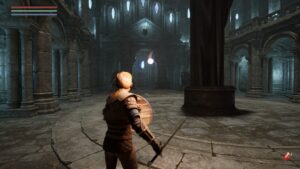
The Fordside manor captivates instantly—eerie, yet rich with small details of life. Falling leaves catching stray moonlight, pigeons cooing on cracked windowsills, jazz and piano drifting through the halls like memories refusing to fade. Clever camera angles and stark contrasts between pitch-black corners and blinding white light trap you in a visual mood that just keeps tightening its grip. It’s surprisingly immersive for a lean indie production, a noir film you walk through.
While uncovering the truth piece by piece, Morley talks a lot, and it works. His voice makes the world feel like a pulpy pocketbook mystery unfolding page by page. Even the branching conversations attempt facial nuance, with Lady Fordside delivering one of the strongest voice performances despite occasional lip-sync awkwardness.
“The deeper you go, the colder the truth becomes.”
But unsettling discoveries quickly replace polite introductions. Tarot cards forecasting doom. A stranger with a knife lurking just out of reach. Rooms clinging to memories of cruelty that should’ve stayed sealed away. The deeper you go, the colder the truth becomes.

Clues, Keys, and Clicking Every Corner
Soon, everything revolves around puzzle-driven detective work: leafing through old letters, searching for hidden keys, rotating statues, brute-forcing open a path with a crowbar — single-use, though. Your progress is forward-leaning in a way that builds suspense, though interaction itself leans heavily on seeking out green exclamation marks scattered throughout the environment. Once you’ve clicked them all, Morley comments, context lands, and you move on.
Morley’s investigation later shifts to the Westland Asylum, a location soaked in even darker history, where the mystery thickens with every file, memory, and boarded-up ward. The atmosphere remains gripping, the story keeps escalating. Yet finding that one trigger to move the plot along can turn into endless loops through the same corridors, guessing which invisible hotspot the game wanted you to notice five minutes earlier.
“Endless loops through the same corridors.”
And sometimes Morley seems almost supernatural, walking into a room and instantly conjuring a flashback of events he shouldn’t know. A man with a knife stands staring at him from afar, a presence begging for a reaction he never gives. Yes, now and then, there are odd beats that break immersion just when the tension peaks.

Beautifully Riddled… with Bugs
On the visual side, there’s admirable ambition, with stylish lighting direction and hand-placed details that emphasize tension. The game also runs smoothly even without modern helpers like upscaling or frame generation. But at the same time, I can’t ignore the textures and objects that regularly popped into existence right before my eyes. Some clues replay themselves, audio levels spike and dip as if separate teams mixed every menu, some voiced lines cut out entirely, and certain subtitles vanish before you even have a chance to read them.
Interaction bugs creep in now and then as well, with objects refusing to respond until a full restart, and scripted scenes not always locking movement, allowing you to accidentally wander past essential story context. After a while, these small technical wounds begin to stack up, and with every detour caused by a missing prompt or glitchy trigger, the noir illusion takes another hit—and my frustration kept rising.

Final Thoughts
There is a genuinely compelling detective thriller here—dripping with jazz, dread, and a steadily tightening knot of family secrets and buried guilt. Its strong atmosphere and Morley’s constant narration make unraveling the mystery feel intimate, like a crime novel coolly smoldering in your hands.
But the rises are matched by dips: a haunting world weighed down by too much pixel-hunting, buggy interactions, and narrative beats that occasionally forget their own logic. In the end, The Last Case of John Morley cuts deeper than expected—elegant in style, enticing in mood, but bleeding from wounds that haven’t been stitched up yet.
Additional Information
Release Date: Nov 27, 2025
Reviewed On: PC. Download code provided by the publisher and PR agency.
Developer: Indigo Studios – Interactive Stories
Publisher: JanduSoft
Relevant links: The Last Case of John Morley on STEAM