DaRmaZat
Part horror FMV, part old-school 2D puzzle adventure. There were quite a few doubts about whether the unique yet daring concept of the Argentine indie game Tenebris Somnia, developed by Andrés Borghi in collaboration with Saibot Studios, would catch on in 2026. Yet here we are, less than a week after its release, and this freshly launched survival horror title with puzzle elements has already proven to be a hit!
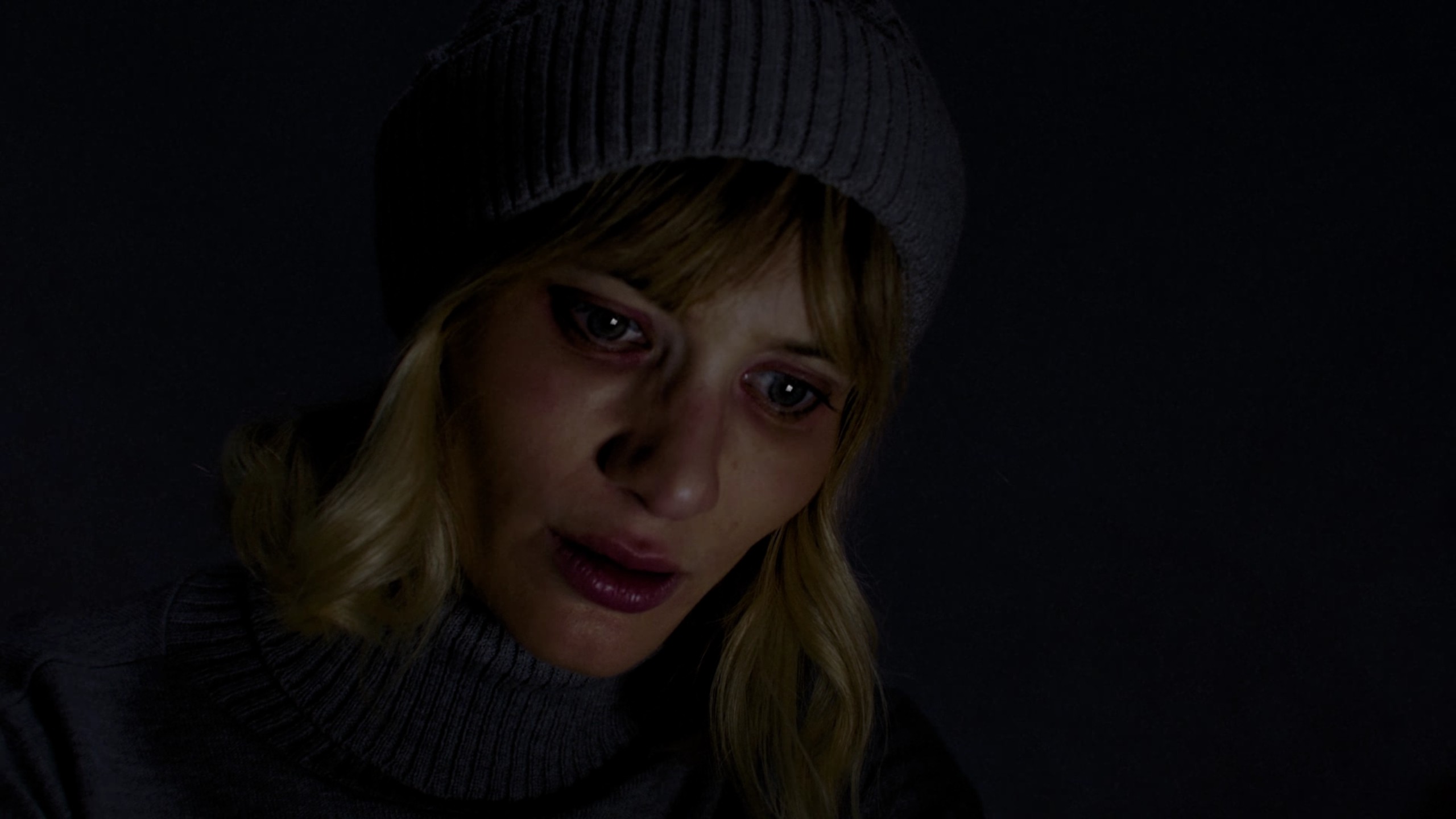

The story in Tenebris Somnia immediately sets the eerie tone you would expect from this genre. You play as Julia, who decides to check on Iván, her ex-boyfriend and a short-film maker, because you keep having disturbing nightmares about him being torn apart by horrible creatures. Even though you stopped talking after your breakup, you still have the keys to his apartment.
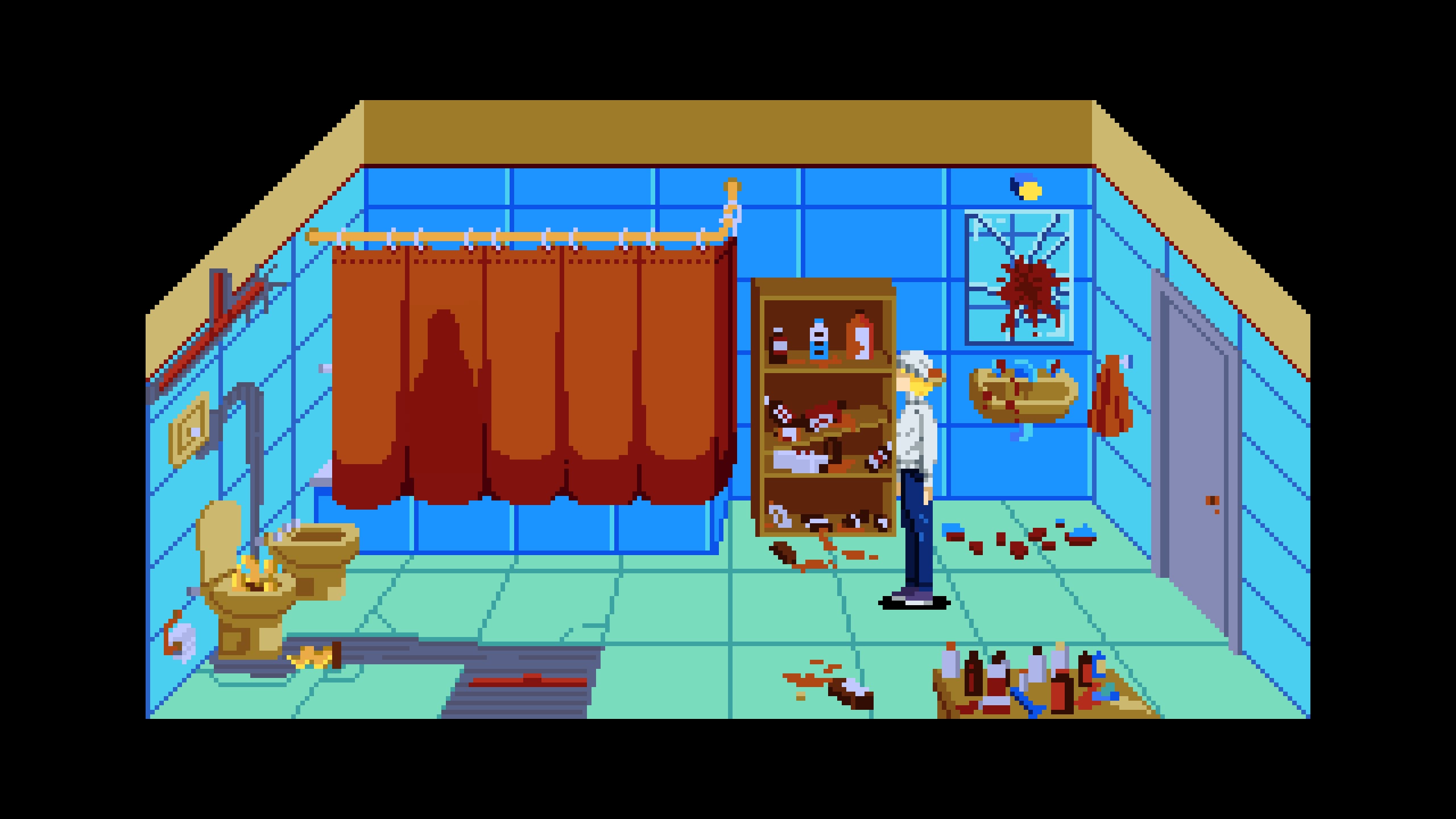
Upon arriving, you quickly realize that something has gone horribly wrong. For starters, there is extensive damage, as if a fight has taken place. Broken objects litter the floor, along with an occult book filled with strange writing. Blood is smeared across the bathroom mirror, and a red, wax-like substance has sealed certain doors shut at the hinges. Time and again, you find hints that all of this has something to do with DEVORA, the dark short film you made together back in the day. Before long, you also start seeing ghosts. Some attack you, while others silently stare at you. Iván himself, however, is nowhere to be found. At this point, you already know that finding out what happened to him will be an especially intense and equally horrifying descent into madness.
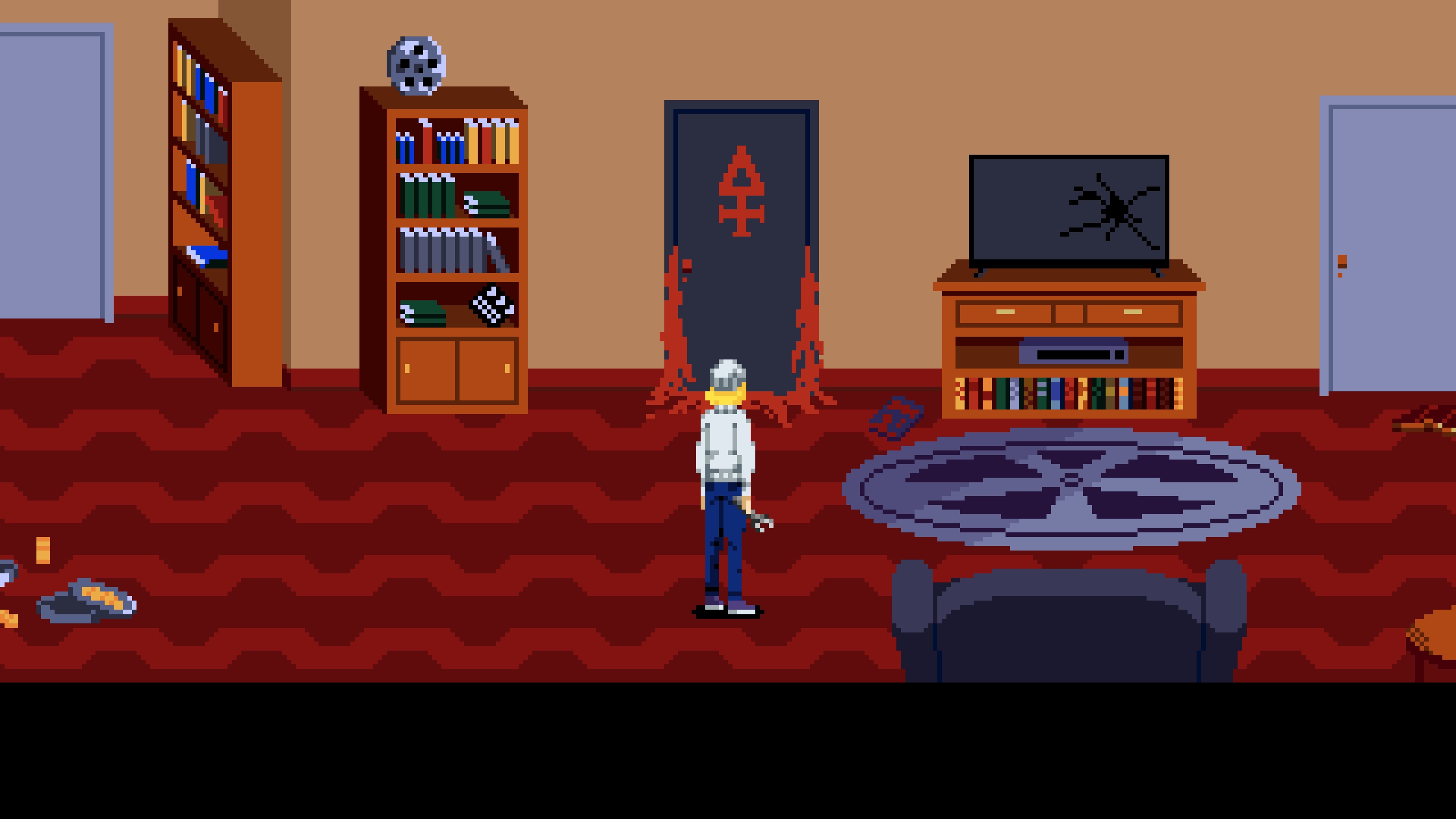
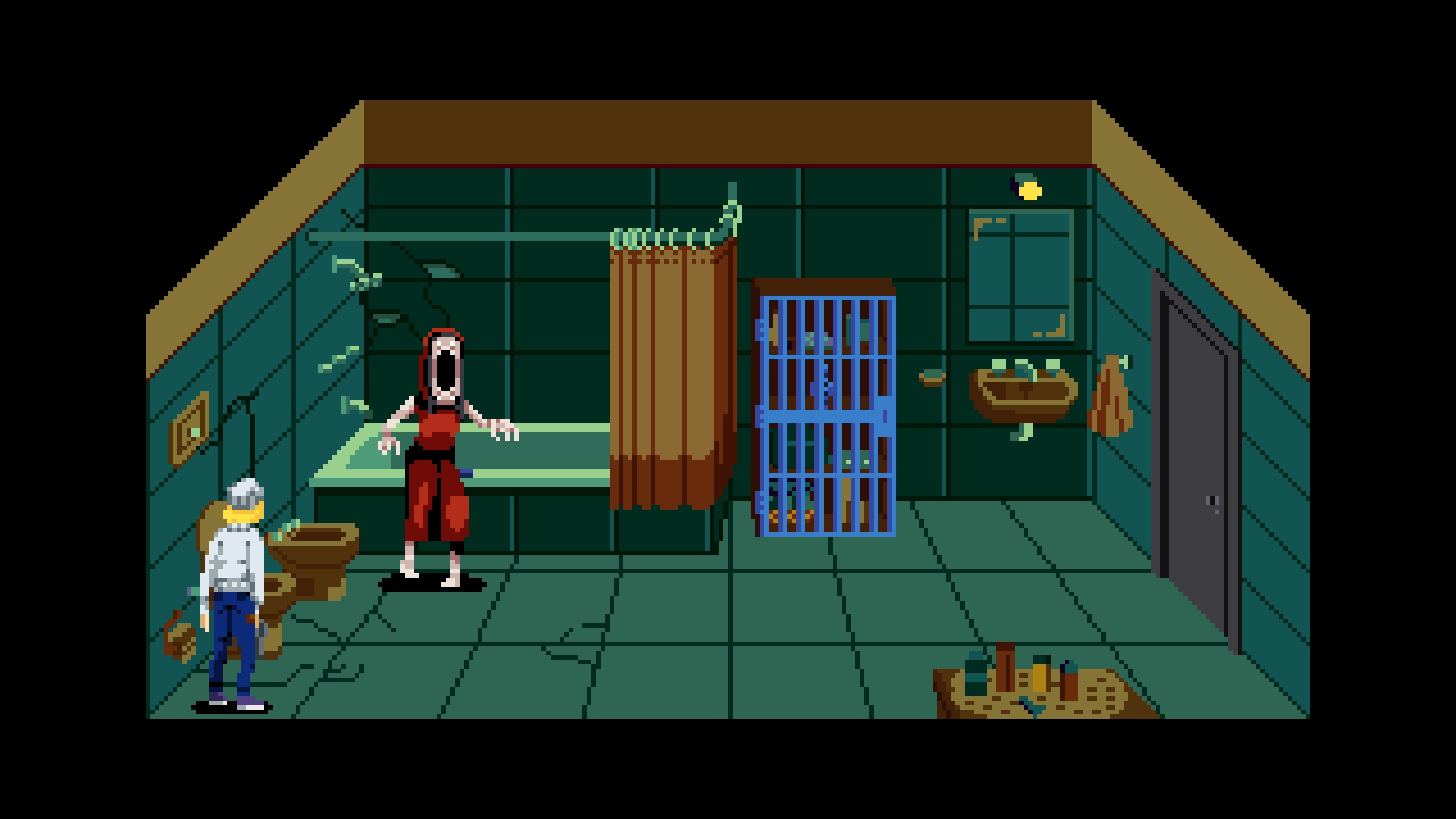
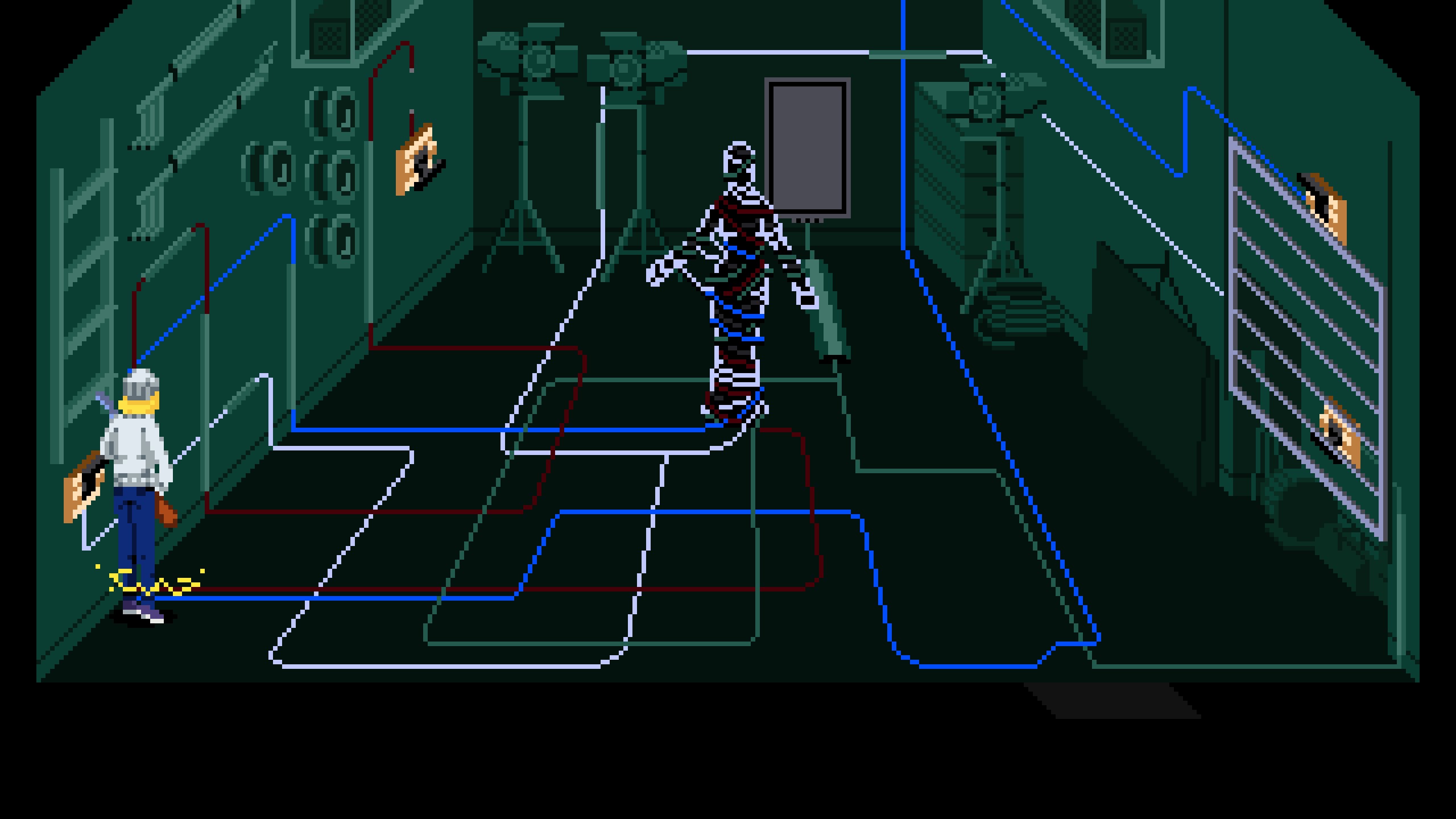
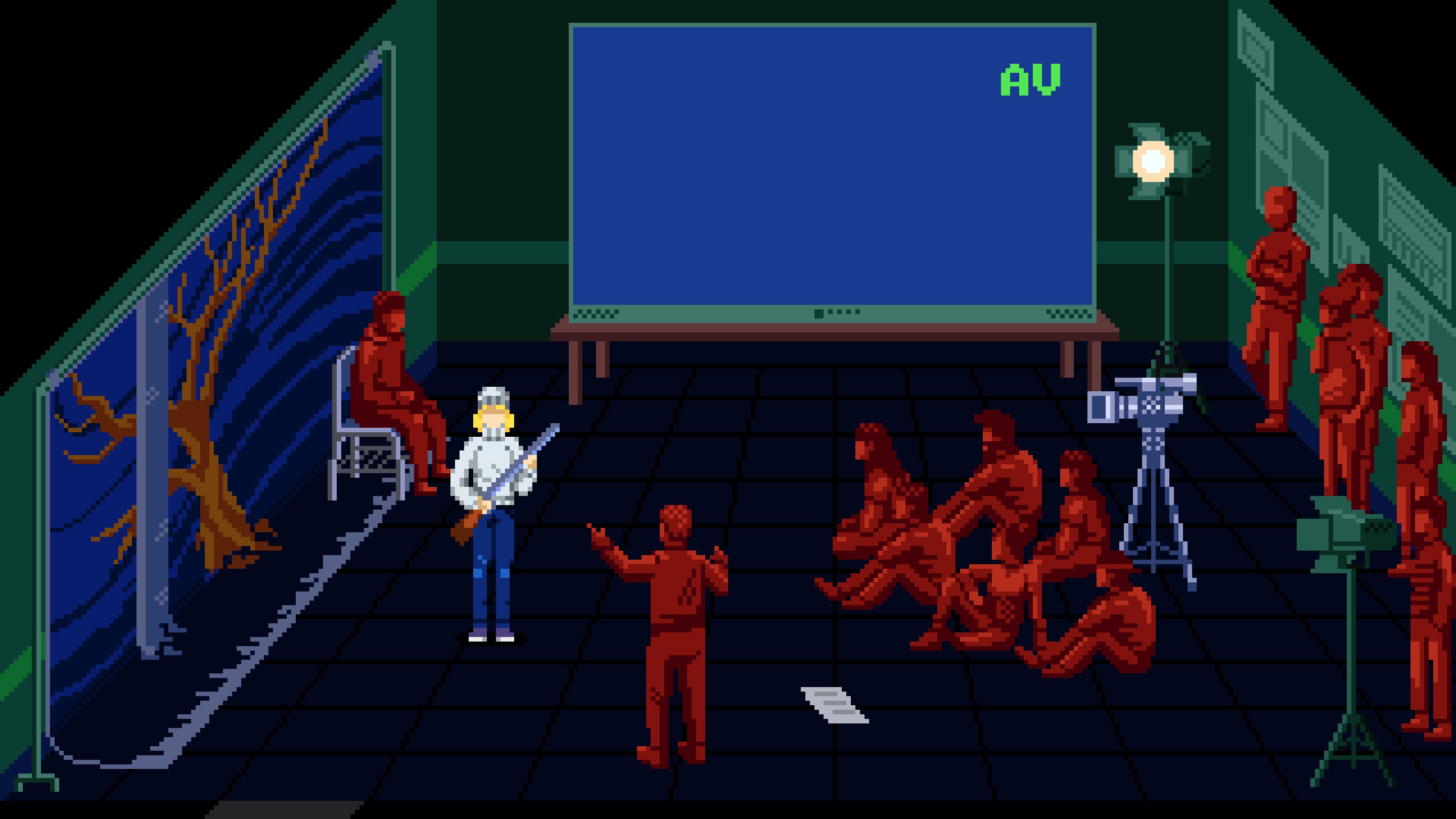
Right from the start, the NES-like visuals – complete with the characteristic black screens displaying white text in an old-fashioned font – are accompanied by wonderfully fitting chiptune music. The classic pixelated environments are also packed with symbolism. Each floor of the apartment building has its own main color, while every door features a distinct symbol or vivid color of its own. Certain rooms also change dynamically as you progress, introducing new puzzle elements and doorways that become either accessible or permanently closed.
The puzzles themselves are pretty clever and follow the kind of logic you would expect, which doesn’t make them particularly difficult. There is some trial and error, though, along with regular backtracking between floors and rooms. These are classic genre tropes, such as combining items in your inventory, consulting a book for hints, unlocking doors and cabinets with the right keys or special tools, and performing actions in a specific order, among other things. My only minor gripe is that Julia naturally performs actions very slowly, including examining objects and moving around. The latter remains sluggish even when you activate the run toggle. Be prepared for a slower-paced experience, as this is a game that encourages you to take your time.

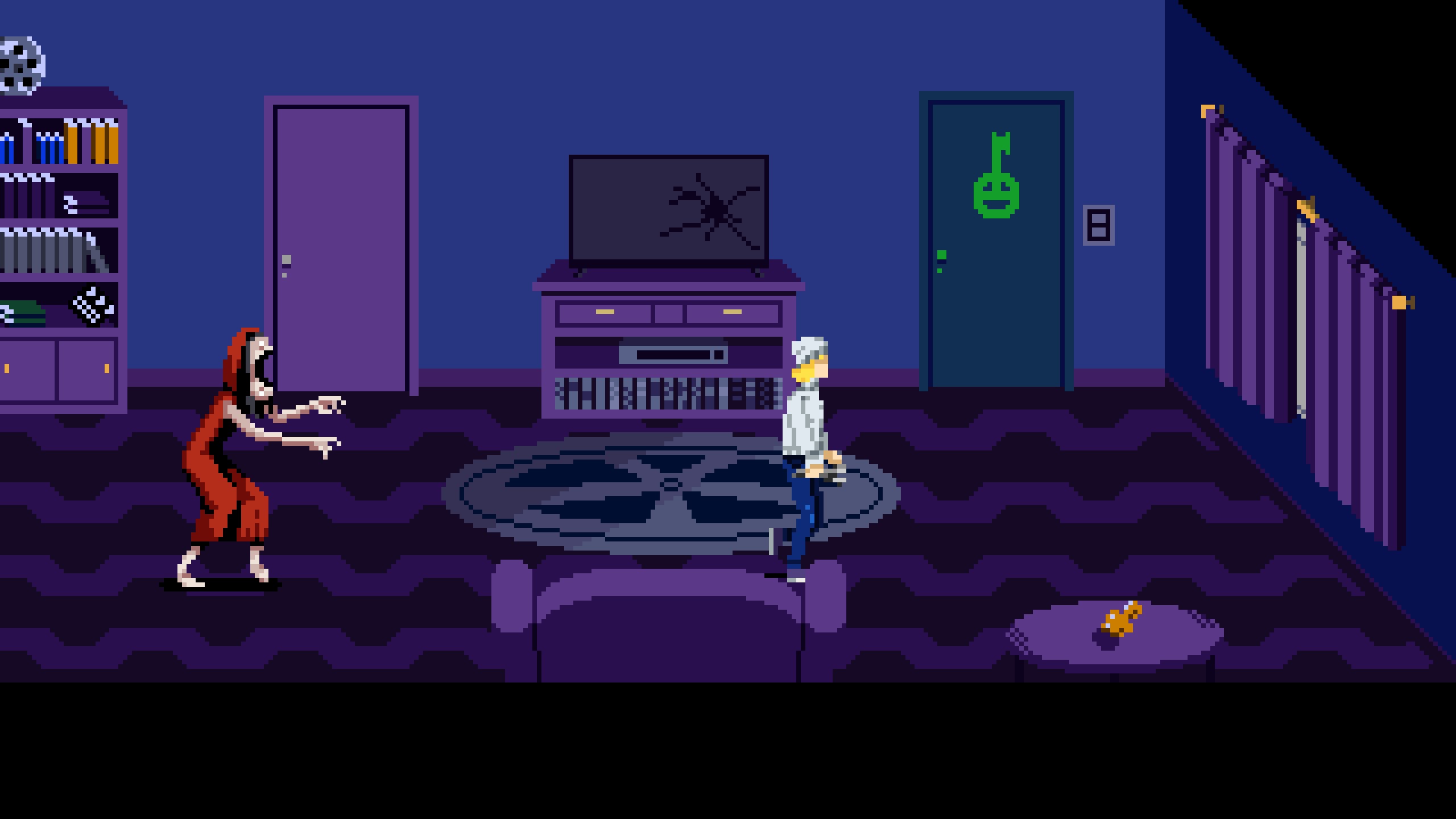
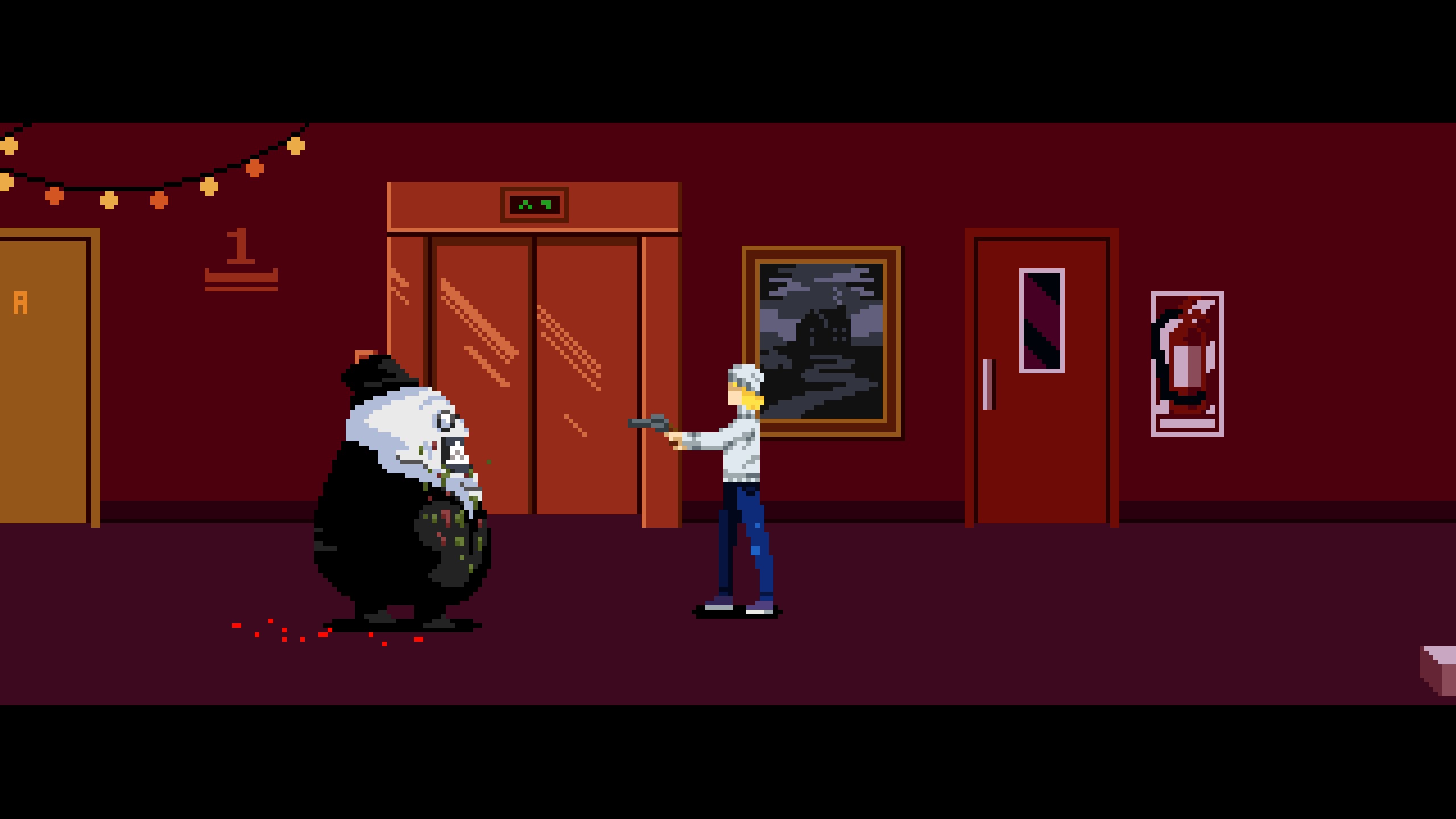
However, every now and then, you may have to run for your life during an escape sequence. Some sections also require you to clear the area of numerous gruesome, fantasy-based enemies first. To deal with these threats, you need to find various melee weapons, such as a wrench and a pipe, as well as a pistol and a shotgun, along with their limited ammunition. Combat feels a bit clunky, as you might expect, but it is neither particularly difficult nor frustrating. Most often, what can really get you killed are unexpected attacks from multiple enemies at once. The key is to analyze enemy attack patterns the old-fashioned way and reposition yourself vertically or horizontally in time. And yes, the game also features boss battles, which I actually found pretty decent because they require you to think while fighting, without giving too much away.
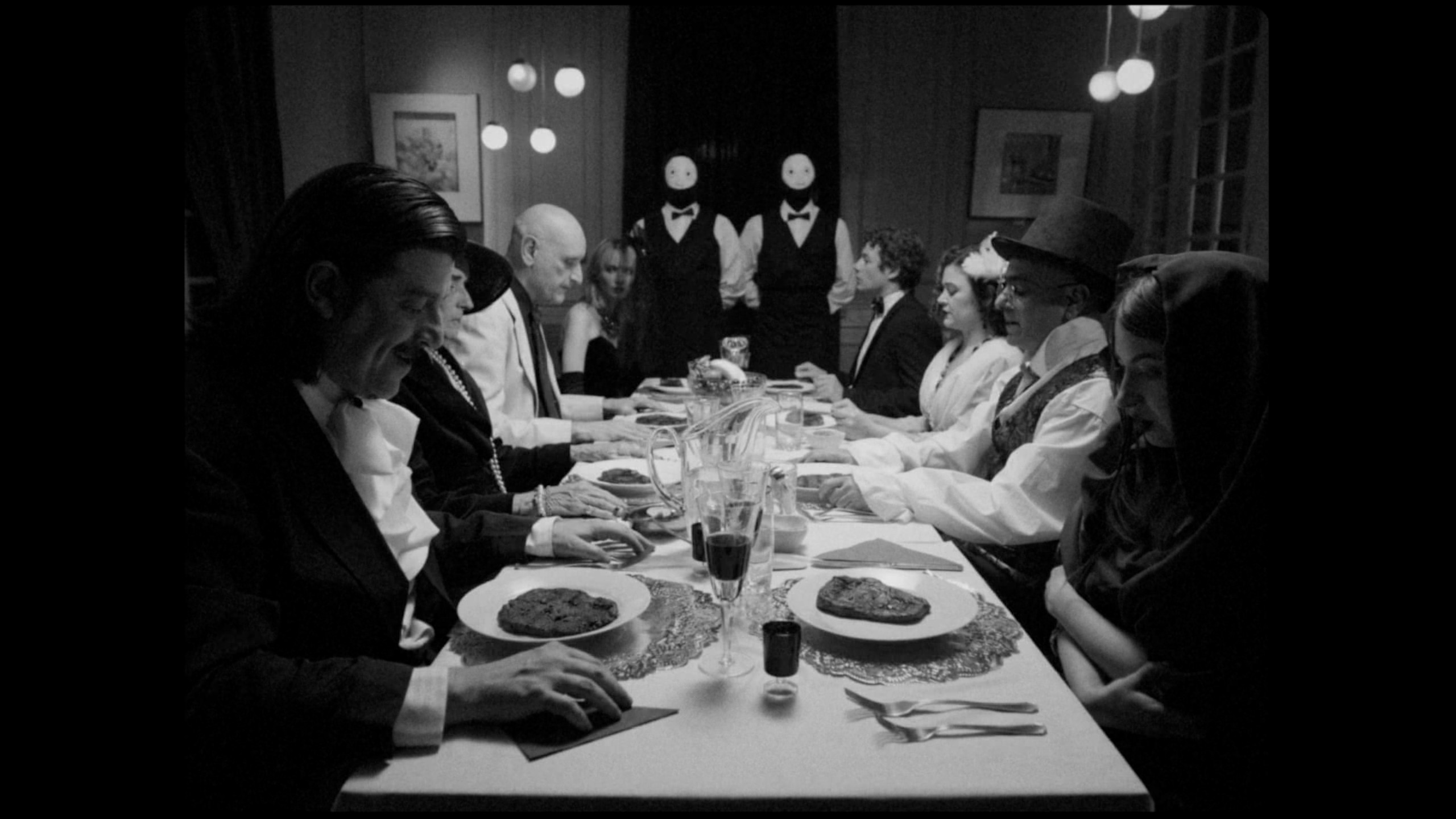
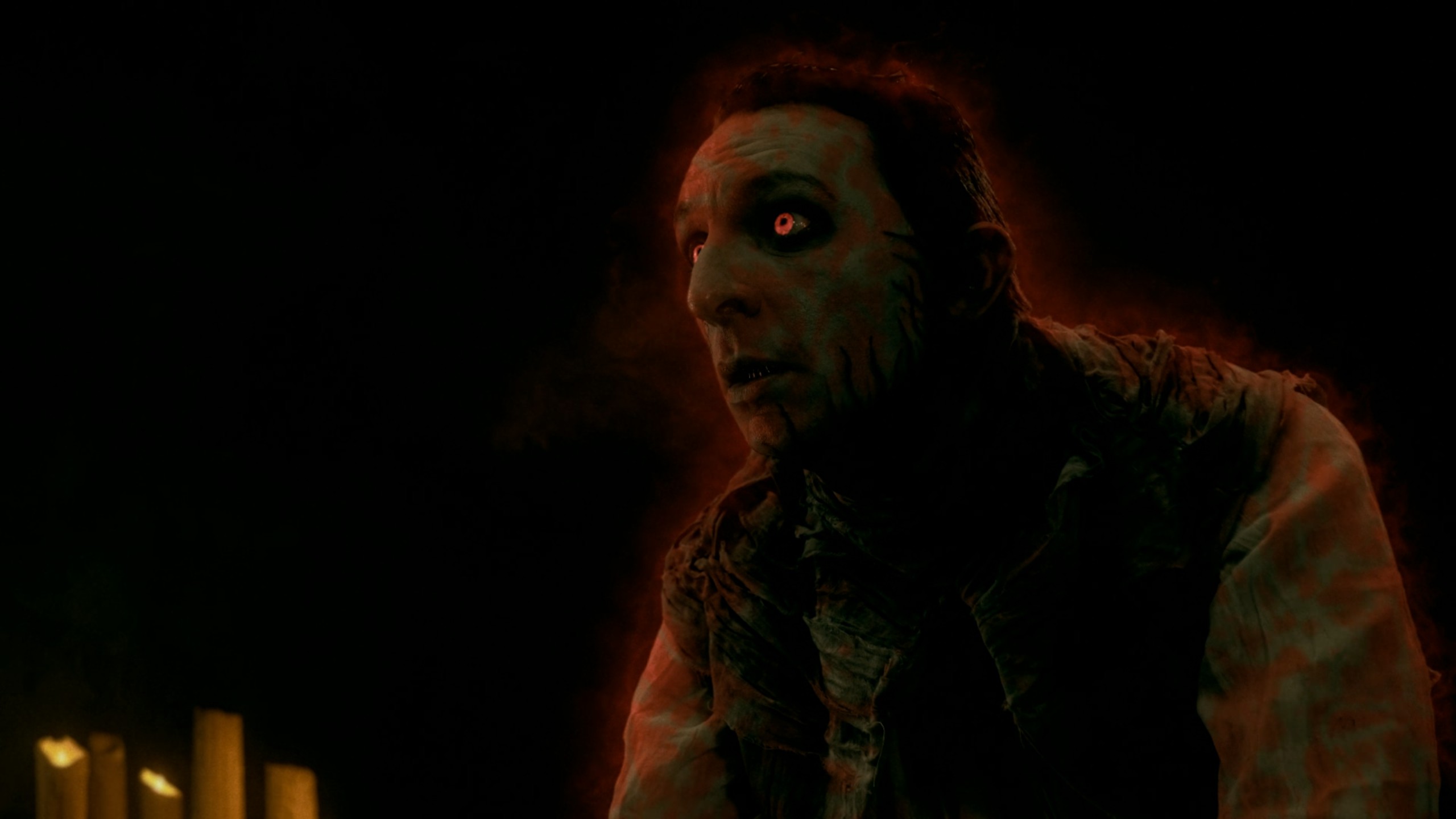
Building on what happens during the pixelated gameplay, the game presents beautifully shot, high-quality live-action cutscenes featuring professional actors from Argentina. Although they never speak – perhaps making the experience even more convincingly disturbing – the scenes feel just like a real horror movie and make everything increasingly immersive and frightening by the minute. Naturally, there is plenty of blood and gore, both in the retro 2D visuals and in the live-action footage itself. Expect severed body parts, petrified people, and monsters in the most unexpected places, ready to jump-scare you, and so on. Heavier themes also come into play, including breakups, depression, suicide, cult-related situations, and more. This is also reflected in the game’s PEGI 18 / ESRB M age rating. Consider this a warning for more sensitive players.
Final Thoughts
At times, progress in Tenebris Somnia may be a little slow, and the combat is somewhat clunky, but this survival horror game pulls off its daring concept with flying colors. Its fantastic live-action cinematics bring to mind the golden age of FMV games, as well as the days when horror films could leave a lasting impression through visuals alone, without dialogue ruining the effect. The intriguing storytelling, impressive 2D retro aesthetic, and solid puzzles that genuinely make you think without becoming frustrating should not be underestimated either. To top it off, the fact that there are four different endings to unlock makes the game even more interesting for additional playthroughs.
Additional Information
Release Date: October 16, 2026
Reviewed On: PC. Download code provided by the publisher and PR agency.
Developer: Andrés Borghi, Saibot Studios
Publisher: New Blood Interactive
Relevant Links: Available on Steam.