DaRmaZat
 Cosmic horror through the eyes of a penguin? It might sound absurd, but Penguin Colony turns this unusual premise into a mind-bending journey. Drawing on H.P. Lovecraft’s mythos, particularly At the Mountains of Madness and The Shadow Out of Time, the bizarre title plunges you into an Antarctic nightmare where things get increasingly disturbing the deeper you venture into the ice.
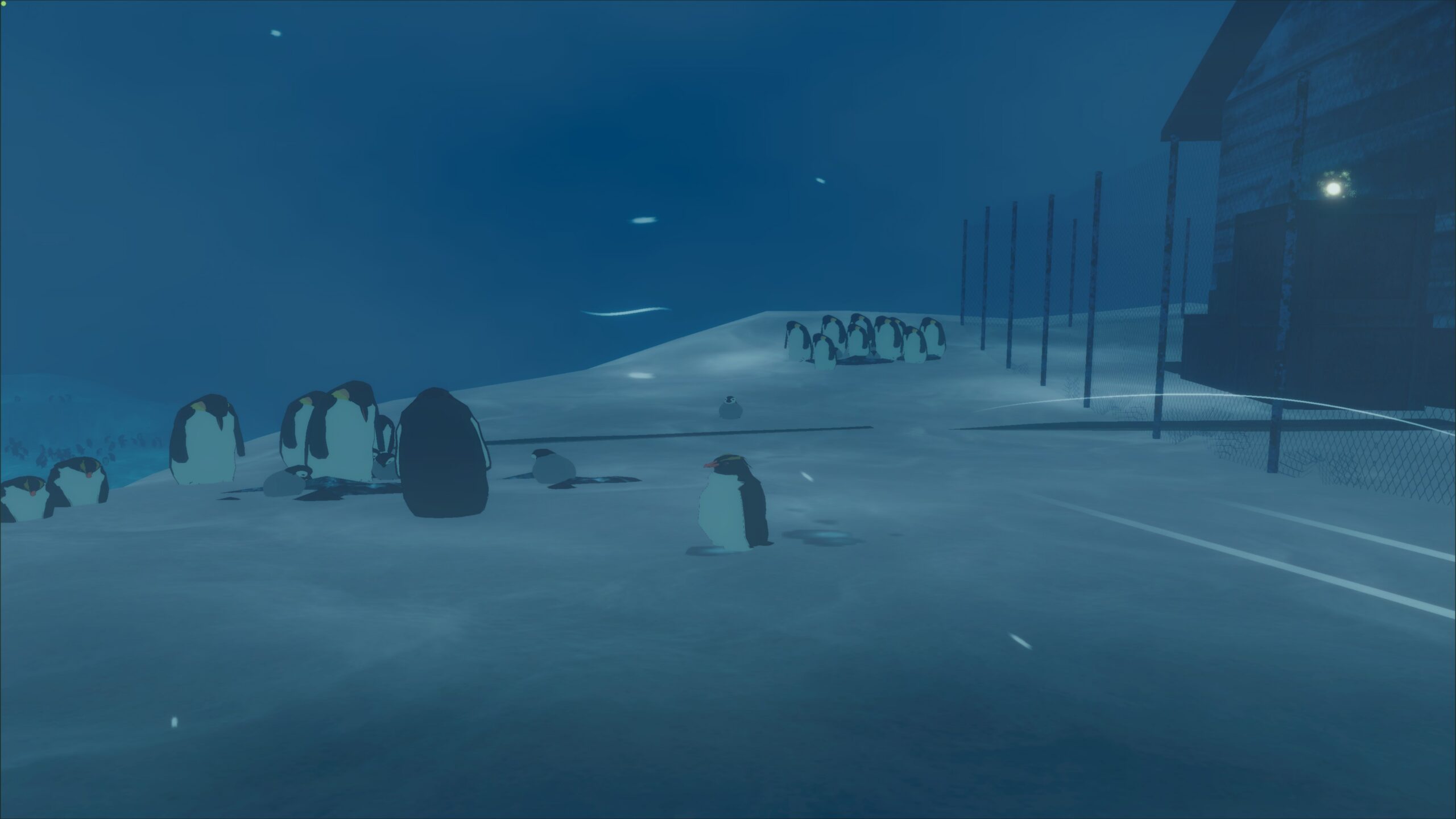
Antarctica, 1939. Naturally, there’s a snowstorm. You hear the weary voice of narrator Howard Blakely, who talks about his stroke and the medication he’s taking. Meanwhile, World War II is looming on the horizon, and swastika flags are already appearing all over the globe. Even Antarctica, though spared from guns, bombs, and tanks, isn’t safe from the intangible madness unfolding around it. Yet whatever is happening here goes beyond anything natural. And you’re not experiencing any of it from a human perspective, either.
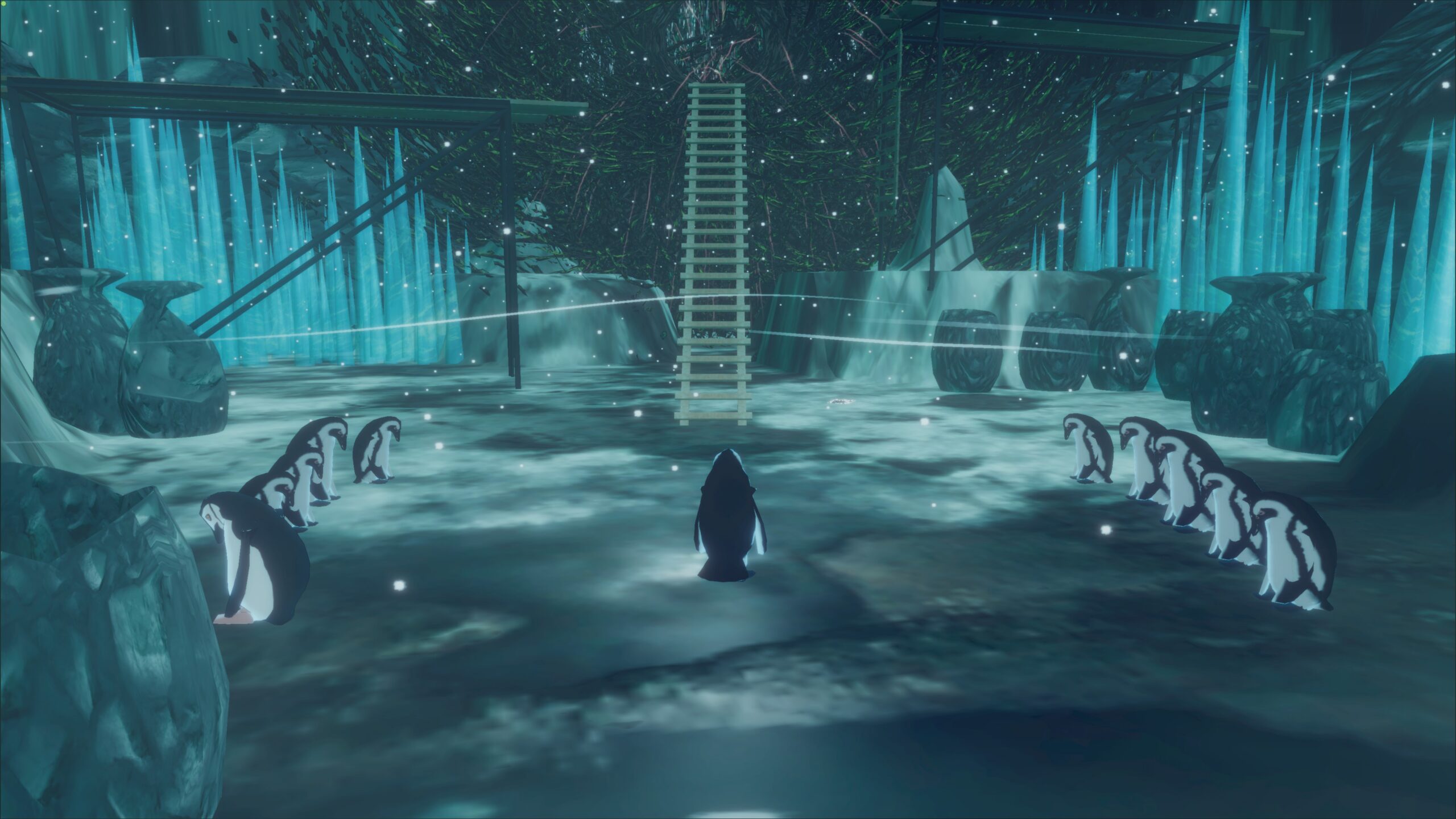
Instead, you’re controlling a penguin. And not just one particular penguin, or even a single species. Thanks to the Swap Penguin mechanic, you can freely switch bodies by walking up to another penguin and pressing a button. Just as in nature, each species has its own characteristics. Some can jump higher, swim faster, or glide farther, while others are better at climbing or squeezing through narrow gaps. Switching between them becomes essential to the experience, as their different abilities open up new routes through the frozen wilderness.
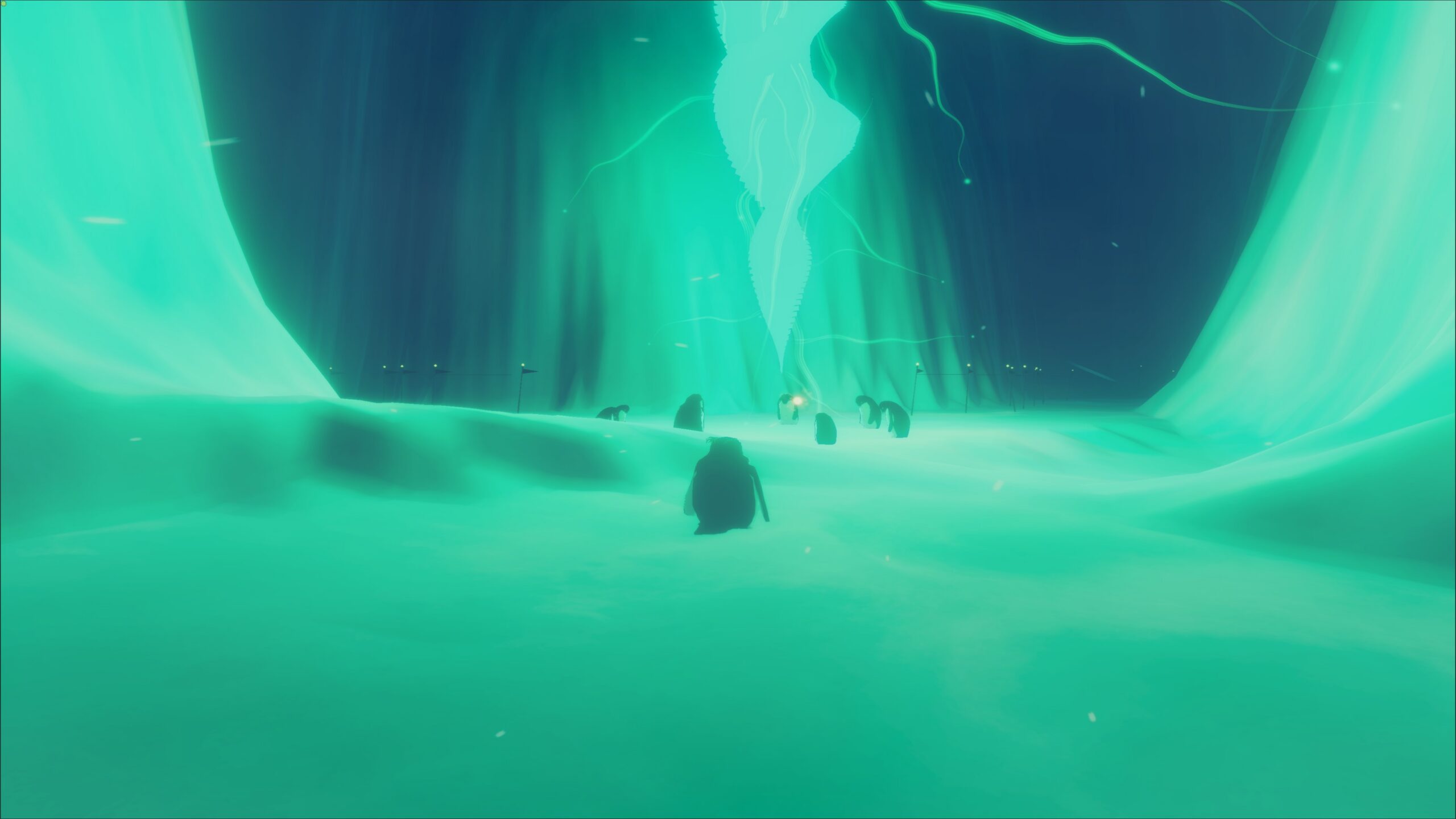
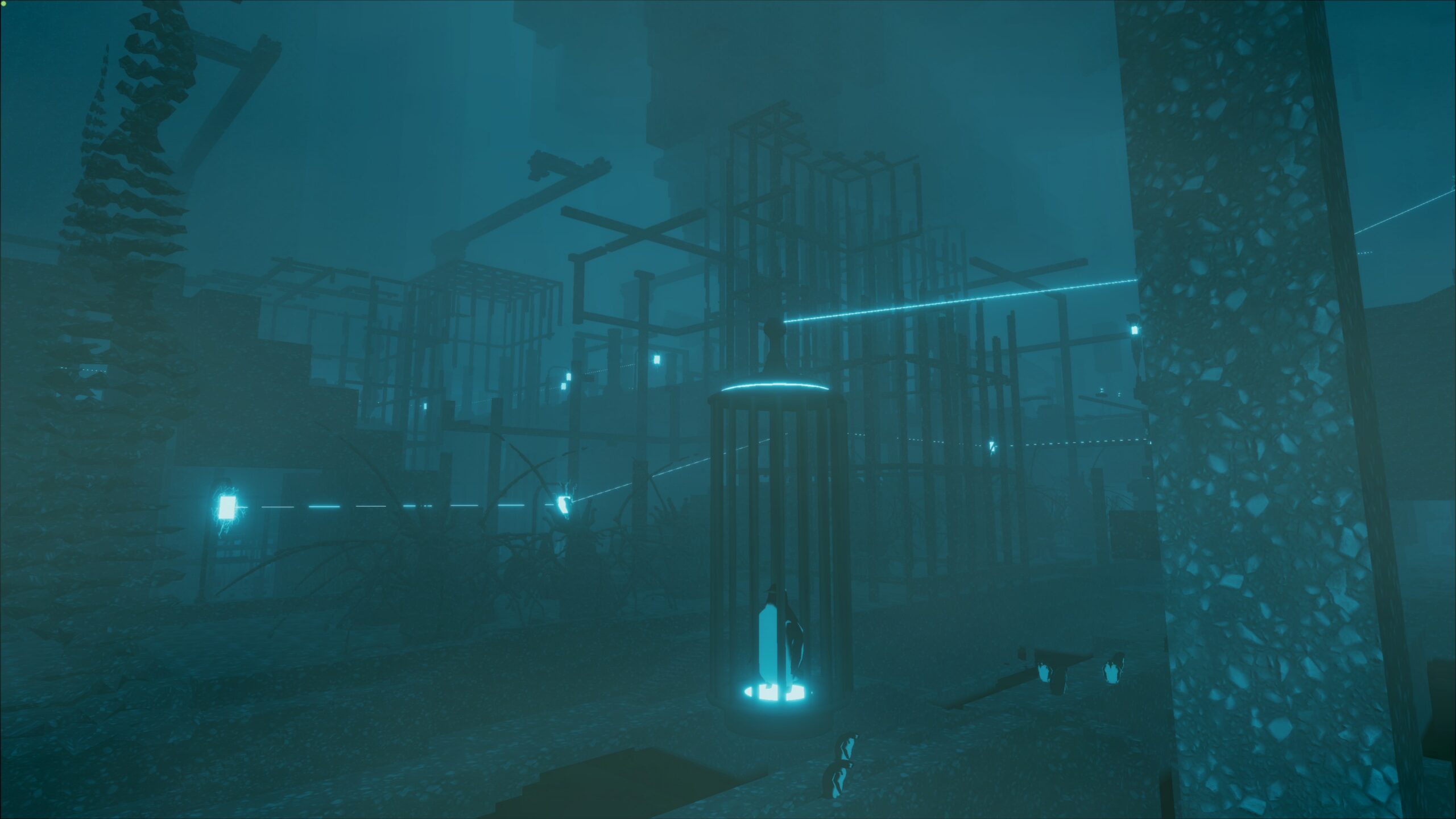
Navigating this vast, snowy landscape feels distinctly otherworldly, with progression revolving around collecting Insight to increase your stamina. These glowing orbs are scattered across the ice fields, on structures, and inside caves. It’s easy to lose your bearings because everything starts looking alike. Fortunately, a light on the horizon is always there to guide you toward the destination. Whatever that might be. And when even that isn’t enough, freezing winds blow snowflakes in the right direction. It reminded me of the guiding wind mechanic in the Ghost of Tsushima and Ghost of Yōtei games, but that’s where the similarities immediately end.
Controls aren’t explained particularly well, either. The circular meter on the right might not mean much at first, but it indicates that your penguin builds up momentum while sliding on its belly. Get it right, and you can use that momentum to launch yourself into surprisingly high jumps. Luckily, this isn’t really a game about mastering controls. It’s about experiencing what it feels like to lack control in the first place.
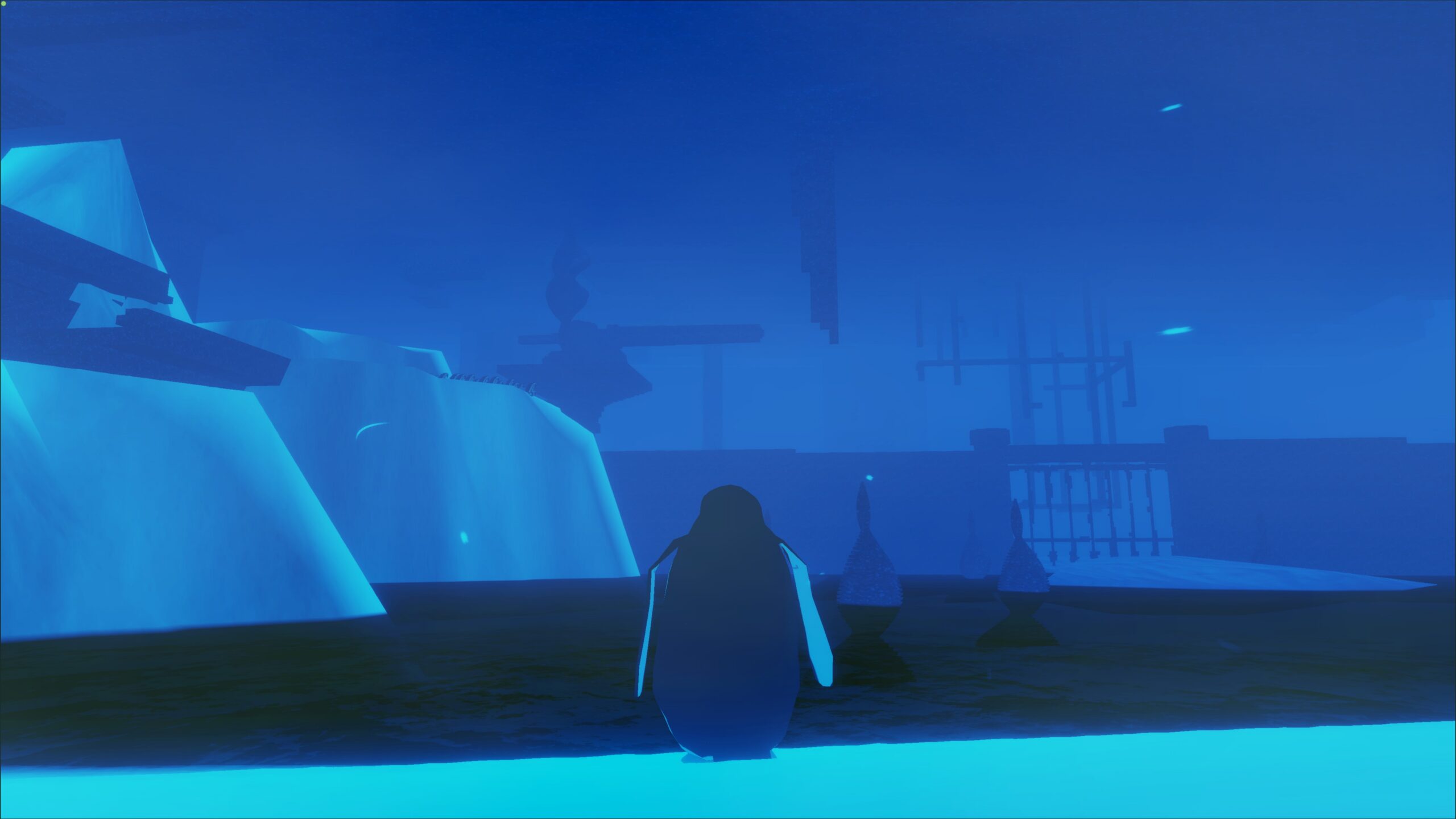
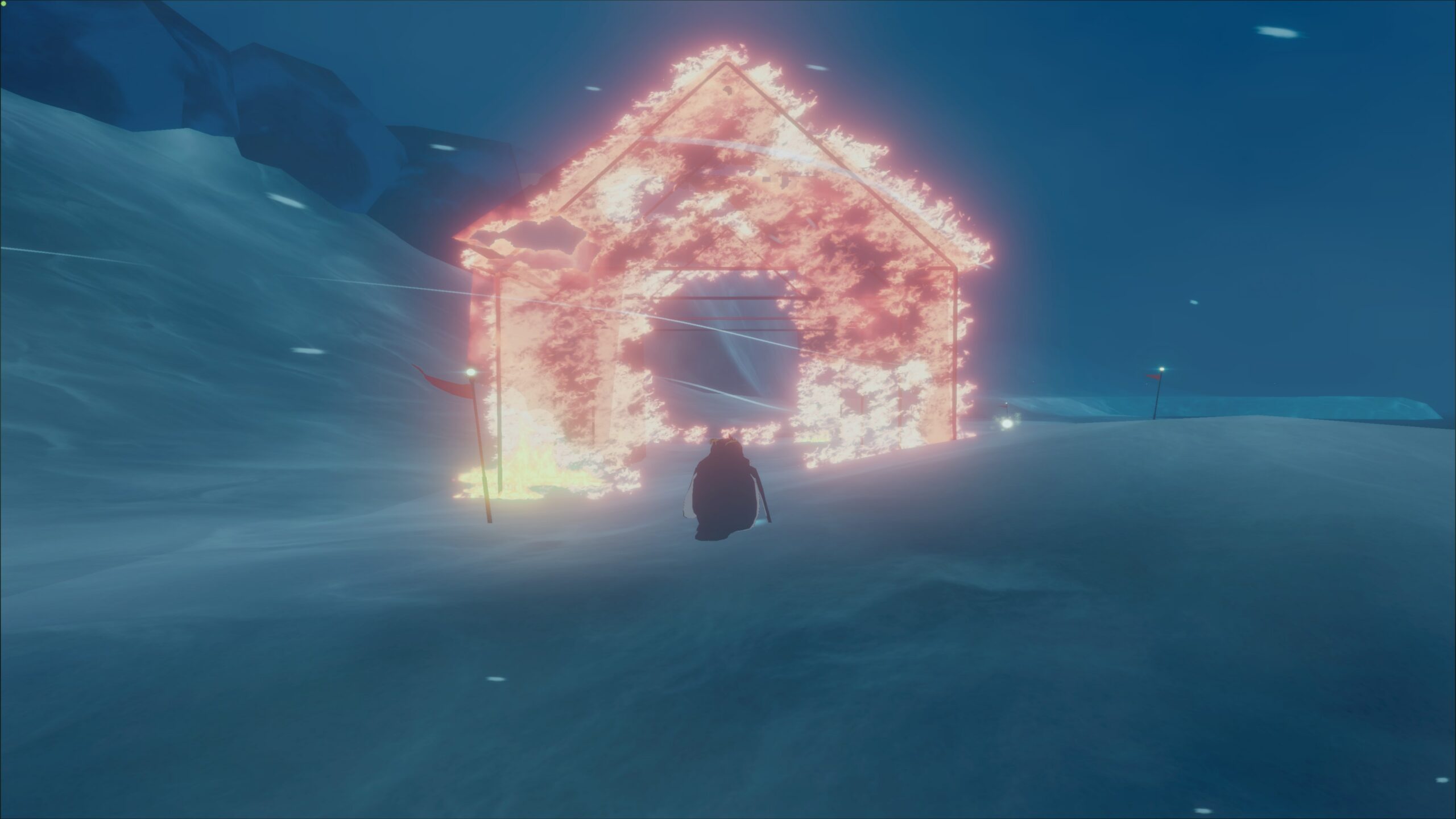
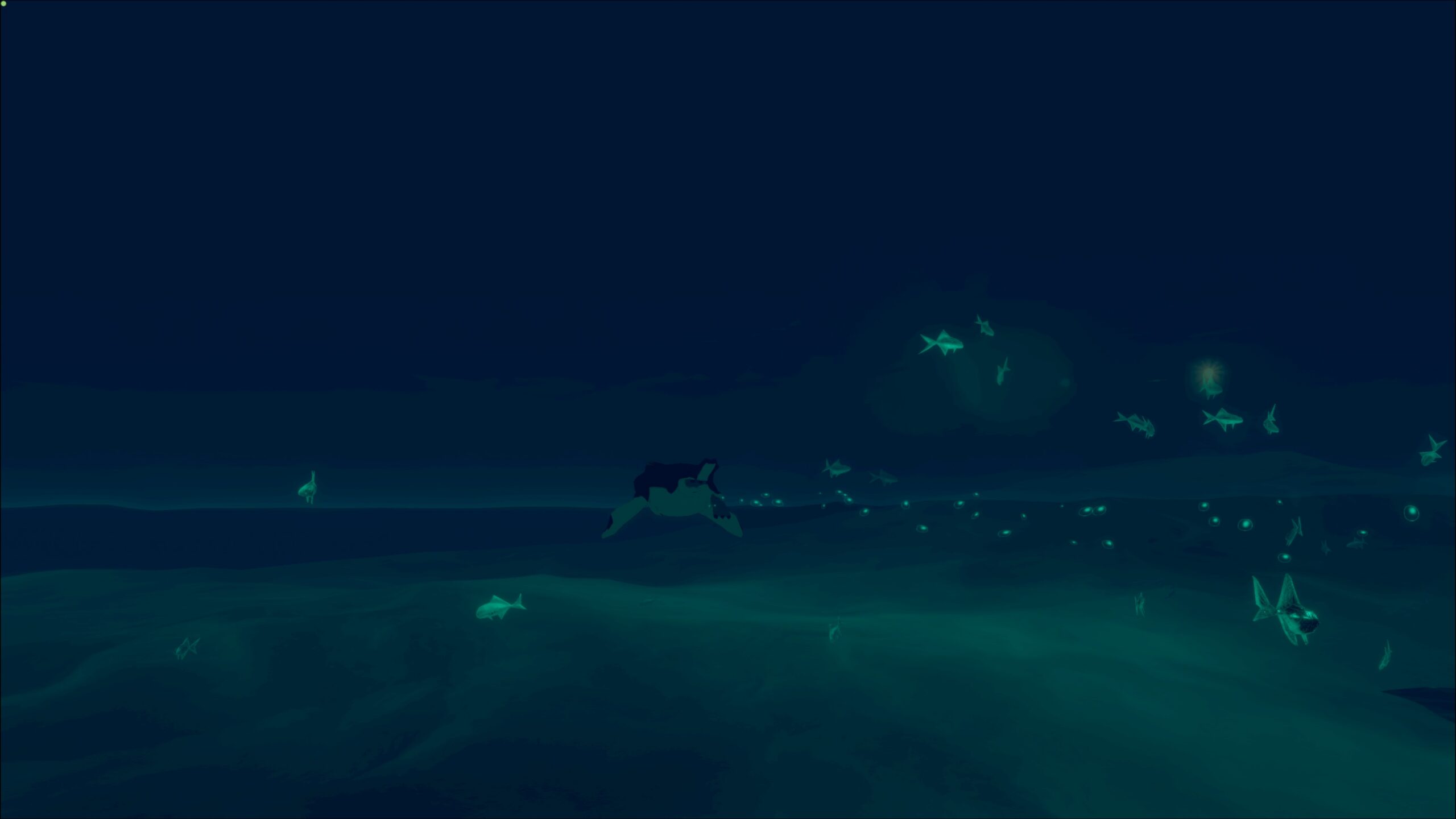
You’re constantly fighting your way forward across an unforgiving landscape that doesn’t seem particularly interested in cooperating. Clearly, this struggle is meant to be more than just another part of the puzzle. It also serves as a metaphor for the suffering at the heart of the experience. But that’s still the gentler side of the game. Once you reach a human base camp, the real horror begins. Tents spontaneously catch fire, while blood-spattered men collapse face-first into the snow. Gruesome sights become increasingly common, including bodies with their entrails hanging out. Suddenly, a strong The Thing vibe takes over, from the isolated Antarctic setting to the visceral body horror and the growing sense that something has gone terribly wrong. The contrast between these atrocities and the penguins’ almost comical appearance makes the whole experience even more unsettling.
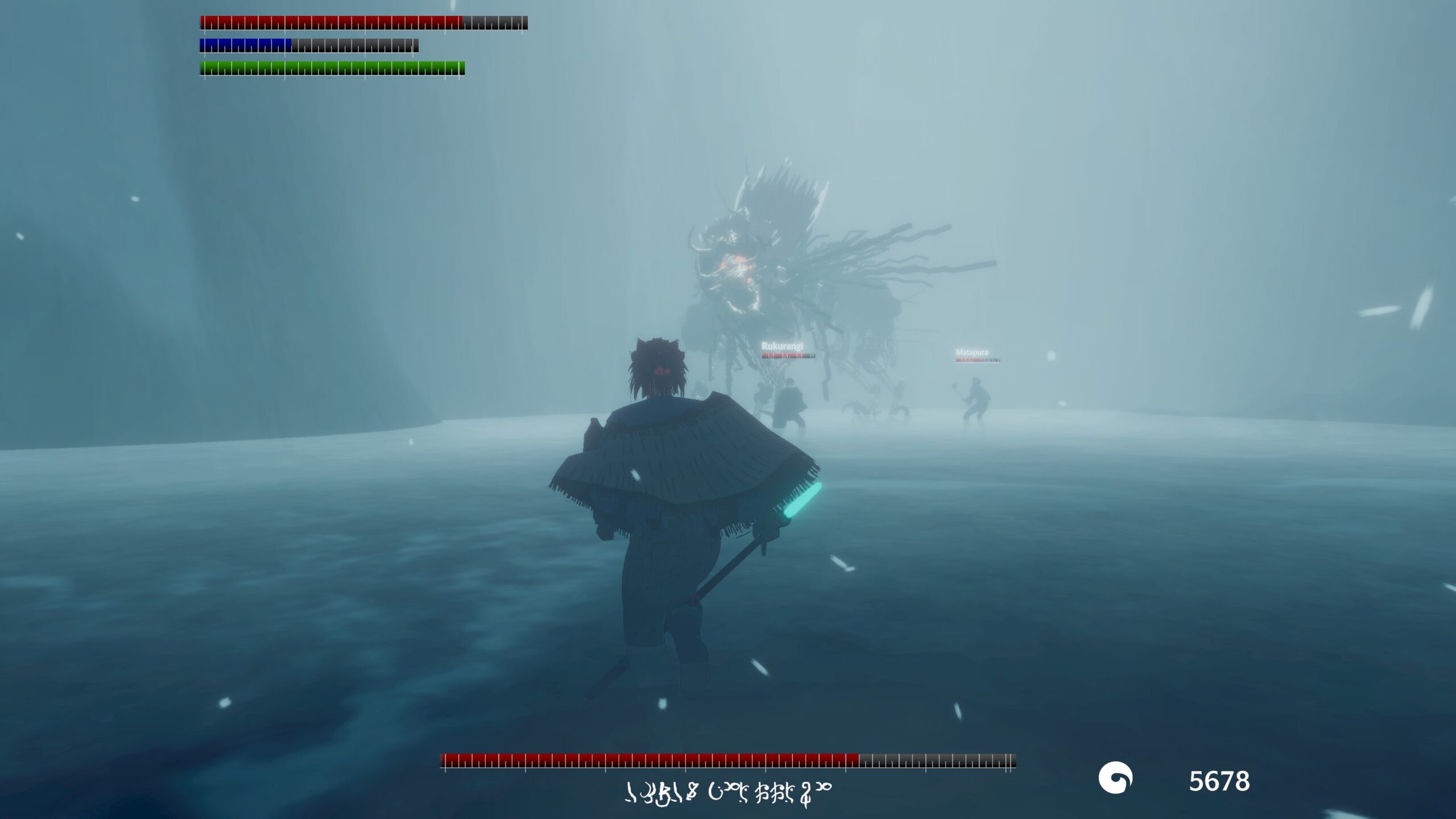
Your penguin can actually die, too. Chemical substances in the water and fatal falls from too great a height can both bring your current penguin to an untimely end. When that happens, you’re automatically warped into another nearby penguin, so death doesn’t necessarily mean starting over. There’s also a boss encounter, although it’s more of an escape sequence than a traditional fight. Still, the fear it instills is convincingly done.
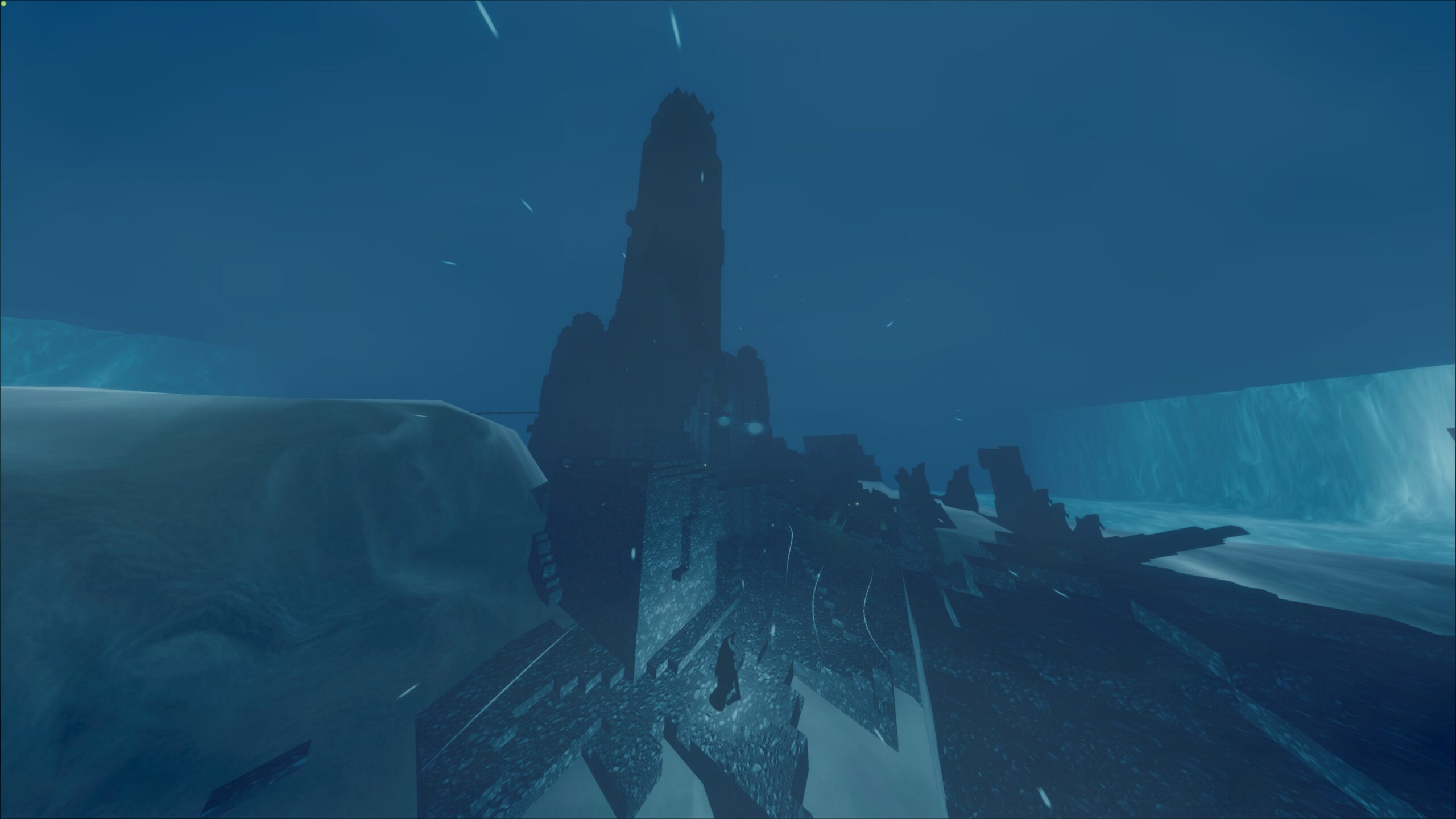
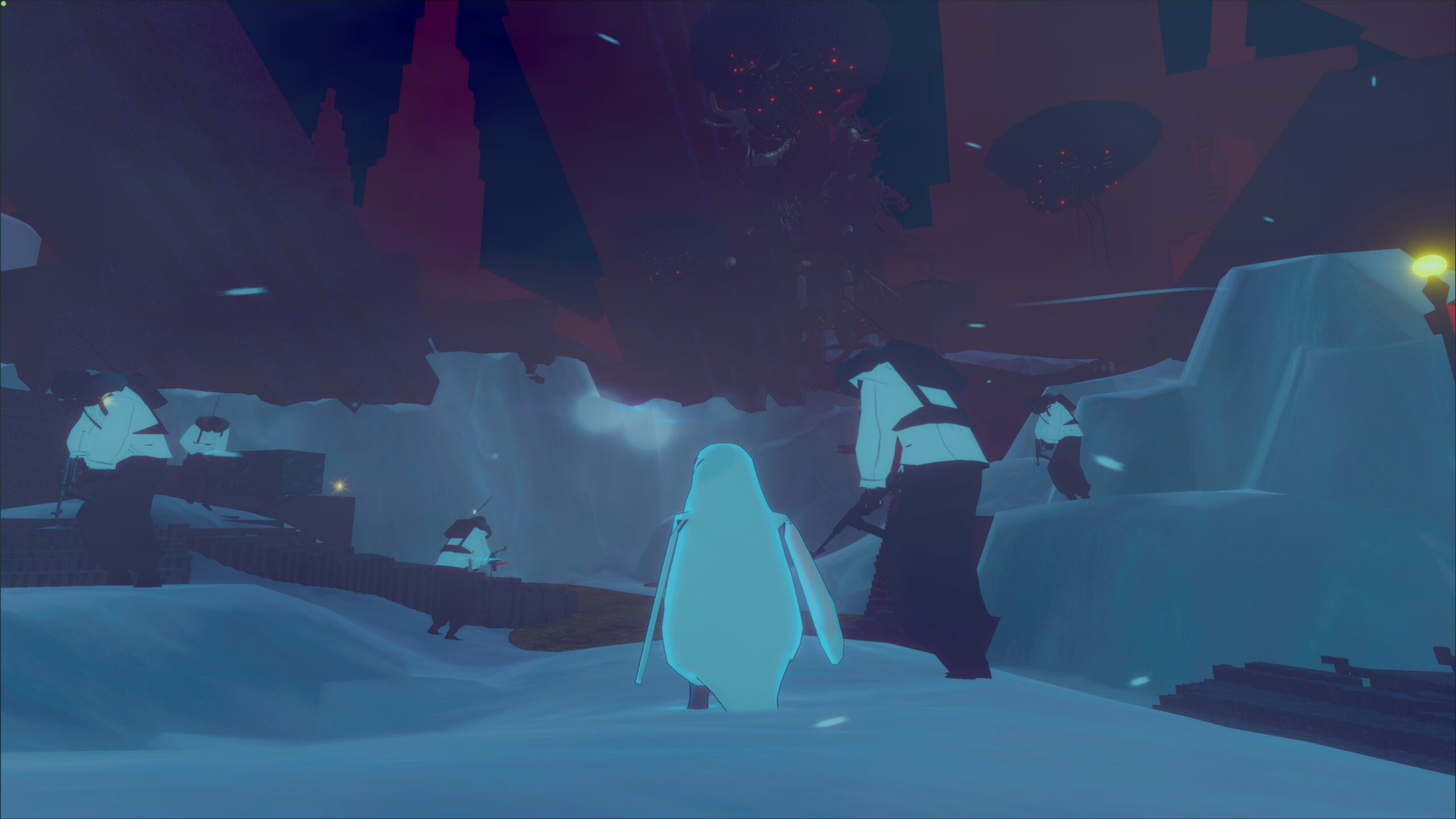
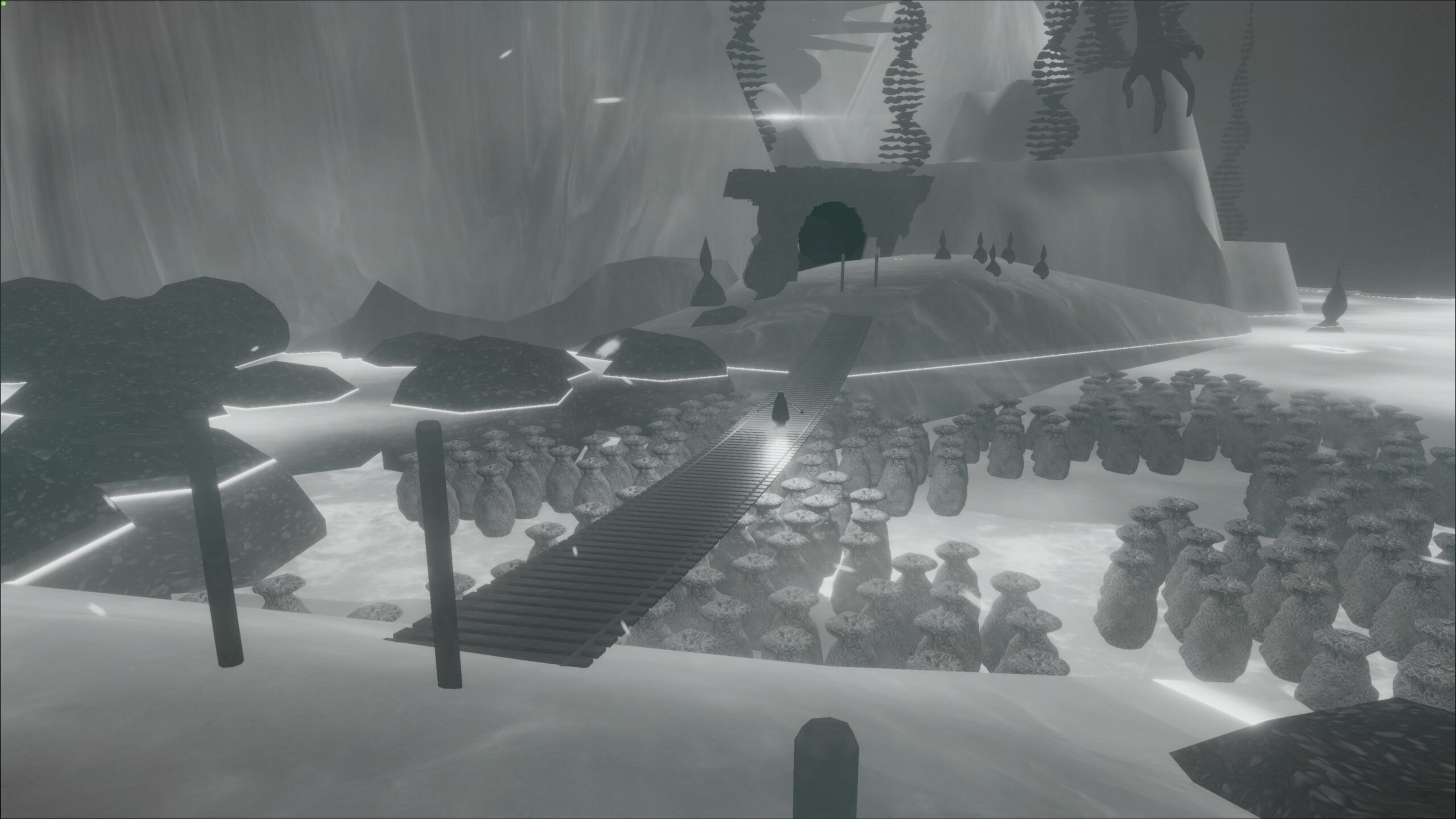
After reaching a strange obelisk, the intrigue really starts to build. What follows revolves around what could be the greatest discovery humanity has ever made, and it’s genuinely intriguing. But what is it? What exactly is going on? These are questions you’ll find yourself asking repeatedly throughout the game.
Penguin Colony‘s historical and sociocultural narrative drops cryptic hints about what’s really going on, punctuated by increasingly intense subliminal flashes, but these remain loose threads. It’s up to you to tie them together. An ancient race called the Aryan enters the picture, along with references to something or someone buried beneath the ice for a thousand years. Could an inconceivable power lie behind it all, something best left untouched by anyone seeking to exploit it for destructive purposes? After all, what happens when people try to wield a power they barely understand?
For a brief moment, you also take control of members of the Iwi tribe, learning about their beliefs and rituals. One section even has you paddling a waka, a type of canoe. Before long, however, the narrator returns with more anecdotes about his painful past, set against a backdrop of Nazi Germany’s increasingly apparent ambitions to build the greatest empire the world has ever seen.
The physical horrors of World War II are only part of what Penguin Colony seeks to lay bare. Its psychological toll receives just as much attention, particularly when leadership and the desire for power enter the equation. The story explores how ambition can distort judgment, how people make catastrophic mistakes on their own, and how those missteps become even more destructive when interpersonal communication breaks down. Different worldviews and conflicting beliefs can create a divide that neither side seems willing to bridge. What begins as an attempt to achieve something greater can gradually turn into a justification for almost anything, as though the ends could somehow justify the means.
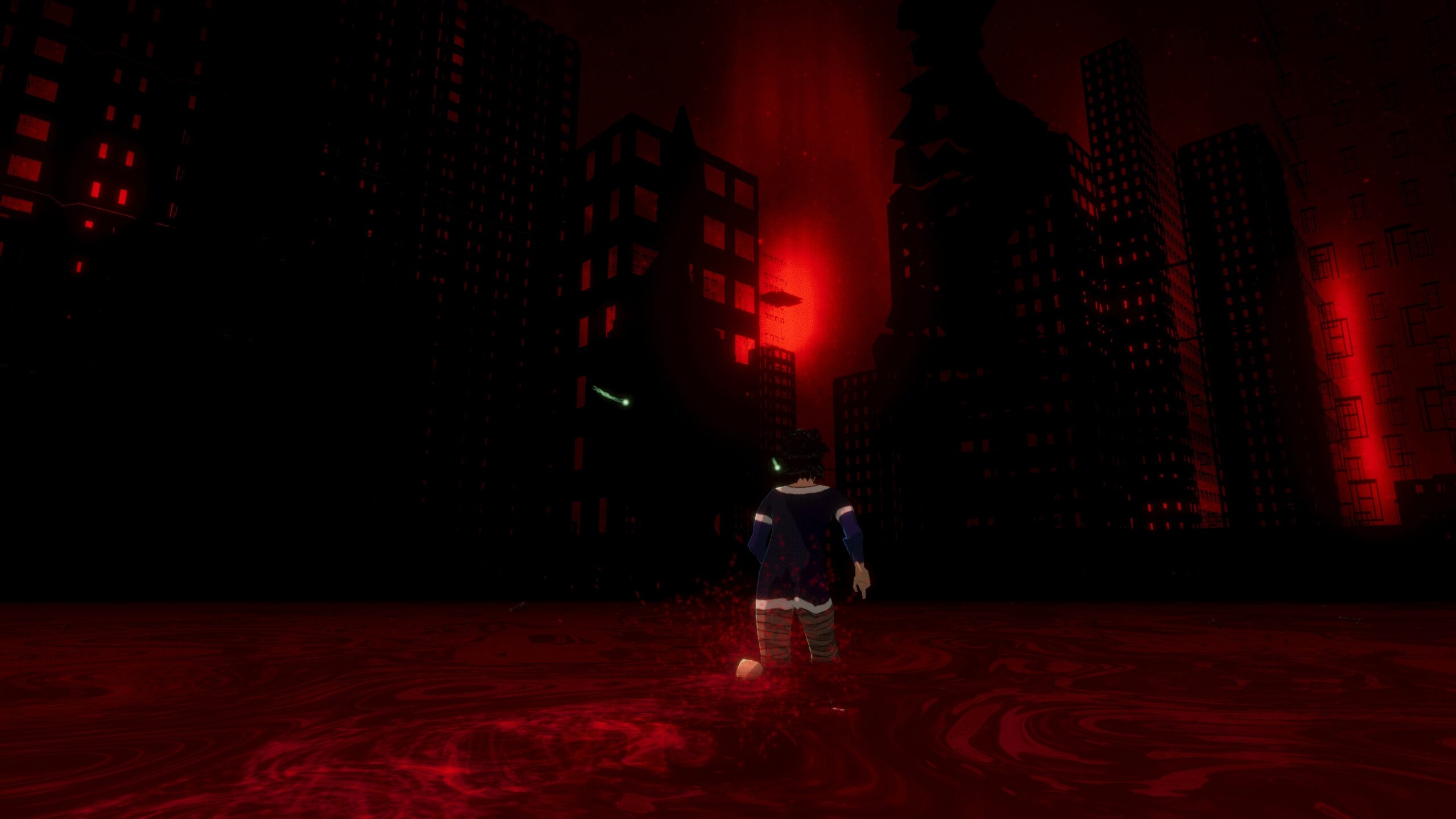
Rather than spelling out every idea within this framework, Penguin Colony lets its narrative and imagery do much of the work. Reinforcing this psychological dimension, abstract visuals, surreal imagery, and abrupt audiovisual fragments occasionally disrupt the experience, blurring the line between what is actually perceived and how the mind interprets it. Much like Lovecraft’s fiction, the horror isn’t simply about encountering something gruesome. It’s also about confronting something beyond your comprehension, something that challenges your understanding of reality and the limits of the human mind.
Visually, the game strikes an odd but effective balance between retro, lo-fi textured scenery, anime-inspired characters, semi-cartoonish yet cute penguins, and surprisingly realistic-looking fish species. A few technical issues do crop up along the way, though. For example, audio clips can overlap and cut each other off, such as when the narrator is speaking and another event triggers a different recording. Subtitles can also stubbornly remain on screen when you open the pause menu, while certain objects occasionally glitch out and simply disappear. Still, despite these minor issues, the experience feels remarkably polished overall. Combined with an eerie but beautiful soundtrack, the result is a world that’s strangely charming at first, even as the atmosphere grows grimmer and more haunting with each falling snowflake.
One of the game’s biggest surprises to me was realizing, after completing it, just how many secrets I’d still missed. As you uncover new routes and switch between penguins with distinct abilities, you can explore areas in many different ways, adding plenty of variety to each run. Once you reach the end, a tree provides an overview of the paths you took and the secrets you uncovered, giving you a solid reason to return for another playthrough.
Final Thoughts
Penguin Colony is a strange, unsettling blend of cosmic horror and abstract storytelling. It’s a thought-provoking narrative about war and humanity’s destructive pursuit of power, where the ends are used to justify the means. A few technical hiccups keep it from being entirely flawless, but its unusual perspective and the questions it leaves you with make it well worth the journey.
Additional Information
Release Date: October 16, 2026
Reviewed On: PC. Download code provided by the publisher and PR agency.
Developer: ORIGAME DIGITAL
Publisher: Fellow Traveler
Relevant Links: Available on Steam.