DaRmaZat
 The Wandering Village is a narrative-driven survival city-builder with a unique twist: your entire civilization exists on the back of a massive, roaming creature named Onbu. Developed by Stray Fawn Studio, a Swiss indie team known for their blend of science fiction and nature-themed design, and co-published with WhisperGames, the title first entered Early Access on Steam in 2022. After nearly three years of feedback-driven refinement, the full release launched across platforms—including Nintendo Switch and PlayStation 5—on July 17.
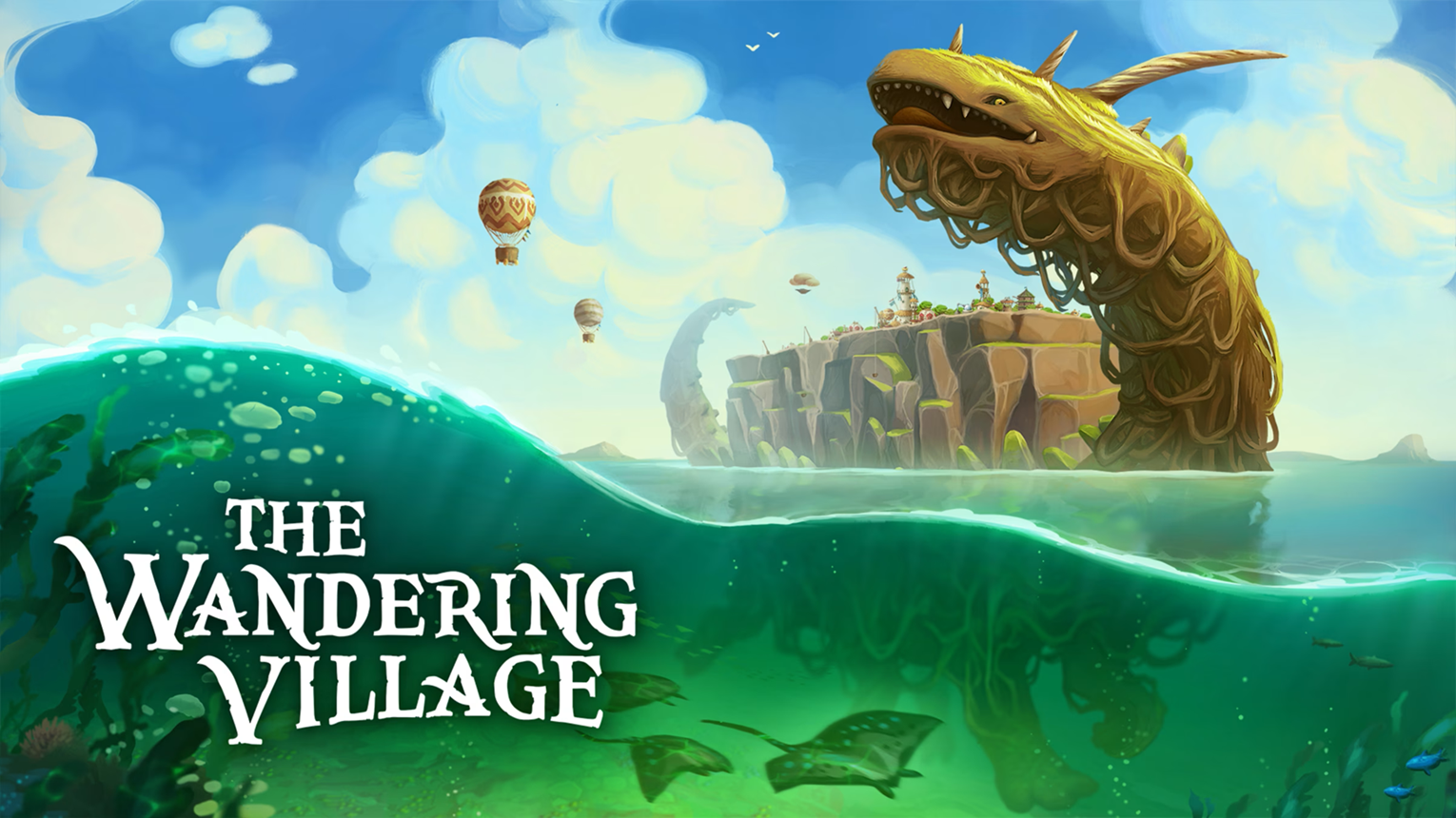
While the game firmly belongs to the management and city-building genre, it stands apart through its strong narrative undercurrent, symbiotic gameplay mechanics, and the way it fuses elements of survival strategy with environmental storytelling.
Unlike most city-builders, The Wandering Village isn’t about carving out territory on static ground—it’s about adapting your settlement to the moving terrain beneath your feet, one that has its own needs, moods, and reactions to your decisions.
Life on the Back of a Giant
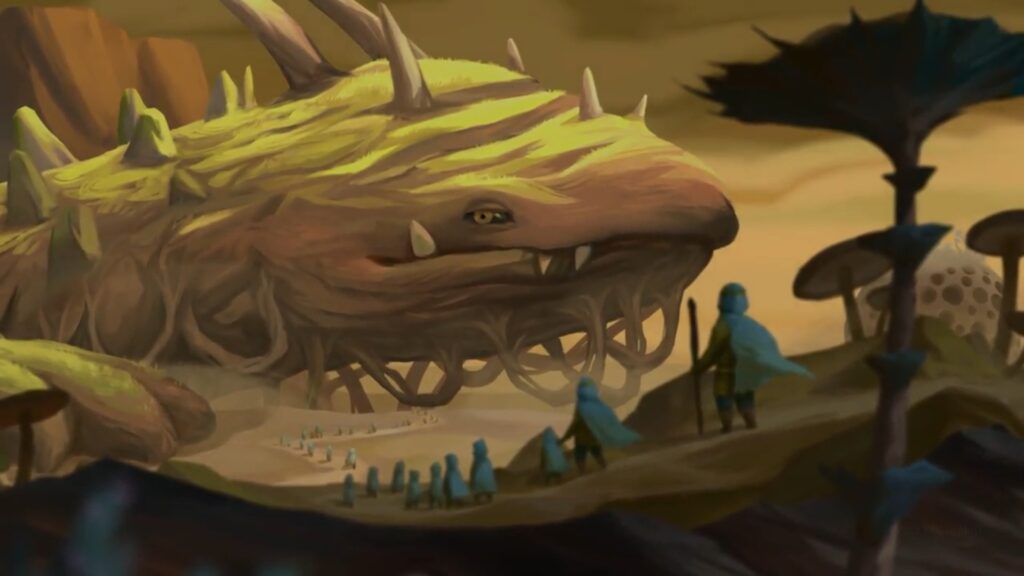
The story unfolds in a devastated post-apocalyptic world, where toxic spores from mutated plants have rendered the Earth uninhabitable. Humanity’s last hope lies not in reclaiming the land—but in leaving it behind. Survivors, called Onyans or nomads, find refuge atop Onbu, a massive, dragon-like creature that trudges across a poisoned world, seemingly immune to its dangers.
Life unfolds on Onbu’s back, where homes are built, crops are sown, and research begins—right along the curves of its colossal spine. But the creature isn’t just a passive mount—it has a mind of its own. While you can suggest which path Onbu should take at forks in the road, it won’t always obey. This dynamic makes each expedition unpredictable. The map ahead constantly shifts depending on Onbu’s chosen route, and you’re forced to react to the changing environments it encounters.
There’s a spiritual undertone to the setting—a metaphor for coexistence, stewardship, and the ecological bond between civilization and its living habitat. Day/night cycles and dynamic weather amplify this theme, affecting visibility, resource availability, crop growth, and even villager morale. Traversing a dry desert may cause water shortages, while humid jungles may spawn dangerous spores. You don’t just build a city; you adapt, improvise, and sometimes survive by the skin of your teeth.
Survival, Synergy, and Sacrifice
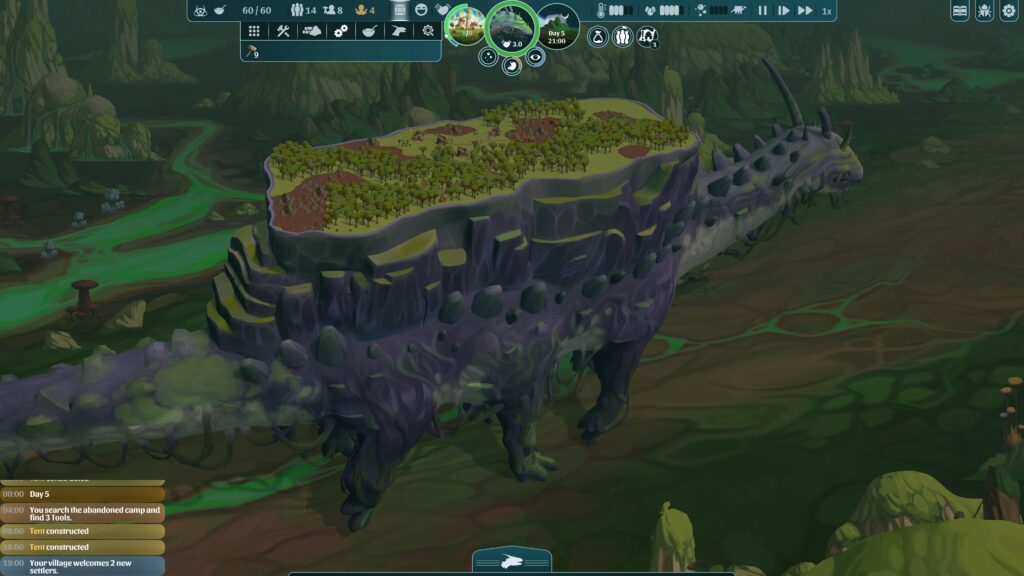
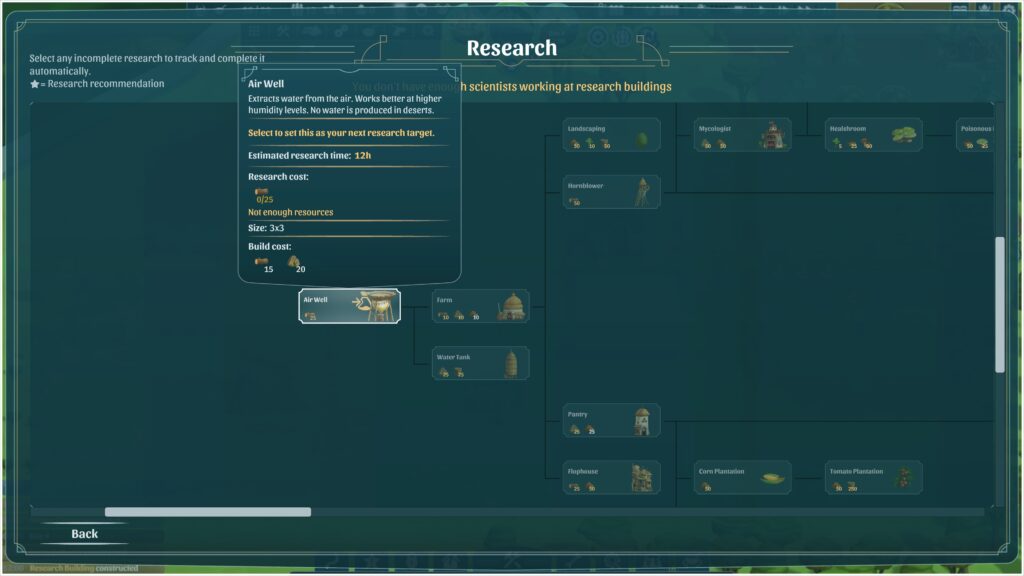
At its core, The Wandering Village plays like a streamlined survival builder: you’ll manage resources, expand infrastructure, unlock tech trees, and assign roles to villagers. But what sets it apart is the ever-present interdependence between your people and Onbu. You’re constantly balancing two ecosystems: the human village and the biological needs of the beast beneath it. Onbu gets hungry, tired, and sick. You can feed it via catapults, cure its ailments, or even pet it to build trust. Eventually, you unlock advanced systems like command horns to influence its decisions—though more sinister options also emerge, such as extracting blood or bile to power machinery. These choices have real consequences: treating Onbu well builds loyalty, while exploiting it erodes trust and risks rebellion.
The biomes also present shifting challenges. Snow-covered regions halt farming, while toxic swamps damage villagers and soil. A limited workforce means constant reassignment—harvesters one day, researchers the next. Space on Onbu’s back is tight, forcing you to think vertically and prioritize layout efficiency.
However, it’s worth noting that the game lacks a proper tutorial, making it less accessible to newcomers in the genre. You’re expected to learn through trial, error, and quite a bit of micromanagement. The resource economy is relatively simple compared to deeper sims like Manor Lords or The Settlers, which may leave genre veterans wanting more. That said, sandbox and challenge modes offer good replay value, with customizable difficulty modifiers that cater to both relaxed and hardcore playstyles.
A Living Ghibli-Inspired World
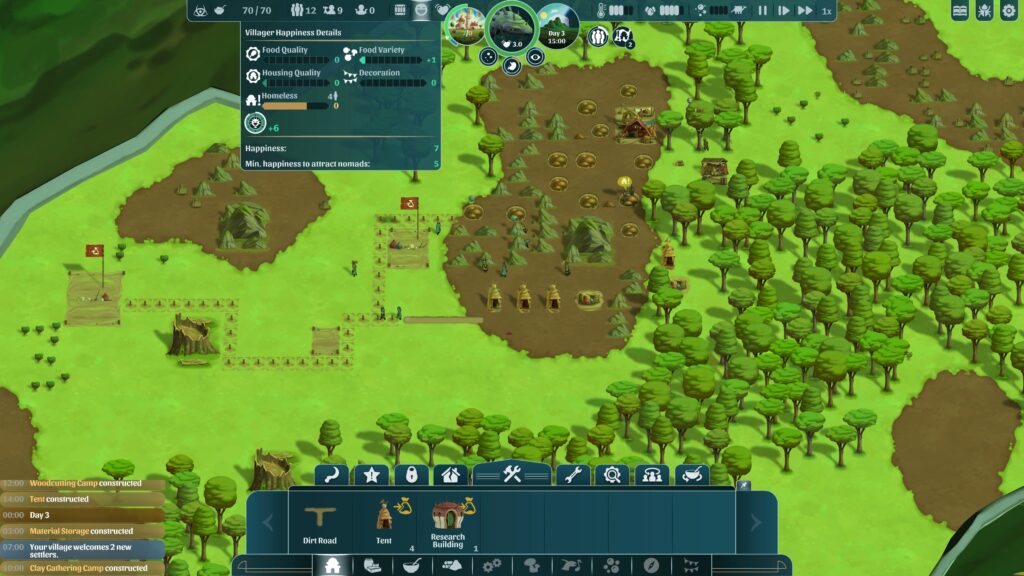
Visually, The Wandering Village leans heavily into a stylized, hand-drawn aesthetic that channels the tone of Studio Ghibli, particularly Nausicaä of the Valley of the Wind. Character sprites are minimalist but charming, and the environments are richly illustrated with layered animations that breathe life into the world. The use of soft color palettes and naturalistic textures gives the entire game a soothing, storybook-like feel.
A standout feature is the presence of animated cutscenes scattered throughout the main campaign. These segments elevate the storytelling, offering a rare cinematic flair in a genre that often leans solely on text and static art. While these moments are limited, they’re memorable, adding weight and beauty to key narrative beats.
However, the layout system could use refinement. Building placement feels rigid, especially when visibility is obscured by trees or terrain. The inability to rotate the camera or structures leads to awkward village designs, and there’s little room for aesthetic creativity compared to games like Anno or Cities: Skylines.
Calm in the Chaos
The soundtrack in The Wandering Village is deliberately understated, featuring ambient and melodic compositions that support the game’s reflective tone. From wind-blown plains to eerie spore zones, each biome carries a distinct audio identity, while the music never overwhelms and instead creates a relaxing atmosphere. Perfect for long, focused sessions.
While you switch between impressive camera angles of your mini-universe and the path the colossal Onbu takes, the sound design subtly reinforces the creature’s living nature. You’ll hear its slow breathing, the creak of bones, the stomp of its steps as it moves through biomes. These touches ground you in the fantasy, reminding you that you’re not just managing a city—you’re coexisting with a titan.
Final Thoughts
The Wandering Village is a beautiful, heartfelt take on the city-builder genre, blending survival strategy with environmental storytelling in a way few games attempt. Its living-world premise, Ghibli-inspired art direction, and symbiotic gameplay loop are truly compelling. The experience is meditative rather than intense, designed for players who enjoy careful planning and worldbuilding with a moral dimension.
However, it’s not without flaws. The limited building depth, lack of a guided tutorial, and constrained design mechanics may frustrate players expecting a more robust or flexible sandbox. Visual clarity during construction and a more intuitive UI could also improve the overall experience. Still, for those willing to embrace its rhythms, The Wandering Village offers something rare: a game that asks not just how you build, but who you choose to become in the process.
Additional Information
Release Date: July 17, 2025
Reviewed On: PC. Download code provided by the publisher and PR agency.
Developer: Stray Fawn Studio
Publisher: Stray Fawn Publishing, WhisperGames
Website: https://www.thewanderingvillage.com
Relevant links: The Wandering Village on STEAM